Before Harley Miller raised money for internet companies, he had to persuade parents to send their children to baseball camp. He grew up in suburban Pittsburgh, attended public school, and started Camp Harley Baseball at fourteen. Recruiting meant door-to-door selling and calling mothers. The business continued into his college years. A teenage founder with his own name on the enterprise had already encountered a question that would follow him into finance: how do you get someone to become a customer?
There is something pleasingly unglamorous about this beginning. Venture capital can make entrepreneurship sound like a mysterious gift bestowed at a university demo day. Baseball camp requires a more immediate kind of persuasion. A parent must trust you. A child must enjoy coming. The name on the shirt cannot do all the work. However grand the business eventually becomes, somebody has to agree to show up.
A baseball camp, then an investment committee
Miller went to the University of Pennsylvania’s Wharton School and earned a Bachelor of Science. His subsequent career developed at Insight Partners, where he spent nine years before founding Left Lane Capital in 2019. The sequence matters. The teenager who had sold an activity became an investor in businesses selling services, convenience, and experiences at a much greater scale. He then became the founder of an investment business himself.
That last move gives his career an interesting symmetry. An investor usually gets to interrogate someone else’s ambition. A founder has to put his own ambition on the table and endure the interrogation. Building a firm means accepting that the questions now concern your judgment, your colleagues, your processes, and the reasons anybody should entrust you with money. The comfortable chair on one side of the meeting table has an uncomfortable twin.
His years at Insight included work on consumer internet investments. Left Lane’s account of his earlier experience lists companies such as HelloFresh, Delivery Hero, Trivago, and Udemy. It also makes an essential distinction: those were investments associated with Insight, where Miller played a significant role, rather than investments made by Left Lane. The deals involved teams and investment committees. A career can travel with an investor; ownership of the whole history cannot.
That history gives the later firm’s focus some context. Meal kits, food delivery, travel search, and online learning occupy different parts of a household’s budget. They also ask related commercial questions. How often does a person need the service? How easily can they find an alternative? Does convenience justify another purchase? The consumer’s diary can be as revealing as the company’s pitch deck.
Putting a name above the door
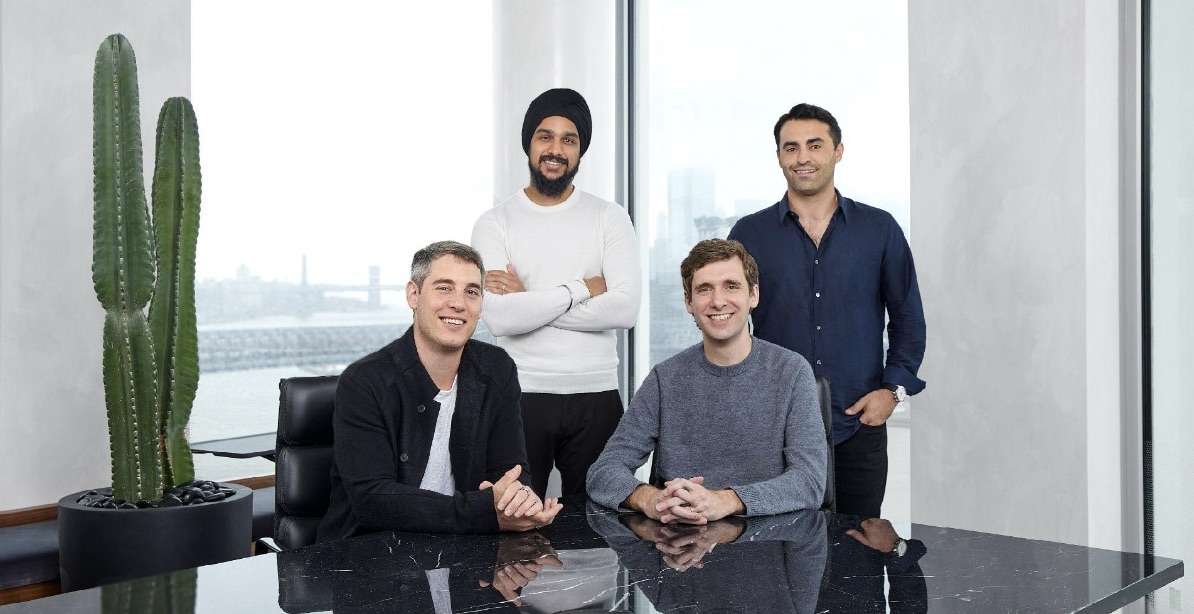
Left Lane was founded in August 2019. By April 2022, its second fund had closed with $1.4 billion in commitments, following a $630 million first fund. The second vehicle exceeded its initial $1 billion target. Those figures describe capital entrusted to the firm for investing. They are consequential enough without turning them into a fictional estimate of the founder’s personal fortune.
At that second closing, the leadership comprised Miller, Dan Ahrens, Jason Fiedler, and Vinny Pujji. The firm reported 36 investments across twelve countries and offices in New York and London. The geography suited the business: consumer behavior takes local forms, while the machinery for studying and financing it can travel. A useful service does not become less useful because the first enthusiastic customers speak another language.
Fundraising also supplied its own education. Miller’s 2022 conversation with Harry Stebbings explored the lessons of 2,500 limited-partner meetings for the first fund, the transition from investor to fund manager, and the problem of building an institution that lasts. Behind a closing announcement sits a less photogenic business: explaining yourself again, listening to objections, and deciding which parts of the argument deserve another draft.
The number of meetings is a useful antidote to the effortless-founder myth. Repetition is work. It can also improve the question being asked. A founder seeking capital learns what other people consider evidence. An investor seeking capital encounters the same scrutiny, with the added complication that the eventual product is his own capacity to choose. Nobody can offer a live demonstration of a decade that has yet to happen.
The next purchase is the interesting one
Left Lane describes its investment focus around enduring customer relationships. Its present-day approach spans the movement of offline spending into digital businesses, technology that performs tasks for customers, and brands connecting digital experiences to physical ones. The common thread is a commercial relationship that continues beyond the initial introduction. The first sale gives a business something to celebrate. Subsequent sales give it something to study.
“Brand matters, but venture returns require repeat behavior at scale.”
Harley Miller
For a reader outside finance, a cohort is simply a group of customers who arrived during the same period. Following that group over time helps distinguish a busy entrance from a durable business. If people keep returning, the company has earned another opportunity to sell. If they vanish, buying more advertising may keep the total customer count moving while concealing the departure lounge.
This is where consumer investing becomes more demanding than spotting a fashionable logo. Affection is valuable, but expensive affection can be difficult to finance. A brand must deliver something people want while leaving enough money to keep delivering it. The arithmetic has little respect for an attractive typeface. Nor does it care how elegantly the founder announces that the community is growing.
From the household budget to the grandstand
Miller’s later investments add sport to that picture. In September 2024, he joined the board of Kings League alongside representatives of Cassius and Fillip. The seven-a-side football competition began playing in Spain in 2023 and expanded to Mexico with Kings League América in 2024. Its financing brought investor oversight into a business built around a different presentation of a familiar game.
Football offers a useful illustration of the difference between the activity and the product sold around it. The ball remains a ball. The surrounding format, distribution, personalities, and viewing experience can change. A new league has to persuade spectators to make room in their attention budget, then persuade commercial partners that this attention can sustain a business. The scoreboard settles one contest; the accounts settle another.
In July 2024, Freestyle Chess announced $12 million in funding from Left Lane. Magnus Carlsen and Jan Henric Buettner founded the venture, which planned a tournament series and investment in the digital experience, products, staffing, and marketing. Miller’s statement emphasized the combination of competitive play and presentation. An ancient game was being considered through the lens of a contemporary audience business.
Chess makes the point rather neatly. The intellectual contest may already be compelling to participants. Growing its commercial audience requires deciding how somebody else encounters it, understands the stakes, and becomes interested enough to return. The investor’s challenge is to identify the business that can sit around that interest. A room full of accomplished players does not automatically produce a room full of paying customers.
In March 2025, Pro Padel League announced a $10 million seed round led by Left Lane. Miller described the firm’s criteria for sports properties in terms of potential leadership within a geography or sport and the creation of lasting communities. The portfolio already included Kings League, The Snow League, LOVB, and Freestyle Chess. The sports interest had become a series of investments rather than an isolated excursion.
These businesses also make patience unavoidable. Events require organization, athletes need a competition worth entering, and audiences have plentiful alternatives. Sponsorship, ticketing, and other revenue streams must develop alongside the spectacle. The appeal of the category is easy to understand. Its practical demands are equally visible. The crowd can cheer enthusiastically while an accountant quietly asks who paid for the venue.
The business behind the bets
By August 2026, Left Lane reported approximately $3.8 billion in assets under management. Its announcement of promotions reached beyond the investment team into Accelerate, the portfolio support function, and into finance and operations. Alex Wu became Partner of Talent and Erica Amatori Partner of Platform. Arjun Kapur and Paddy Dillon became Principals in New York and London, respectively. Six new investors also joined.
That announcement offers a different view of Miller’s work. Finding companies is only part of building an investment firm. Founders may need help recruiting people, developing marketing, and making operational decisions. The firm itself needs financial administration and relationships with its own investors. An institution becomes visible in the jobs that make its headline activity possible. Someone must look after the machinery while somebody else discusses the next opportunity.
Miller’s responsibilities also include corporate governance. EquipmentShare’s current biography records his return to its board in 2026, after an earlier period from December 2016 to December 2024. He serves on the compensation committee. A board appointment is a quieter entry in the story than a fund closing, but it describes another part of the profession: continuing responsibility after the excitement of a transaction has passed.
Back at the beginning, a baseball camp had offered a straightforward commercial education. Getting families through the door mattered, and so did giving them a reason to value the experience. Miller’s career has since passed through investment committees, fundraises, international portfolios, and sports leagues. The setting has changed considerably. The recurring question remains wonderfully ordinary: once somebody has tried what you are offering, will they come back?
Keep reading & listening
- Left Lane Capital ↗
- Harley Miller on LinkedIn ↗
- Left Lane on X ↗
- Catalyst: consumer investing and Miller’s early business ↗
- 20VC: fundraising and building a firm ↗
- Watch: Miller’s 2022 interview on digital adoption ↗
- Freestyle Chess funding announcement ↗
- Kings League board appointment ↗
- EquipmentShare board biography ↗
- Left Lane’s August 2026 team announcement ↗
- September 2026 interview on European consumer startups ↗