He never lost his last three years of college squash. Then he picked a game where losing is the whole point - startups.
Walk into the Nevis office in New York and you will find a 41-person company trying to do something quietly radical: hand financial advisors back the roughly 80% of their day that gets eaten by admin. Meeting notes. Follow-up emails. Account-opening paperwork. The unglamorous machinery of wealth management. Nevis builds AI to absorb it. Somewhere near the center of that effort, in the CEO Office, sits Sam Scherl.
His title is Founder's Associate - the role companies reserve for the person they want in the room when the hard calls get made. It is a job with no fixed lane. One week it is competitive research, the next it is a customer rollout, the next it is whatever the founders decide matters most. For a man whose entire athletic career was about controlling the variables, it is a deliberate step into a world that refuses to be controlled.
Because before the startup, before the venture capital, there was the glass court. And on that court, Sam Scherl was very nearly unbeatable.
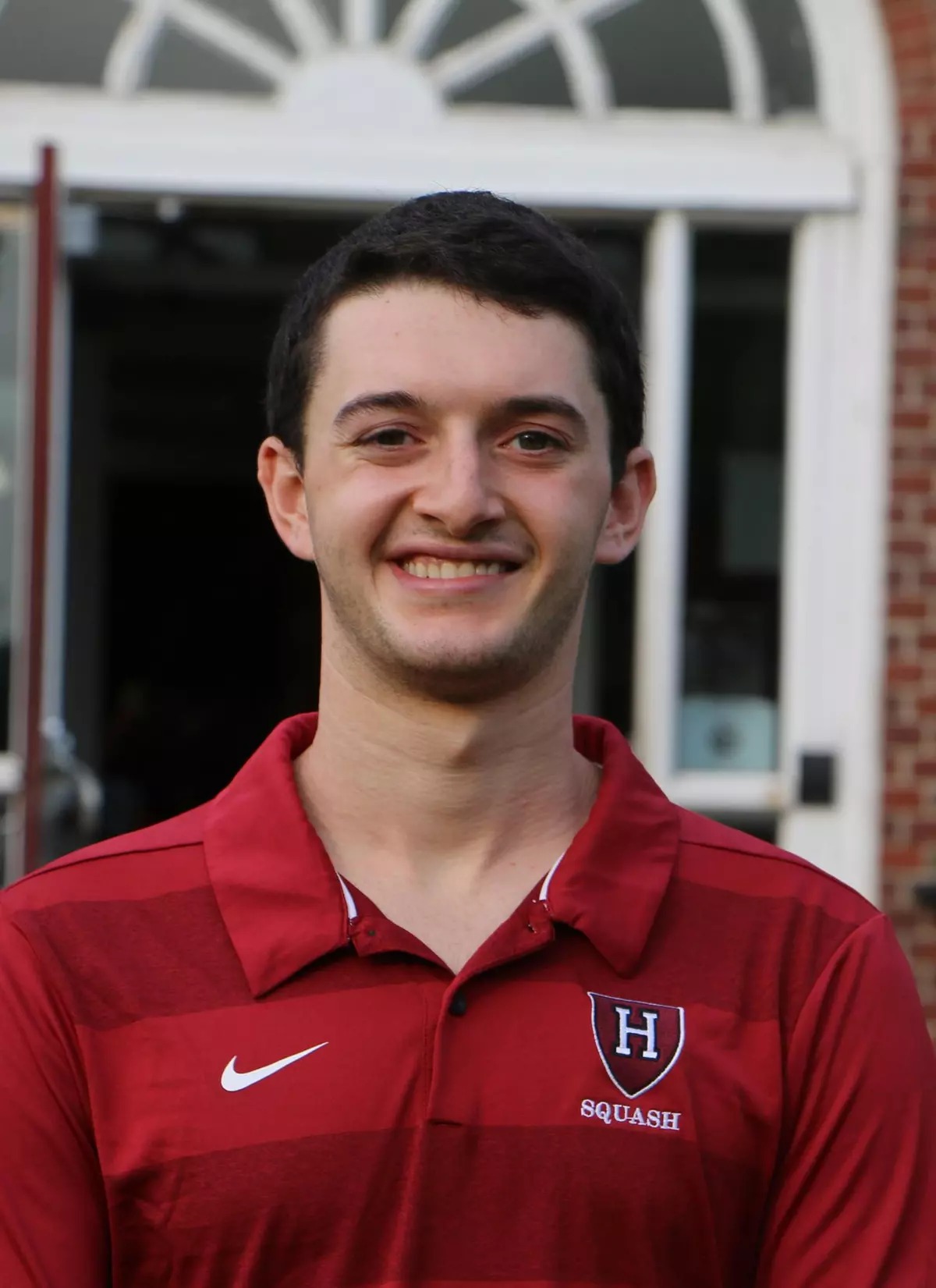
Read his college stat line and you will assume it is a typo. Sophomore season: 16-0. Junior season: 16-0. Senior season, as co-captain: 15-0. He was, in the words of the Harvard record book, the only player on the roster to appear in more than three matches and go unbeaten. That earned him First-Team All-American and First-Team All-Ivy honors and, in January 2022, the campus title of Student-Athlete of the Week.
The strange part is where he did it from. Scherl spent most of his career at the No. 3 spot on the ladder, not the marquee No. 1 line. The grind position. The one where you are expected to win without applause. He won anyway, every time, for three straight years.
He arrived at Harvard already decorated. Growing up in South Orange, New Jersey, he ran through the junior ranks - ranked No. 1 in the U.S. at Under-15, Under-17, and Under-19, a U17 and U19 national champion, a 2015 US Junior Open winner, and a member of the USA Junior National Team. At The Pingry School he captained varsity squash and graduated a National Merit Commended Scholar. He was, in short, the kind of teenager who made winning look like a habit rather than an event.
There was even a family script to follow: his cousin Zeke Scherl had captained the very same Harvard men's squash team back in 2013. Sam ran the family business his own way, anchoring teams that took home national titles, including a second straight championship in 2020.
“It's been a good lesson in deciding what things are worth your time or money or cost.”
Sam Scherl, on the new NIL rules - Harvard Gazette, 2021
In 2021 the NCAA finally let athletes profit from their own names. Most stars chased the spotlight. Scherl's instinct was characteristically practical. Harvard supplies rackets only during the varsity season, leaving players to buy their own over breaks - so he struck a low-key deal with an equipment company for free gear, asking only that he speak well of the product. No mandatory posts. No theatrics. Just a fair trade.
He had chafed under the old rules - "the little curtailments of my freedom were very frustrating," he told the Harvard Gazette, recalling being barred from endorsing a former coach's website. But given freedom, he used it like an economist, not a celebrity. It is a small story that explains a lot about how he approaches everything: figure out what is actually worth the cost, then act.
That same instinct shaped his career. A computer science concentrator, he could have written code for a living. Instead he went into venture capital, joining Insight Partners in New York as an analyst evaluating companies across AI, fintech, cybersecurity, and digital health - learning, from the investor's side of the table, what makes a software business actually work.
Then he switched chairs. Studying startups is one thing; building one is another. Scherl left the VC perch to join Nevis, betting on a small, fast-moving team over the comfort of a $20B fund. From scout to player. From the scoreboard to the arena.
Nevis is an AI platform for wealth management, built to automate the admin that swallows advisors' days - meeting summaries, task generation, prep, search, emails, account opening.
Nevis's founding belief is blunt: "AI will empower advisors, not replace them." The goal is to reclaim the ~80% of an advisor's time lost to manual, fragmented workflows.
The company has raised $40M from leading investors including Sequoia, and counts wealth firms like United Capital, GC Wealth, and Apollon among its early customers.
Around 41 people, led by co-founder and CEO Mark Swan. The Founder's Associate role puts Scherl at the highest level of that team, with visibility into every major decision.
He concentrated in Computer Science at Harvard while simultaneously running the table in college squash. Athlete and engineer, same person.
His teenage trophy case holds both U17 and U19 U.S. national titles - he was the best junior in the country across multiple age groups.
Squash runs in the blood: his cousin Zeke Scherl captained the same Harvard team back in 2013.
He grew up in South Orange, New Jersey and went to The Pingry School, where he also captained the squash team.
He played most of his career at the No. 3 ladder spot - the grind position - and still never lost.
Before building, he graded builders: as an Insight Partners analyst he sized up AI, fintech, and health-tech companies.