Hans Snook wanted a name with “Phone” or “Tel” in it. Orange sounded risky. Hutchison had already tried selling Britain a communications service called Rabbit, and that animal had come to an unhappy end. Another curious name might reasonably have seemed an extravagance. Snook’s hesitation is an appealing place to begin the story of a chief executive remembered for his certainty about the future.
Then he changed his mind. Colleagues recalled a board meeting at which he acknowledged his doubts and said he could now see how the idea would work. From there, he became an advocate for a mobile business whose name offered no technical explanation whatsoever. It required the service, the advertising and the people answering the telephone to do the explaining together.
There is something reassuringly unpolished about that conversion. The familiar corporate legend begins with a founder who sees everything before anyone else. Snook’s more useful story includes other people bringing him an idea, resistance, persuasion and a revised opinion. For a business built around communication, listening was a promising start.
A holiday with a very long interruption
Born in Germany in 1948, to a British father and a German mother, Snook grew up in Canada and attended the University of British Columbia. His working life began in hotel management, including a stretch in Calgary. The early career belongs to a world of guests and front desks, a considerable distance from mobile spectrum and telephone masts.
In 1983, he set off on a round-the-world trip. Hong Kong interrupted it. He took work in a paging business that subsequently became part of Hutchison Whampoa, and the means of paying for further travel developed into a telecommunications career. The backpack acquired a rather substantial piece of hand luggage: a business to run.
By 1992, Hutchison had sent him to Britain. Its Rabbit service was struggling. Rabbit let customers make outgoing calls near a base station, a limitation that became awkward beside the expanding promise of cellular phones. Snook and fellow founding director Graham Howe closed that operation and concentrated on developing a new mobile network. Orange would enter a market already occupied by Vodafone, Cellnet and One2One.
The hotel background gave the new venture a useful inheritance. Orange connected customer accounts with telephone numbers so callers could be greeted by name. That small courtesy made the machinery feel less anonymous. A person who has spent time dealing with hotel guests has encountered the difference between a functioning system and a customer who feels someone is paying attention.
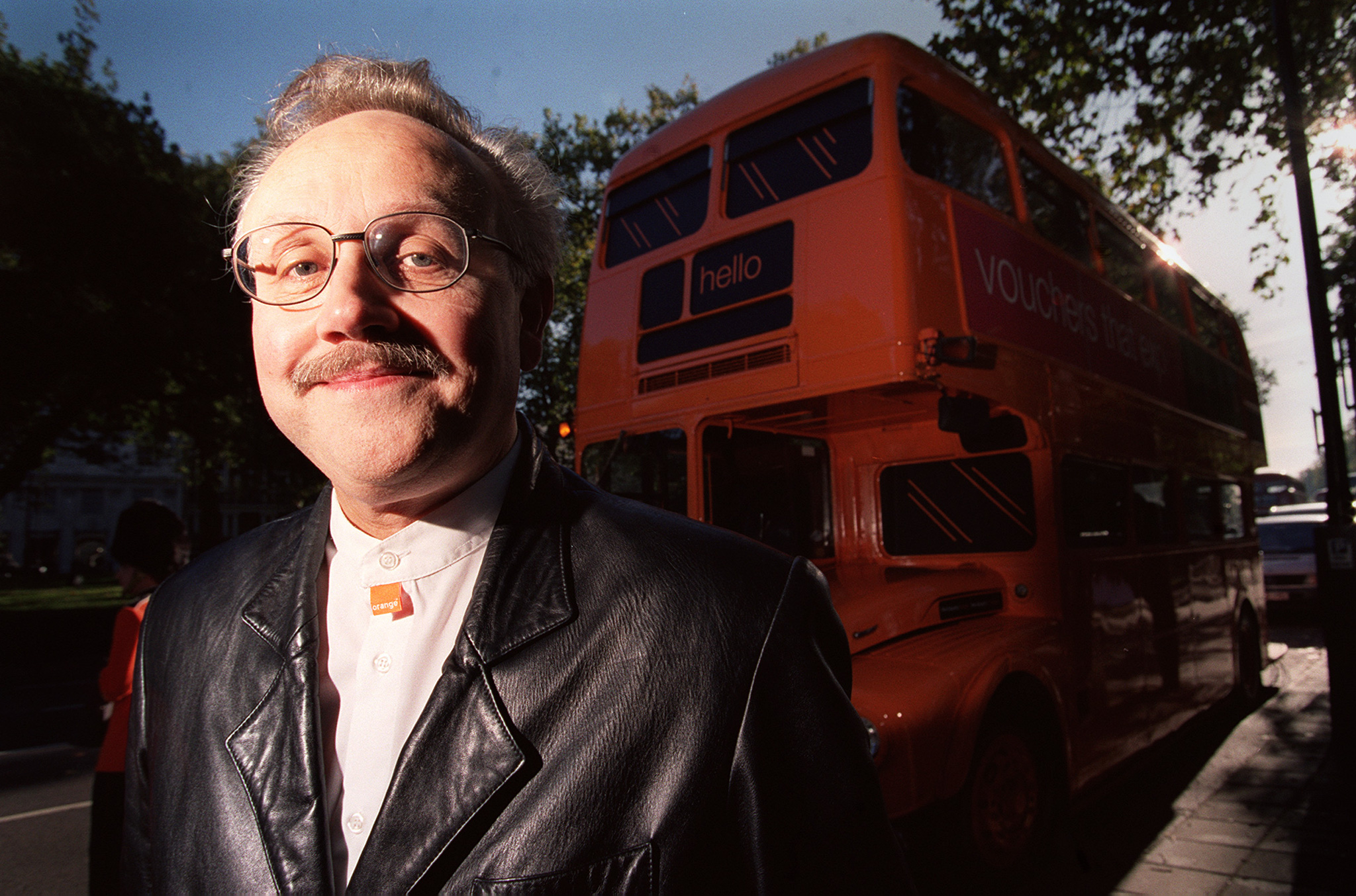
The bill had to keep the promise
Orange launched in Britain on 28 April 1994. Snook was its co-founder and launch chief executive, working with Howe and the backing of Hutchison and British Aerospace. Fourth into the market, it needed a reason for people to reconsider the networks already available to them. The new name could attract attention; the bill would have to survive inspection.
At launch, calls were charged by the second rather than rounded up to a minute or half-minute. Monthly packages included an allowance of call time. These were changes a subscriber could understand without becoming an amateur radio engineer. Someone making a short call could see why the charging method mattered. The promise of friendliness had found its way into arithmetic.
The visual identity and advertising belonged to a wider creative effort. Wolff Olins, including Doug Hamilton, worked on the brand; Chris Moss and Rob Furness were among the early contributors. WCRS developed the advertising associated with its optimistic slogan. Snook’s role was to support and carry the proposition through the business. Giving him every pencil in the design studio would leave a crowded room of people mysteriously unemployed.
His taste in corporate clothes certainly helped him stand out. A leather jacket could accompany him into settings where other executives preferred more conventional armour. Before the 1996 flotation, he told an interviewer he wore a particular bright tie to all his presentations. Even the wardrobe had a repeatable business process.
Orange billed by the second. A short conversation could stay a short charge.
Illustrative durations. No tariff or price comparison implied.Twenty-five cities, one reluctant comedy audience
Howe supplied an essential counterweight to the public personality. As finance director and deputy chief executive, he had to turn the venture’s ambitions into financing. By April 1995, Orange had around 200,000 customers. A £1.2 billion bank deal followed later that year, then the March 1996 flotation, at a market capitalisation of £2.5 billion.
The investment roadshow took Snook and Howe through 25 cities. After the Hong Kong stage had already secured sufficient subscriptions, they wondered why they needed to continue. Their bankers had a different interpretation of the itinerary. Success had arrived; the remaining presentations were still on the calendar.
At one tired meeting across the Atlantic, the pair offered a compressed version of the sales pitch. Howe delivered the first half of the familiar slogan; Snook completed it and announced that was the presentation. The audience met the joke with deadpan faces. Corporate optimism, it appeared, travelled more reliably than British boardroom humour.
The offer ended ten times oversubscribed. Those results make the awkward encounter more enjoyable, but the partnership is the point. A persuasive future still needed borrowing, forecasts, investor meetings and someone willing to keep the schedule. Howe’s presence keeps the Orange story properly plural.
“I wear it to all my presentations.”Hans Snook on his lucky tie, 1996
A million calls, counted on a Thursday
In a later recollection, former Orange planning manager Lucy Goudie remembered Snook visiting staff on Fridays to talk about progress. One visit in 1995 stayed with her: the UK network had carried a million calls the previous day. Her memory includes delight that the calls could actually be counted. Digital networks were changing what the engineers could know about their own work.
It is a pleasingly concrete glimpse of leadership. The chief executive had a number to share, and the number connected the staff’s daily effort with people using the service. A million conversations are harder to picture than a million pounds, but for a telephone business they are a rather direct measure of whether anyone has noticed you exist.
By 1997, Orange had passed a million customers. By 2000, its customer count had reached roughly eight million. The orange square had become familiar far beyond the team who first had to defend its name. Growth gave Snook’s conviction a public scoreboard, although it could never make customer service a completed task.
He could be blunt about that unfinished work. In 1999, while criticising prepaid tariffs and service standards across the industry, he also acknowledged dissatisfaction with Orange’s own service. The cheerful presentation coexisted with an executive willing to complain about what customers were being sold. Optimism did not require him to enjoy every tariff.
From one million to eight
The jukebox in his pocket
Snook’s ambitions soon stretched beyond calls. In 1999, he was discussing subscriptions, airtime, electronic commerce and relationships with content providers as possible revenue streams. The mobile operator would become involved in more of a customer’s life. That raised commercial questions as well as technical ones: who would provide the service, who would charge, and why would anyone want it?
At the British Phonographic Industry’s annual meeting in July 2000, he described the opportunity for a mobile jukebox. Music could reach people wherever they chose to listen, and listeners could assemble something like their own radio stations. He also admitted that dealing with the numerous record labels was a problem he had yet to solve. The future still came with a rights department.
Earlier that year in Cannes, he had introduced Orange World, a film imagining connected daily life. Its scenarios included mobile payments and control of household devices. The ambitions are recognisable now, but they were being presented before smartphones made such activities routine. The film worked as an invitation to imagine uses for a network beyond carrying another conversation.
Former colleague Dowshan Humzah also remembered a less expansive intervention. When a discussion turned to customers being disturbed by their phones, Snook asked about the product manager responsible for the off button. The joke belongs beside the grand presentation. A company offering constant connection also needs to understand why someone might wish to escape it.
“Where do we generate revenues in the future?”Hans Snook, 1999Watch the future, circa 1999Orange World archive film · 5-minute version · YouTube ↗
The name outlasted the job
Orange’s ownership changed quickly. Mannesmann bought the British business in 1999. Vodafone’s acquisition of Mannesmann then brought Orange into a group that already owned a competing UK network, and Orange passed to France Télécom in 2000. A young British challenger had become a valuable piece in a much larger European contest.
Snook stepped away from executive leadership around the subsequent flotation and served as an adviser during 2001. In May 2002, he became non-executive chairman of Carphone Warehouse, working with Charles Dunstone. He left that chairmanship in 2005 and took the chair at mobile content company Monstermob. His interest in what people would buy through their phones had carried him beyond running the network itself.
Monstermob supplied a harder later chapter. Following LaNetro Zed’s acquisition of a controlling stake in February 2007, Snook and other senior board members departed. The Orange experience had earned him influence, but a previous success offered no permanent exemption from changes of ownership or management.
The corporate name continued on a separate journey. France Télécom adopted Orange as its own name in 2013. Snook had helped found the UK mobile business launched in 1994; the French telecommunications predecessor had a different history. Keeping those origins distinct makes the outcome more interesting: the acquired business supplied the name that the buyer eventually chose to wear.
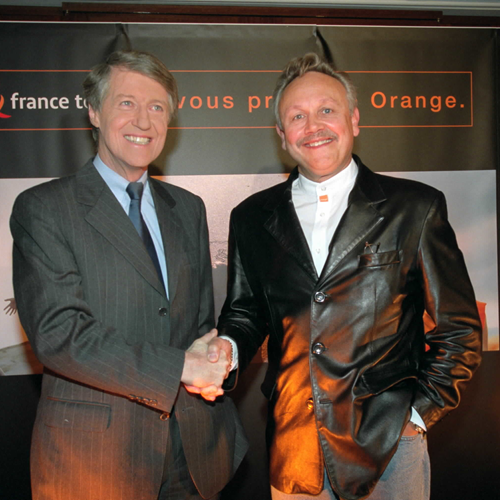
Permission to reconsider
Later accounts place Snook near Marbella, in southern Spain. A 2024 report again identified him among residents of the area. The setting is a change from the British investor circuit, though travel had already redirected his life long before Orange existed.
People who worked with him have continued to revisit the earlier years. Brian Millar, who worked with Orange, recalled Snook’s belief that a brand followed from good products and clear communication. Seen that way, the memorable square was a consequence of many promises being made and kept. It gave people something simple to recognise while a much larger organisation did the complicated work behind it.
Snook’s original objection to the name remains the detail that gives the career its shape. He could be persuaded. Then he could persuade others. Orange required both abilities: enough doubt to examine an unfamiliar idea, followed by enough commitment to make it work in tariffs, financing and service. The leather jacket made an impression. The willingness to reconsider made room for the business.
Follow the Orange thread
More about the people, the company and the ideas behind the story.