Hanif Bayat spent years learning to put numbers on complicated things. At the University of Toronto, he studied theoretical chemical physics. At BMO and RBC, he modelled financial products, including equity derivatives. Then he left banking and started a website to help people navigate real estate. The sequence looks tidy on a biography. The business took a less orderly route.
WOWA began in 2018 as a marketplace for real estate agents. It became a personal finance encyclopedia, with more than 1,000 calculators, guides and tools. Between those two descriptions sits the interesting part of Bayat’s working life: learning that an answer people find useful can be more valuable than the service you originally meant to sell them.
A derivatives model belongs to a world of specialists. A mortgage calculator has to make sense to someone with a salary, a down payment and a suspicion that the arithmetic has turned against them. Bayat’s career connects those worlds. The mathematical training remains. The audience has changed, and with it the standard by which an explanation earns its keep.
A doctorate, then a different desk
Bayat completed his doctorate in 2011. The degree’s formal subject, theoretical chemical physics, practically requires an extra breath to pronounce. It also points to the kind of work he had learned to do: use quantitative methods to understand difficult systems. His education had already crossed disciplinary borders. He had studied physics before moving into chemistry.
The university years included a turn toward the machinery of education itself. In 2010 and 2011, he served on the University of Toronto’s Graduate Education Council and a tribunal panel. Those are quieter entries than a company launch, but they give his career another dimension. Alongside analytical problems were questions of rules, decisions and how an institution governs itself.
Banking offered a different setting for the same technical equipment. Bayat spent nearly six years as a quantitative analyst at BMO and RBC. Equity derivatives were among the products he analysed and modelled. The work required mathematical precision inside institutions whose customers, elsewhere in the building, were making rather more ordinary decisions about borrowing and saving.
That distance matters. Knowing how a financial product can be modelled does not automatically make its consumer version easy to understand. A person can be comfortable with an equation and still want a clear explanation of a loan. Finance has many rooms; expertise in one does not come with a master key to every other door.
When Bayat launched WOWA in Toronto in 2018, he carried that technical background into a market where comparison was the practical problem. People needed to understand their options. They also needed information presented in a form that did not require them to become financial professionals first. The customer’s question was smaller than a bank’s model, and often much more consequential to the customer.
- 2011University of Toronto
Doctorate completed - After 2011BMO + RBC
Quantitative banking - 2018WOWA
Founder and CEO
The business hiding inside the business
The original WOWA proposition was about choosing a real estate agent. Profiles could show experience, fees, transaction information and reviews. Some included video interviews. The ambition was to make an often personal choice easier to inspect: put competing services beside one another and give the buyer or seller something more substantial than a recommendation passed across a kitchen table.
By January 2020, WOWA was expanding that marketplace from Ontario into British Columbia. Bayat was thinking about the awkwardness of hiring someone online. Professional credentials matter, but so does the person behind them. An agent relationship is likely to involve money, deadlines and negotiations. A profile needs to help people judge whether they can work together.
Calculators belonged to the same effort to make the process legible. WOWA’s mortgage affordability tool responded to confusion about how lenders assessed buyers, especially after the mortgage stress test. Different estimates could leave a prospective borrower trying to reconcile several answers to what seemed like one question. Bringing the models together gave that uncertainty somewhere useful to go.
The company’s later account dates its shift toward financial content to 2020. By 2022, its identity had widened into a personal finance encyclopedia. Real estate remained part of the subject, but loans, taxes, savings and investments joined it. A visitor could arrive with a housing question and find a broader set of calculations waiting nearby.
In August 2023, WOWA announced that it had passed one million monthly page views. The announcement also counted more than 1,000 guides, tools and calculators. Page views measure attention rather than a head count; one person can generate several. Even with that distinction, the milestone marks how far the company had moved from its first description.
The change gives Bayat’s story its shape. The business grew through information that people could use before they hired anyone. A calculation sits early in a decision, when someone is still trying to discover what is possible. An agent marketplace sits later. WOWA found room in that earlier moment, where a useful answer can determine whether the next step happens at all.
A library with somebody paying the bills
An encyclopedia sounds admirably uncommercial until somebody has to maintain it. WOWA makes its website free to use and earns money through financial businesses. Its clients include lenders and fintech companies. Depending on the arrangement, revenue comes from leads, clicks or monthly fees. The person using a calculator and the business paying the company have different reasons to be there.
That makes clarity part of the commercial structure. Consumers need information they can understand and return to. A lender wants contact with someone considering a financial product. The platform brings those interests together. The arrangement also makes the quality of the information central: the reader has to be able to distinguish an explanation from an invitation to buy.
Bayat’s stated mission is to improve transparency and give people resources for informed decisions. WOWA’s tagline, “Simply Know Your Options,” is suitably modest. It leaves the decision with the reader. A comparison can show the consequences of a choice; the household still has to decide which consequences it can live with.
The work is shared. WOWA’s team includes financial analysts, writers and developers. Its advisers bring experience in investment and technology. That range is appropriate for a product which has to get a number right, explain what it means and keep the interface usable. A correct answer buried in a confusing page has very limited social ambitions.
The platform’s scope also changes how Bayat appears in public. The former bank analyst now writes about banking and personal finance for The Globe and Mail. He appears in interviews about housing and the economy. The calculations have become part of a wider conversation, with an audience that wants to understand the forces behind the figures on its own screens.
“Our success stems from addressing our users’ needs.”
Hanif Bayat, August 2023
Housing, with the variables left in
Bayat’s housing argument gives considerable weight to monetary policy and speculative demand. In public discussion, he separates demand for a home to live in from demand for property as an investment. He also considers how quickly construction can respond. These are his analytical positions, and he presents them as an explanation of how affordability problems developed.
In a BNN Bloomberg discussion shared through his LinkedIn account, he used Texas as a comparison for Canadian markets. His point was that population growth interacts with supply: when building can respond quickly, additional demand need not produce the same lasting affordability pressure. Zoning restrictions and administrative delays feature prominently in his account of what slows that response.
The distinction is useful because it asks a more precise question than whether a place has grown. How does the place respond to growth? A queue at the door looks different when the door can be widened. Housing is less obliging than a doorway, of course. Land, financing, permissions and construction time all enter the calculation.
For Bayat, the monetary side deserves equal attention. Cheaper money can encourage investment in assets, while households trying to enter a market face the resulting prices. His argument connects the decisions made by financial institutions and policymakers with the numbers a first-time buyer encounters. The subject is large; the consequences arrive as a monthly payment.
It is possible to disagree with an explanation and still appreciate the discipline of making it explicit. Bayat puts the variables where readers can see them. His public role extends the logic of the calculator: identify the inputs, examine the relationship, then argue about whether the model describes the world adequately. A chart should invite a better question, rather than end the conversation.
The next calculation
The company’s research has also acquired a more institutional audience. In the publicly available sample of WOWA Data Labs’ Q3 2025 Canadian Lenders Report, Bayat describes an idea that began as social media posts and developed into quarterly analysis. Interest from the banking sector helped turn the charts into a larger research product.
His introductory letter explains a review process with several hands involved. A team member collects data, a peer reviews it, and a third reviewer checks selected data points and visuals. He thanks Ali Nassimi, Jimmy Nguyen, Sanika Purohit and Kirill Sukhikh. The attention to that process is revealing. Publishing a number involves work that is largely invisible when the final chart appears.
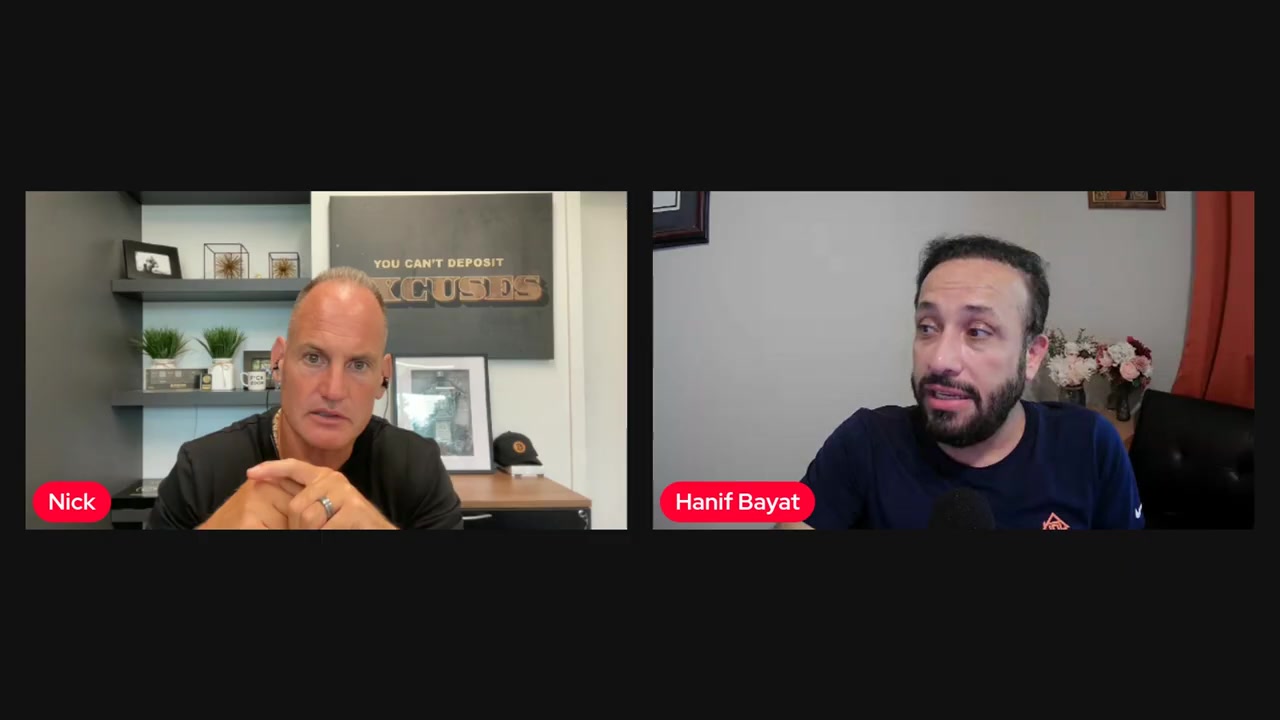
In July 2026, Bayat spoke with Dave Chilton on The Wealthy Barber Podcast about the next pressure facing information businesses: AI. The conversation covered WOWA’s origins, housing affordability and a move toward proprietary data. A company built around helping people find answers must now consider how those people will find information through changing interfaces.
That development puts a fresh question beside the earlier pivot. Which information will remain worth seeking directly? The institutional research gives WOWA another way to be useful, with customers who want data for their own analysis. The audience and the product may change again. Bayat has already experienced how much a business can learn from the work it thought was secondary.
There is a personal detail that fits this wider view of his career. Bayat says he reads history every day. His interests reach beyond finance, and his professional path has crossed several disciplines. The habit suggests an appetite for context, for seeing how one set of decisions creates the conditions for the next.
His own sequence now includes a doctorate, banking desks, an agent marketplace and a financial encyclopedia. Each stage produced a different question. The common thread is a willingness to work through the numbers and put the answer into a usable form. For someone deciding what an ordinary life will cost, that is a practical ambition. The paperwork will still be there. At least the arithmetic can have company.
Follow the calculations
Explore Bayat’s writing, conversations and the tools his company publishes.