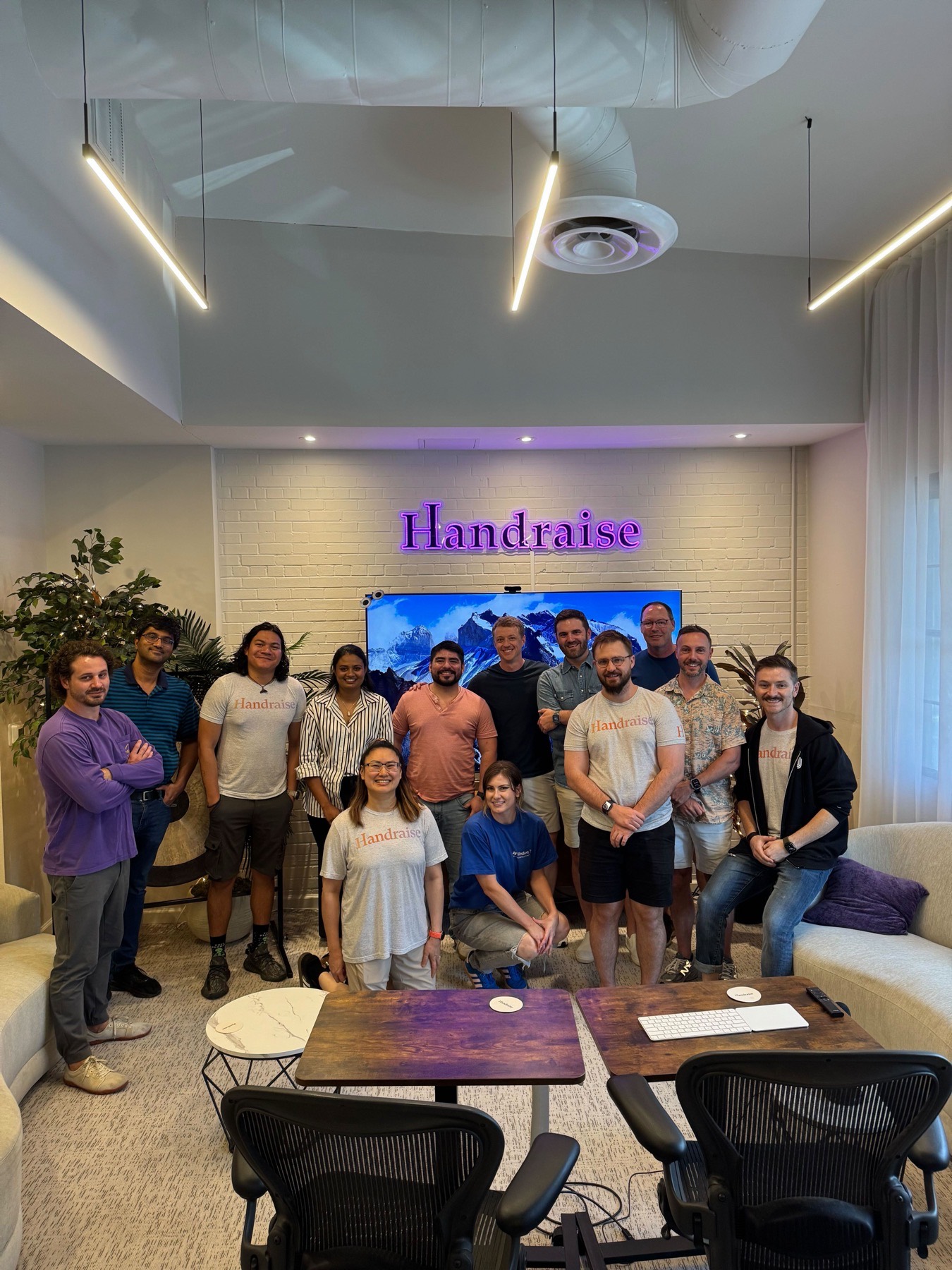
In the beginning, Handraise had a clean little proposition. A company earns a flattering news story. The story is credible, but credibility is not distribution. Handraise would use artificial intelligence to find the right audience and turn the article into a targeted ad. This was 2023, and founder Matt Allison knew the awkward gap well. He had already co-founded TrendKite, the Austin PR analytics company that Cision bought for $225 million. PR departments could measure a clip. They still struggled to make the clip travel.
The new company raised $6.4 million in seed funding led by Silverton Partners. Floodgate, Bill Wood Ventures, Firebrand Ventures, Aperiam Ventures, Active Capital, Sputnik ATX VC and Capital Factory joined in. Allison described it as getting the band back together: the initial seven-person crew included several people from TrendKite. The cost of the experiment, at least in disclosed outside capital, was substantial enough to build an enterprise product and small enough that every change of thesis still mattered.
Then the article acquired a second audience
The first audience was human: customers, investors, reporters, employees. The second was a machine asked to explain the company. ChatGPT, Claude, Gemini and Perplexity did not merely display links. They absorbed claims, compared sources and compressed the public record into an answer. Suddenly, the interesting life of a press story began after the click.
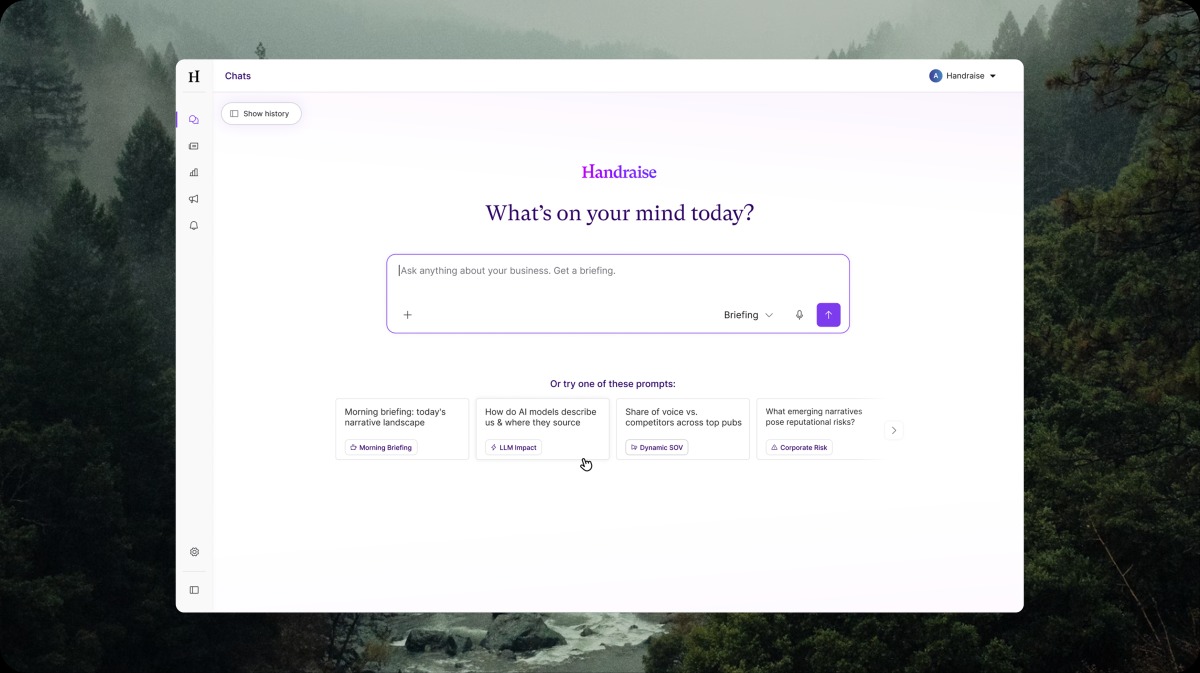
Handraise changed with that realization. Its current product is not chiefly an ad tool. It is an AI brand perception platform for communications teams. It watches earned, owned and social media; groups related coverage into what the company calls living narrative clusters; measures whether the brand is central or incidental; examines source authority and citations; and runs repeated analyses across major models. The aim is to show not only where a brand appeared, but what people and machines are coming to believe about it.
This distinction sounds fussy until you imagine a company with excellent visibility and an awful reputation. A brand can dominate an answer because it is frequently associated with a recall, a lawsuit or an obsolete product. The mention is high. The sentiment may even be clumsily marked “neutral.” The positioning is still poisonous. Handraise's wager is that reputation lives in the recurring interpretation, not the appearance count.
The first metric to fail was the easy one
Media software has long rewarded the countable: mentions, reach, share of voice, a red-green sentiment score. Handraise has not abandoned numbers. It argues that the easy numbers become misleading when the unit of analysis is wrong. A fixed set of prompts can produce a wonderfully precise visibility score, but change the prompts and the score may move. The company says it typically runs about 30 model queries per narrative cluster before treating a signal as stable. It also compares answers grounded in current web retrieval with baseline, no-retrieval behavior.
A single answer is an anecdote. Handraise repeats the test to look for a pattern that survives different questions, models and retrieval conditions.
What changed Allison's mind was not a failed ad campaign revealed in public. It was a change in the environment. His own account is that communications teams always influenced organizational direction while lacking enough intelligence to guide the work. Generative AI made that old deficiency newly visible. Now another class of stakeholder was reading everything, answering instantly and preserving yesterday's bad framing with unnerving confidence.
What the buyer actually gets
Handraise sells B2B enterprise software to communications, corporate-affairs, reputation and marketing teams. Its site sends buyers to a briefing rather than a self-serve checkout; list pricing is not published. The company publicly features customer-story videos involving Walgreens, Hershey, AMD, Colossal and Adobe. One anonymized Fortune 100 communications director says the platform shows both how AI perceives the brand and which narratives and sources shape that perception. A separate public testimonial from Going praises dynamic share of voice and gap analysis over the old “total mentions over time” view.
The platform spans media monitoring, brand-centric sentiment, competitive intelligence, risk detection, campaign measurement, executive visibility, board-ready reporting and daily briefings. Herald is the conversational layer. A communications leader can ask what changed overnight, why a competitor owns a theme, or which sources are driving a stubborn AI claim. Handraise says the answer is assembled from intelligence already structured around the customer's business, not improvised from a fresh web search.
Those four verbs are the product at its most useful. They turn a sprawling map of stories and citations into a communications decision. The point is not to “control” a language model like a remote-control car. It is to improve the evidence that journalists, readers and retrieval systems encounter - then test whether the interpretation changes.
The clever part is also the fragile part
Handraise sits between established media-intelligence suites such as Cision, Meltwater, Muck Rack and Signal AI, and a newer crop of AI visibility trackers. The old suites are broad: databases, outreach, social listening, monitoring and distribution. The newer products often begin with lists of prompts. Handraise's claimed difference is that it begins with the narrative and follows it through coverage, model interpretation and citation behavior.
| Approach | First question | Useful when |
|---|---|---|
| Traditional monitoring | Where were we mentioned? | You need clips, reach, alerts and reporting. |
| Prompt tracking | Did we appear in this answer? | You need a repeatable snapshot of selected AI queries. |
| Handraise | What story is becoming durable? | You need to connect media narratives, citations and AI interpretation. |
The boundary matters. This is an enterprise instrument, not a magic eraser for an unfavorable answer. It depends on enough public evidence to reveal a pattern; a tiny company with little coverage may have more noise than narrative. It will not replace a journalist database if the immediate job is finding ten reporters by Friday. It is also a poor fit for a team that wants a cheap mention alert and has no staff or authority to act on what the analysis recommends. Measurement helps only when the organization can publish, brief, correct and earn better evidence.
Stop treating every mention as equal. Group coverage by the claim it reinforces. Separate visibility from favorability. Test the same underlying question with varied wording. Record which sources recur. Then choose one verb - amplify, clarify, counter or create - and assign an owner and a deadline.
That method does not require Handraise. Doing it continuously, across thousands of stories and several unpredictable models, is what the software is for. The company’s expertise comes from fifteen years spent close to enterprise communications technology: first learning to quantify earned media at TrendKite, then discovering that a measurement system built around articles was too small for a world built around answers.
There is an appealing irony here. Handraise began by trying to make a good story travel farther. Now it is concerned with the stranger possibility that a story can travel too far - into a model, out through a thousand differently worded questions, and back into the world as common knowledge. The hand being raised belongs to the communications leader asking the question everyone else skipped: what, exactly, did the machines learn?