Before Hafiz Ahmad Ashfaq was a co-founder, he was a teacher looking for a different working life. He left teaching to build an online business, sought out a mentor, and learned to make automated webinar funnels. The ambition was fairly human: earn a living, have more room to move, and travel. The occupation he chose to get there sounds considerably less romantic. It involves the sequence of things that happens after someone clicks an advertisement.
A click is a small act with a large entourage. There may be a registration page, a presentation, an email, a booking form, and eventually a conversation about buying something. Every step gives the visitor an opportunity to leave. Ashfaq made a career out of arranging those steps. Qadeer Wagriya, his friend and business partner, concentrated on getting the right people to the beginning of them.
The partnership became Madsgency. Today, Ashfaq is its co-founder and CEO, with San Francisco listed as his professional base. The company describes itself as a venture builder focused on the United States. That is a substantial change in the work being offered: an agency built around marketing and development now proposes to turn departments into independent businesses. The two founders still sit at the center of the story.
A teacher, a mentor, and a second attempt
Ashfaq came from a middle-class Pakistani family. His early family life included sharing one room with his parents and siblings. The later freedom to travel was part of what he wanted from working online. There is a practical scale to that ambition. More space and more choice are understandable rewards, even to someone who has never heard the phrase “evergreen funnel.”
The early business took him into affiliate marketing for information products. An affiliate sells someone else’s product; a vendor owns the offer. Ashfaq and Wagriya made that transition. It put them closer to the questions behind a purchase: what was being promised, how it was explained, and whether the explanation gave a stranger enough confidence to act.
Gavin Stephenson was a mentor in Ashfaq’s development as a marketer. Ashfaq created a product, then worked on another launch with his coach and Wagriya. The working arrangement joined product presentation with paid traffic. It also gave the partnership a useful division of labor. One person could concentrate on the route through the offer while the other concentrated on who entered it.
The administrative vocabulary became part of daily work: optimization, automation, tracking. None is a particularly charming word to put on a postcard. Together, however, they describe a business that can reach customers without requiring its owner to repeat every introduction personally. For a former teacher seeking a more flexible working life, the attraction is easy to understand.
Madsgency partnership begins
Tube Framework training launch
Affiliate World Asia speaker
Two specialties, one customer journey
By September 2020, Ashfaq and Wagriya were marking the fifth anniversary of their partnership with the launch of the Tube Framework Elite Program. Ashfaq handled evergreen funnel creation, optimization, and automation. Wagriya worked on paid traffic and YouTube ad optimization. Their specialties were adjacent enough to cooperate and different enough to need each other.
The program, developed in collaboration with marketer Douglas James, combined learning YouTube advertising with learning to offer advertising and account management as a service. Its intended participants included entrepreneurs, freelancers, and coaches. Students were being invited to learn a trade and a way of selling that trade. The lesson continued beyond the point at which an advertisement went live.
Ashfaq’s stated aim was to “keep creating, optimizing and scaling evergreen funnels for YouTubers and coaches.” The recurring verbs tell you something about the work. Creation is only the beginning. A funnel is supposed to be adjusted as people move through it, with its performance examined at each stage. “Evergreen” describes the intention to keep the sequence running over time.
Teaching the process added another layer to the partnership. Client work required the founders to solve a particular problem. Training required them to explain how they approached it. Someone learning the method would need to understand both the advertising that introduced an offer and the structure that received the visitor. The curriculum joined those responsibilities in the same program.
The person on the other side of the screen
Ashfaq’s explanation of webinar selling places a person at its center. “People love person-to-person dealing,” he says. For a coach or consultant, a presentation offers a chance to explain a problem, demonstrate expertise, and let a prospective customer assess the person offering help. The sale depends partly on whether that encounter earns trust.
This is a recognizable extension of teaching. A presenter needs to make an idea understandable before asking the audience to do something with it. In a commercial webinar, the next action may be a purchase or a call. The format changes the setting, but it preserves the problem of holding someone’s attention long enough for an explanation to land.
The customer group matters here. Ashfaq’s public professional profile emphasizes business coaches, consultants, and small-business owners. These are businesses in which the person making the promise can be closely involved in delivering it. A prospective client may want to hear how that person thinks before agreeing to work together.
There is a modest irony in using automation to arrange something so personal. The emails and registration steps can repeat; the audience still needs a reason to listen. Ashfaq’s account of the webinar puts the human encounter inside that machinery. The technology gets someone to a presentation. What they make of the speaker remains their own decision.
“People love person-to-person dealing.”
Hafiz Ahmad Ashfaq
The glamorous part has tracking pixels
Madsgency’s recruitment language offers a close view of the work underneath the sales pitch. A YouTube advertising role called for knowledge of registration funnels, webinar funnels, and applications for higher-priced offers. It also required conversion tracking, audience research, campaign structure, and the ability to troubleshoot tracking pixels before paid traffic began.
Those requirements are worth lingering over. An advertisement may be the thing the public sees, but a campaign also depends on whether the business can tell what happened afterward. If a visitor registers, books a call, or buys, the team needs a way to connect that action to the campaign. Otherwise, the next decision becomes an expensive exercise in optimism.
The same vacancy named tools for analytics, reporting, landing pages, and email marketing. It asked for people who understood how to optimize acquisition costs and make decisions from data. This was the infrastructure supporting the founders’ specialties: a group of practical skills that has to operate together for the customer journey to be measurable.
Ashfaq’s own public advertising offer describes scripting, editing, launching, and managing ads alongside funnel installation and reporting. It uses the names MadsTrack, Golden Creative, and Feedback Loop for parts of the process. The names are memorable; the underlying activities are concrete. Creative production, tracking, and campaign adjustments all appear in the same service.
Back in class, with a different syllabus
In 2023, Madsgency’s training activity also appeared as the Elite Digital Marketing Academy, aimed at developing Pakistani talent through practical advertising skills. Its emphasis included Google Search and YouTube ads, with the stated goal of helping participants find work locally and internationally. Teaching had returned to the business, this time organized around the work the agency sold.
The academy’s published program includes YouTube video advertising, Google Search, display advertising, advanced tracking, and recorded material on funnels, prospecting, and sales. Its coaching structure lists live Zoom classes, recordings, and group support. That combination puts technical instruction next to the commercial task of finding and serving a customer.
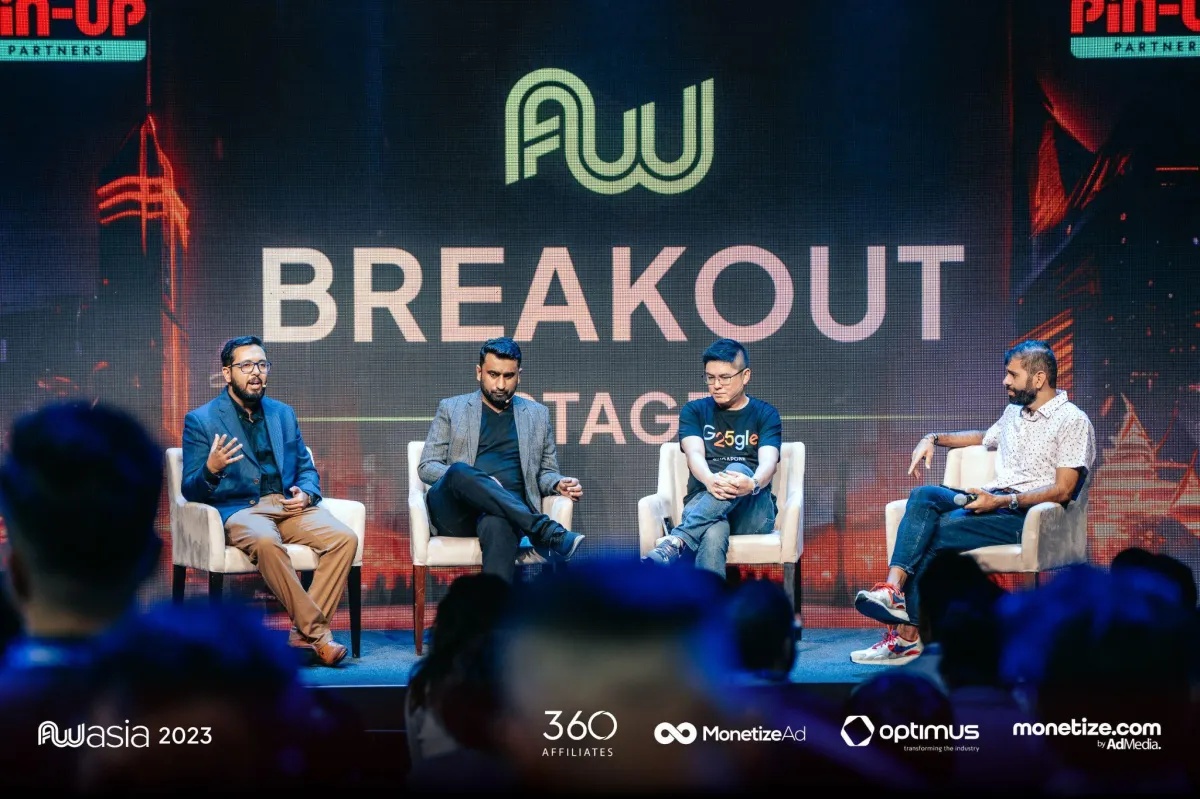
Ashfaq was also a listed speaker at Affiliate World Asia 2023. A separate company photograph shows him speaking from a breakout-stage panel, seated alongside other participants. The setting suits the career he had built: specialists discussing the mechanics of online marketing with an audience that works in the same trade.
Between the course, the academy, and the conference appearance, explanation became a recurring part of his professional life. There is a pleasing circularity to it. The former teacher went into business and then found several ways to make teaching part of the business. The subject had changed; the need to communicate a method had remained.
When a department becomes a business
Madsgency’s current description extends the founders’ ambitions beyond advertising services. It says the company is transforming departments into independent ventures, combining skilled professionals with operational support for entrepreneurs. Its name retains the earlier proposition: Marketing And Development Services Agency. The acronym has kept a record of the work that came first.
The company lists offices in the United States, the United Kingdom, the UAE, and Pakistan while describing its market focus as American. It also presents a group of venture founders alongside Ashfaq and Wagriya. The stated plan gives operating teams a larger role in what the company builds. Design, development, and other service capabilities become the starting material for separate businesses.
For Ashfaq, that creates a new set of questions around an old concern. A funnel connects attention to an offer. A venture needs the people and routines to deliver what was offered, repeatedly, for paying customers. Turning a department into a business asks whether those working arrangements can carry responsibilities of their own.
His career has moved through teaching, online product sales, agency work, training, and now the leadership of a venture builder. Wagriya remains the partner beside him. The next chapter follows naturally from the work after the click: once a customer arrives, someone has to build a business capable of keeping the promise.