Silk has had a remarkably successful career as something expensive to look at. Dr. Gregory Altman would like it to take on more work. A handbag, a stretch of performance fabric, the finish on a piece of leather: he sees places where the protein inside a silkworm’s cocoon might earn its keep without ever becoming a shimmering thread. The proposition sounds rather grand for an insect. Altman has given it much of his working life.
He is the co-founder and CEO of Evolved By Nature, the Massachusetts company he started with Dr. Rebecca Lacouture in 2013. Its Activated Silk technology turns natural silk protein into ingredients that other manufacturers can use. The consumer might never know his name, or notice the silk. That invisibility is part of the attraction. Altman is trying to change what an everyday object contains while allowing it to remain an everyday object.
One more season
His route into this work included an unusually candid reason for pursuing further education. Altman studied chemistry at Tufts and played offensive tackle for the Jumbos. After earning his undergraduate degree in 1997, he enrolled in engineering while he still had a season of football eligibility. His account of the decision was refreshingly free of retrospective career planning.
“Football caused me to go to graduate school, nothing else.”
Gregory Altman, recalling his Tufts years
A course taught by David Kaplan gave that extra year an unexpected direction. Kaplan asked students to write a mock grant proposal. Altman’s classroom work became the beginning of a company, Tissue Regeneration, founded in 1998 and later called Serica Technologies. He completed his doctorate in 2002. An additional season had become a much longer commitment to research.
Altman credited football coach Bill Samko with lessons he carried into business: effort and care were things he could control, even when outcomes were beyond him. The connection endured. Tufts later listed him on its Athletics Board of Advisors. There is something pleasingly consistent about an executive who left the field for a laboratory and kept a place for the field in his life.
The partnership that outlasted the class
Lacouture met Altman when she was a Tufts freshman and he was a graduate student serving as a teaching assistant in an introductory biotechnology engineering class. His research caught her attention. She asked to join the project team. That request began a collaboration measured in decades, an unusually long apprenticeship for two people who would eventually have to learn entirely new industries together.
Their backgrounds gave them different ways into the same problem. Lacouture brought mechanical engineering and, later, doctoral training in biomedical engineering. Altman approached the work from chemistry. She has credited him with the idea of turning silk fiber into a liquid. He has credited her with developing the manufacturing processes that made the chemistry commercially workable. A promising substance still needs someone to work out how to make it again tomorrow.
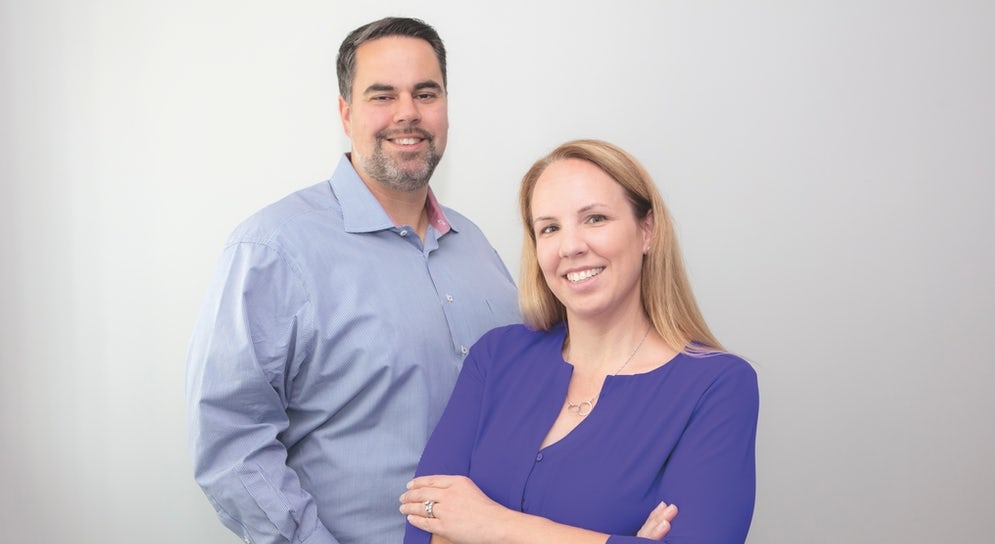
At Evolved By Nature, that division of labor became a division of responsibility. Altman took strategy, marketing and innovation; Lacouture, as president and chief operating officer, led development, engineering and operations. It is a useful pairing for a business that has to speak both the language of molecular configurations and the language of purchasing departments. Neither audience is much impressed by a good answer to somebody else’s question.
Giving luck more chances
Ask a founder about luck and the reply can become a little ceremonial. Altman has offered a more mechanical account. He and Lacouture worked to increase the number of opportunities they had to succeed or fail. Experiments that failed were useful because they opened the way to another hypothesis. Persistence, in this telling, involves movement: run the test, learn something, change what needs changing.
He also acknowledged a less reproducible event: meeting Dan Kraft by chance. The encounter led to support from the Kraft family, which Altman described as instrumental in getting the company started. His account leaves room for both hard work and fortunate introductions. A scientist can improve the odds of an experiment. Arranging the right conversation is a less exact discipline.
The same openness appears in his earlier thinking about management. He has described the value of a “learning organization,” one willing to entertain different ideas at the team, management and strategy levels. That principle fits the shape of his career. The material remained silk; the list of questions, partners and customers kept changing. Staying curious about those changes became part of running the business.
The part of silk you cannot see
For Altman, the cocoon is interesting because a single protein can contain regions that interact differently with water and arrange themselves into different structures. Those properties help explain silk’s familiar combination of strength and flexibility. They also suggest uses beyond weaving. The scientific challenge is to work with the protein’s possibilities in forms that can be useful on other surfaces.
That is the idea behind Activated Silk. The company describes a library of molecules derived from natural silk protein, rather than one ingredient expected to perform every conceivable task. Different applications ask for different behavior. A material coating has to function on the surface where it is applied, in the conditions in which someone will actually use it.
- 01CocoonNatural silk feedstock
- 02ProteinProcessed into useful forms
- 03FinishApplied to another material
Silk can do a job without becoming the fabric.
This helps explain why Altman has stayed with one substance for so long. Each application becomes another set of experiments, rather than a reason to abandon the original material. The ambition is expansive, but the work is particular. A finish that behaves well on one surface has earned a result there. The next surface brings its own demands.
A handbag still has to be a handbag
The appeal to fashion is easy to grasp. Leather is commonly given finishing treatments to control its appearance and performance. Evolved By Nature wants silk-based chemistry to replace some of the fossil fuel-derived inputs used in that process. Anya Hindmarch’s Return to Nature collection offered an early public example, bringing the company’s work into a product people could carry rather than a demonstration they could merely admire.
The transition required compromises. Altman acknowledged that the early Hindmarch collaboration did not reproduce every property of a heavily treated conventional finish. That admission matters. A new material arrives in a world full of existing expectations, from the way a bag feels to the marks it picks up. The buying decision includes all of them, however fine the underlying idea.
Fashion also gave the scientists a different kind of collaborator. Altman has discussed projects with designers including Jonathan Cohen, Patrick McDowell and Grace Ling. Designers ask chemistry to make room for color, texture and expression. A laboratory can establish what a material does; a designer can discover whether anyone wants to wear the result. Both are consequential tests.
The unglamorous tests remain essential. Leather finishes are assessed for their ability to survive repeated flexing and rubbing, among other demands. A promise about a better ingredient has to coexist with the ordinary expectation that a purchase will hold up. Sustainability may begin the conversation. A scuff can have the final word.
The factory is part of the idea
Chanel invested in the business in 2019. That same year, Altman and Lacouture joined the BoF 500. Their work had acquired a place in fashion’s conversations about its future. For two researchers working on a protein, it was a notable change of company. The next problem involved quantities rather than guest lists.
In June 2022, Evolved By Nature announced a $120 million Series C led by Teachers’ Venture Growth and Senator Investment Group. The financing accompanied a manufacturing expansion in Walpole, Massachusetts, where a facility had opened that May. The announcement reported annual production of 150 metric tons and set a future capacity goal of 900. The gap between those figures describes the scale of the undertaking; the larger number was an announced target.
Metric tons of Activated Silk per year. The capacity goal was forward-looking when announced.
Manufacturing has been a recurring concern for Altman. Long before Evolved By Nature’s factory expansion, he emphasized the value of keeping research, engineering and manufacturing connected. It is an operational preference with a practical consequence: the people discovering what a material can do remain close to the people finding out how reliably it can be made.
Six tanneries, one new route
In November 2024, the company announced an exclusive chemistry partnership with Authentic Thai Leather, a coalition of six Bangkok-based tanneries. The arrangement put its Activated Silk L1 system into an existing production network. It was a different route to adoption from a single designer’s collection: work with the businesses that supply the material in the first place.
The system includes a topcoat, basecoat and auxiliaries. The company describes it as eliminating PFAS and added cross-linkers while reducing fossil fuel-derived inputs such as polyurethane. That distinction is useful. Reducing a particular input is a specific manufacturing change, and it should be understood on its own terms. An entire product has many ingredients and many stages in its making.
Another route opened in April 2025 with a commercial supply agreement with kdc/one, whose work includes formulation and manufacturing for consumer brands. That month, Evolved By Nature also received the Rising Star Award at in-cosmetics Global, which recognizes first-year exhibitors. After decades with silk, the team could still arrive somewhere as the newcomer.
Altman’s career has accumulated these changes of setting: the football field, the classroom, the research team, the factory and the tannery. Each brought people with expertise he needed, from Kaplan and Lacouture to manufacturers asked to put a new ingredient to work. The continuity lies in his willingness to keep examining a familiar material. Silk already had an excellent reputation. He keeps asking what else it can do.
Follow the thread
- COMPANYEvolved By Nature ↗
- PROFILEGreg Altman on LinkedIn ↗
- INTERVIEWThe 2018 conversation about experiments and chance ↗
- INTERVIEWThe demands of a leather finish ↗
- VIDEO · 2020Watch Altman discuss textiles and chemistry ↗
- ANNOUNCEMENT · 2024The Authentic Thai Leather partnership ↗
- ANNOUNCEMENT · 2025The kdc/one supply agreement ↗