Gradual Runs The Community Behind OpenAI And Perplexity
The startup collapsed events, courses, and forums into one branded platform - and quietly won over the AI labs everyone else is chasing. Founder Jerry Li built it out of a side-project mailing list for engineers.
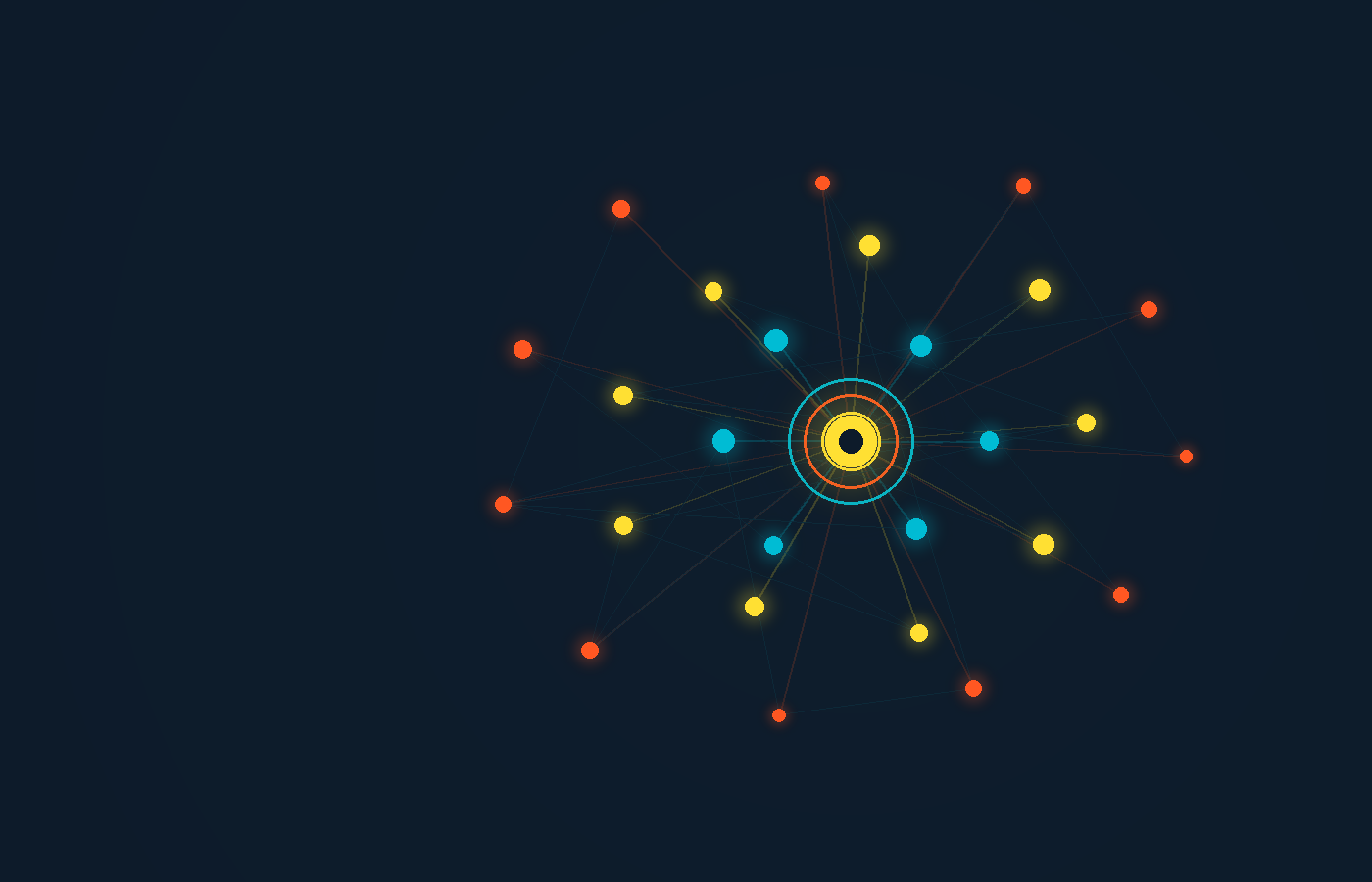
Somewhere in the settings panel of a company you have definitely heard of, there is a login you have almost certainly never seen. It runs the member events. It hosts the courses. It carries the forum where people actually talk. The company's logo is on all of it, so nobody thinks about the vendor underneath. The vendor is Gradual, and the list of companies quietly running on it - OpenAI, Perplexity, Scale AI, Fiverr, Siemens - is the most interesting thing about a startup that would rather you not notice it at all.
For most of the last decade, the smart money in software went the other direction. The advice was to unbundle. Buy the best course tool. Buy the best events tool. Buy a separate forum, a separate CRM, a separate email platform, and glue them together with integrations and duct tape. Every seam was a product opportunity for somebody. Gradual is a bet that the seams themselves became the problem.
The originIt started as a favor
Gradual was not born in a pitch deck. In 2016, Jerry Li - who had spent years as an engineering leader, including a stint running global payment infrastructure at Groupon and earlier work as a software development manager at Amazon - started something small on the side. He called it ELC, the Engineering Leadership Community. It was a curated group for people doing the specific, lonely job of managing other engineers. There was no business model. It was closer to a standing invitation than a company.
It grew. By the time it mattered, ELC had passed 10,000 members. And running a community that size, Li ran into the same wall every community operator hits: the tools do not fit together. Registration lives in one place, the talk lives in a Slack nobody opens, the recording lives in a third place, and the members you worked so hard to gather leak out through the cracks between apps.
When the pandemic pushed everything virtual in 2020, Li and his team built their own internal tooling to run ELC's events and keep the community in one place. That tooling was the seed. In 2021, it became a company. The unusual part is the order of operations: the product-market fit already existed, sitting in an inbox of 10,000 people who trusted the person building the software.
The pitchSubtraction, not features
Ask what Gradual does and the honest answer is a list: livestreamed events that scale to 100,000 concurrent viewers, a content hub for blogs and video and podcasts, courses and roundtables, forums, member directories, one-to-one matching, and enough branding control that the whole thing wears your name instead of theirs. Hybrid events get a mobile app, check-in kiosks, and badge printing. It is, on paper, a long feature list.
But the feature list is not the pitch. The pitch is that this list used to be five separate subscriptions, five dashboards, and five invoices - and none of them talked to each other. Gradual's argument is that events, courses, and conversation were never really different products. Your members do not experience your stack as modules. They experience it as friction, and every extra tool is another place for someone to drop out.
Before · the patchwork
Events tool Course platform Forum / community app Member CRM Email + directoryAfter · one login
GradualThis is why the phrase "community-led growth" - which everyone loves and few can actually operate - keeps coming up around Gradual. The idea is that your best distribution channel is a community you own rather than rent from a social network. The catch nobody advertises is operational. Owning a community means owning the plumbing, and the plumbing is miserable when it is stitched together from five vendors. Gradual sells the plumbing, and tries to make it invisible.
The customersWhy the AI labs picked it
Look at who runs on Gradual and a pattern shows up. OpenAI. Perplexity. Scale AI. Cognition. The companies most obsessed with scale and intelligence chose the platform most obsessed with keeping things in one place. That is probably not an accident. When your product is intelligence, your community cannot feel like a bolted-on vendor screen. It has to feel like an extension of the thing people already trust.
The white-label detail is easy to skim past, but it is closer to the whole strategy than a feature. Gradual is built to disappear. There is no "powered by" undermining the brand, no third-party login screen breaking the spell. A company like Perplexity can run members, events, and content, and the member never has to know a startup with roughly ten employees is holding it all up in the background.
The competitionAgainst the specialists
Gradual does not compete head-on with any one rival so much as with a whole shelf of them. Glue Up is strong at association and event CRM. LearnWorlds and Thinkific are excellent, mature course platforms - if what you need is to build and sell online courses, they are hard to beat at that one job. That "one job" framing is exactly the ground Gradual is contesting. Its contrarian read is that specialization was the trap: buy the best-in-class tool for each function and you hand your members a fractured experience made of five best-in-class parts.
Whether that read holds is the open question. Bundles win when the seams genuinely hurt and lose when a specialist is simply better at the thing you care about most. A team that only sells courses may never feel the pain Gradual solves. But a team trying to run events, education, and ongoing conversation for the same audience - and watching people leak between tools - is exactly who nods along to the pitch.
There is also a timing argument in Gradual's favor, and it has to do with who its customers are. The AI companies on its roster are building products that generate answers, not gathering places. Their communities are where users compare notes, report bugs, trade prompts, and decide whether to stay. For those companies, the community is not a marketing checkbox - it is a live feedback loop wired directly into the product. A fractured stack does not just annoy members there; it slows down the signal a fast-moving company depends on. Consolidation stops being a nice-to-have and starts looking like infrastructure.
The takeawayWhat you can steal
The most useful thing about Gradual is not the software. It is Li's sequence. He ran the community first - for years, in public, for free - and learned precisely where community operations break before he wrote a line of the product that fixes it. Most founders do this backwards: build the tool, then go looking for people to use it. Li had the people, the trust, and a detailed map of the pain long before he had a company. The software was the last, obvious step, not the first, risky one.
It is worth sitting with how little it took. Gradual raised roughly $2.27 million across two modest rounds, with Geek Ventures among its backers. There was no blitz-scaled sales team, no billboard campaign. The customer list grew because the founder already sat inside the network of people who run communities for a living, and because the product solved a problem those people felt every single week. That is a cheaper, slower, more durable way to build than most of what the last cycle celebrated.
Gradual is still small - a reported ten or so people, a couple of modest funding rounds, SOC 2 certification, and a customer page that punches far above its headcount. It may stay a quiet piece of infrastructure, or it may become the default operating system for how organizations run community. Either way, the bet is legible: the unbundling era gave us a lot of great tools and a lot of friction. Gradual is wagering that the rebundle is coming, and that it starts where trust is highest - inside your own community.
Good to knowQuestions people ask
What is Gradual?
Gradual is an all-in-one community platform that combines events, content, courses, forums, member directories, and 1:1 matching in a single white-labeled space, so organizations can run their community without stitching together multiple tools.
Who uses Gradual?
Gradual powers communities for companies including OpenAI, Perplexity, Scale AI, Fiverr, and Siemens, spanning both external customer communities and internal company communities.
Who founded Gradual?
Jerry Li, CEO and co-founder, started Gradual in 2021. He previously founded ELC (Engineering Leadership Community) and held engineering leadership roles at Groupon and Amazon.
How is it different from Glue Up, LearnWorlds, or Thinkific?
Those tools each specialize - Glue Up in association and event CRM, LearnWorlds and Thinkific in online courses. Gradual's pitch is consolidation: rather than integrating separate event, course, and community tools, it delivers them as one branded platform.
Can Gradual handle large events?
Yes. Gradual supports virtual and hybrid events from small roundtables to conferences of up to 100,000 concurrent viewers, with livestreaming, chat, polls, Q&A, multi-track schedules, and on-site check-in.