There is a revealing detail in the 2026 Globee Awards for Cybersecurity winners list. Under Cybersecurity Company of the Year, both Abnormal AI and KnowBe4 received Gold. Abnormal AI also received Best of Category. Two golds, one additional distinction. For a reader accustomed to an Olympic podium, this requires a small adjustment.
Globee uses numerical thresholds. An entry can qualify for a medal without being the only recipient of that medal in its category. The award describes a judgment about submitted work; the extra designation identifies the category’s highest final score. Those few words beside the company name tell you how to read the whole enterprise.
And it is an enterprise. Globee organizes business awards, collects entry fees, coordinates judging, publishes results, and sells optional trophies and other keepsakes. Its customers want an accomplishment to travel beyond the people who already know about it. The interesting business question is how far a medal can carry a story.
01 / A company’s work needs a shorter introduction
Consider Progress Software. On March 23, 2026, it announced two Silver Globee awards: one for Flowmon ADS in AI-Driven Threat Detection, another for Automate MFT in Secure File Transfer. Two fairly technical products now had an additional reason to appear in front of customers. The company published the recognition on its own awards page, tying each result to a named capability.
A week later, Iris Powered by Generali announced Gold awards for Top Cybersecurity Vendor of the Year and Top System Integrators of the Year. Iris said this was its fourth consecutive year earning Gold, bringing its four-year total to 27 Globees. Its announcement connected the recognition to the work of integrating identity protection into partners’ existing systems.
Neither announcement establishes that an award caused a sale. Both show what a company can do with one: attach a public occasion to work that would otherwise need a fresh introduction. For a communications team, that is a usable event. For a product team, it is a chance to explain the product again, this time with someone else’s judgment in the opening sentence.
A detailed accomplishment becomes something another person can repeat.
02 / From printed guides to AI entries
Globee dates its establishment to Silicon Valley in 2003. Its own history begins with industry research, printed guides, and technology and cybersecurity awards. That origin is useful context. The organization’s work has long involved gathering information about businesses and presenting selected achievements to an audience.
The catalog has changed. Its 2021 Women World Awards announcement listed eleven programs. The comparable 2022 announcement listed nine. Today the portfolio comprises ten: Achievement, Artificial Intelligence, Business, Cybersecurity, Excellence, Impact, Innovation, Leadership, Pioneers, and Technology. The Innovation program carries the Golden Bridge Awards name.
This is a broad recognition business with technology roots. A company can nominate a product; a department can put forward a project; an individual can present a particular accomplishment. The 2026 Excellence winners list includes IBM alongside smaller organizations. Cybersecurity entries include businesses and the Los Angeles County Registrar-Recorder/County Clerk. The audience extends well beyond founders collecting badges for a startup homepage.
San Madan appears in public announcements as Globee’s president, and the organization’s earlier Women World Awards releases identify Madan as that program’s co-founder. In July 2026, Globee invited AI professionals and other industry experts to apply to judge its Leadership awards. Even a program about leadership now explicitly recruits from AI. The category names offer a running inventory of what companies want recognition for.
03 / The entry fee has a calendar attached
There is no single price for entering Globee. The program, category, and deadline determine the fee. The 2026 Leadership entry kit makes the economics unusually easy to inspect. Standard individual categories cost $352 at the early-bird deadline and $440 at the final deadline. Company, team, product, and communications categories rise from $592 to $740.
Selected categories, not a universal price list. Published fees checked September 11, 2026.
Special categories cost more. Individual Lifetime Achievement reaches $1,200 at the last deadline; Original Research and Innovation Paper categories reach $2,400. For a standard company entry, submitting early saves $148. That calculation excludes the employee hours spent gathering evidence, obtaining approvals, and writing the nomination. Those hours belong in a sensible budget, even though they do not appear in the entry cart.
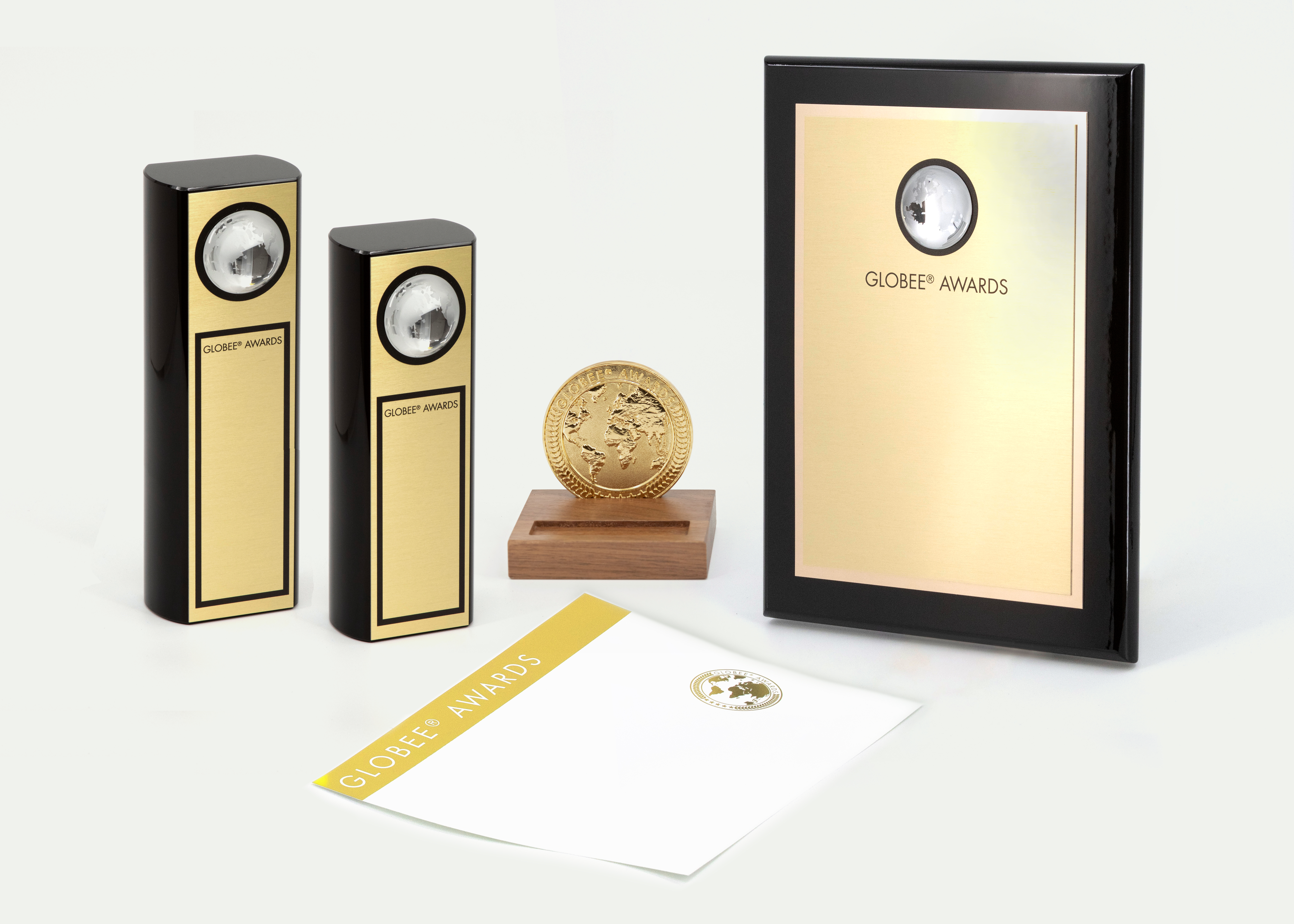
The physical object is a separate decision. Globee’s merchandise page lists Gold, Silver, and Bronze crystal trophies at $295 apiece, medallions at $120, and printed winner certificates at $60. These are listed unit prices. Winners do not have to buy merchandise to retain recognition.
Entry-funded recognition has established alternatives. The Stevie Awards’ International Business Awards also charges by category and applies a late fee. Globee’s fees alone therefore do not settle the competitive question. An entrant needs to compare category fit, the audience it wants to reach, the process it can explain to customers, and the total cost of participating.
04 / The people behind the decimal point
Globee says approved volunteer judges evaluate nominations, with valid scores averaged to determine the result. Gold begins at 8.50, Silver at 7.75, and Bronze at 7.00. A category’s highest score does not automatically qualify for Gold, and being the only entrant does not lift a submission over a threshold.
“Entries scoring below 7.00 receive no award.”
Globee Awards / published judging process
The volunteer side has its own requirements. Applicants must be working professionals, entrepreneurs, or business owners with verifiable backgrounds. Judging is unpaid and free to join if selected. Initial assignments can number up to ten; further assignments depend on review. At least 50 valid evaluations in one program, subject to audit, are required for verified judge participation recognition.
Judges must disclose conflicts and step aside from affected entries. Globee says it can exclude scores or reassign nominations when reviews reveal problems. Entrants receive anonymous numerical scores after results are finalized, but no written comments. That makes the process an evaluation with a score, rather than a consulting engagement that promises a diagnosis of everything to improve.
05 / The useful work happens before “submit”
The nomination format asks for a specific achievement, supported by an essay of up to 650 words or a video of up to five minutes. Evidence must be publicly shareable and accessible to judges. A prominent job title, a long biography, or a company’s general marketing copy is a weak substitute for explaining what happened.
A practical approach is to build a small case study first. Describe the starting problem. Name the action. Show the result and its time period. Then attach evidence that supports that exact claim. This is an editorial recommendation, but it follows the structure of the entry itself. A reader can copy the exercise without entering any competition.
The first thing to check is wonderfully unglamorous: whether the links open. Globee tells entrants to test them in a private or signed-out browser. An impressive result trapped behind a permission request is difficult for a judge to assess. A project whose essential evidence cannot be shared publicly may be poorly suited to this route.
A non-winning paid entry does not earn a refund simply for losing. The current policy permits one revised submission to another suitable Globee program within 12 months, with an equivalent entry-fee waiver. The work still has to qualify. Revision creates another opportunity for assessment, not a promise of a different verdict.
The sensible use of a win is equally specific: say which achievement, which category, which medal, and which year. Globee’s FAQ states that recognition is not a certification, license, or product endorsement. A buyer still has to examine the product. A marketer still needs an audience interested in the achievement.
There is a modest, useful proposition underneath all the gold. Make a piece of work legible to strangers. Give them enough evidence to judge it. If recognition follows, keep the accomplishment attached to the medal. The story travels better when someone can explain what was actually won.
Follow the work
Explore the programs, inspect an entry, or see how a winner tells its story.