Before Gino Rooney built software to help people find warehouse work, he did warehouse work himself. During high school and college, summer jobs took him through a staffing agency and onto the floor beside people managing two or three jobs. Finding an assignment, getting there and getting paid could demand an unreasonable amount of effort before the work itself had even begun. Years later, that experience would give his startup idea something a pitch deck cannot supply: a memory of being on the receiving end.
Rooney would become co-founder, CEO and CTO of Bluecrew, then co-founder and CEO of Classet. Both businesses deal with a deceptively ordinary question: how does a person who can do the job actually get the job? His career follows the awkward distance between those two things. Along the way come a Stanford classroom, a small tax form, a move to Chicago and a growing appreciation for work that software ought to leave to people.
A summer job follows him to Stanford
Rooney's education took him through the University of Illinois Urbana-Champaign and graduate study at Stanford. Illinois identifies him as an alumnus of electrical and computer engineering. He had attended high school in Oak Park, outside Chicago. The route into technology was well established; the choice of what to build drew on a less polished part of his working life.
At Stanford, an entrepreneurship class became the setting for Bluecrew. Rooney and fellow graduate student Cooper Newby shared an interest in the manual processes surrounding temporary employment. Here was an industry already performing an essential matching service, but with substantial delays between a manager needing help and a worker receiving an assignment. A phone could carry the request. Software could help organize the response.
The company began connecting workers and employers in April 2015 and joined Y Combinator's summer batch that year. Its early focus was concrete: warehouse staff, drivers, movers, forklift operators and other hourly roles. Nobody needed a philosophical explanation of the product when a shift was about to begin. Someone needed to turn up.
That specificity matters. A staffing platform has to understand the difference between broadly available labor and the right person for a particular task. An opening for a forklift operator contains more information than an empty square on a calendar. Experience, equipment and timing all affect whether a match will work.
The wine still had to arrive
In early 2016, Zephyr Express, a California wine and spirits delivery business, needed extra help during Super Bowl week. Streets were blocked and delivery hours restricted. It used Bluecrew to find workers who could ride with drivers, unload freight and help move orders through the city. The occasion supplied the glamour; unloading supplied the work.
Zephyr also used the platform for its night picking crew in a 125,000-square-foot warehouse. Its general manager described the problem with traditional agencies as a delay of a day or two. For a business trying to keep a second shift running, that interval could make the service arrive after the need.
Bluecrew's March 2016 update added ways to track punctuality, shifts worked and time on site through a GPS timecard. The company reported more than 12,000 shifts filled since launch and over 1,000 full- and part-time workers added in the Bay Area. These were company figures, describing its early operation rather than its present scale.
Bluecrew's March 2016 snapshot. Two measures of the same practical test: could the platform put people to work?
There is a useful lack of romance in those product details. Punctuality and timecards rarely steal a demo. They do, however, sit close to the questions a worker and a manager need answered: Who is coming? When did the shift start? Have the hours been recorded? Rooney's business was becoming involved in the ordinary mechanics that make a job dependable.
The consequential little form
Bluecrew chose to make its workers W-2 employees. They could select assignments through an app, while the company took on the employment relationship. In a technology market associated with independent contractors, that decision became a defining part of the product.
Rooney explained the choice in terms of worker protection and the concerns of employers bringing temporary staff alongside their existing employees. The service had to make sense on a warehouse floor, where two people might do comparable work even if they had arrived through different recruiting channels. Flexibility was part of the offer. So was the structure behind it.
From an editorial distance, this may look like paperwork. For a founder, it is also product design. The employment arrangement determines which responsibilities the business accepts and what sort of promise it can make. An app can shorten the route to a shift; the organization behind the app still has to support the person taking it.
The result resists the tidy idea that every software business is selling essentially the same thing. Bluecrew was handling work in the physical world, with schedules, payroll and customers waiting for actual people. A matching algorithm could improve the service without absorbing every obligation that came with delivering it.
Chicago, a new CEO and a longer horizon
IAC acquired a controlling interest in Bluecrew in February 2018. The following March, Bluecrew announced that revenue had tripled during 2018, opened a headquarters in Chicago's Merchandise Mart and set out plans to reach 30 markets by the end of 2019. The market count was an expansion target, rather than a result to be quietly rounded into an achievement.
That announcement also changed Rooney's job. IAC executive Adam Roston became CEO, and Rooney resumed his earlier role as CTO, responsible for product and technology. Founding a company had led him into running it; the next stage put him back in charge of building its tools. The titles changed while the underlying problem remained recognizable.
Chicago had personal associations for Rooney, who had gone to school nearby. It also placed the business in a substantial market for the sort of work it served. His public comments welcomed participation in the city's technology community. For this company, growth meant becoming useful in more places with real shifts to fill.
EmployBridge completed its acquisition of Bluecrew on November 9, 2022. IAC received cash and stock and became a minority shareholder in the combined company. The transaction joined Bluecrew's digital operation with an established industrial staffing business. Its history continued inside a larger organization, while Rooney's next company was addressing a narrower piece of hiring.
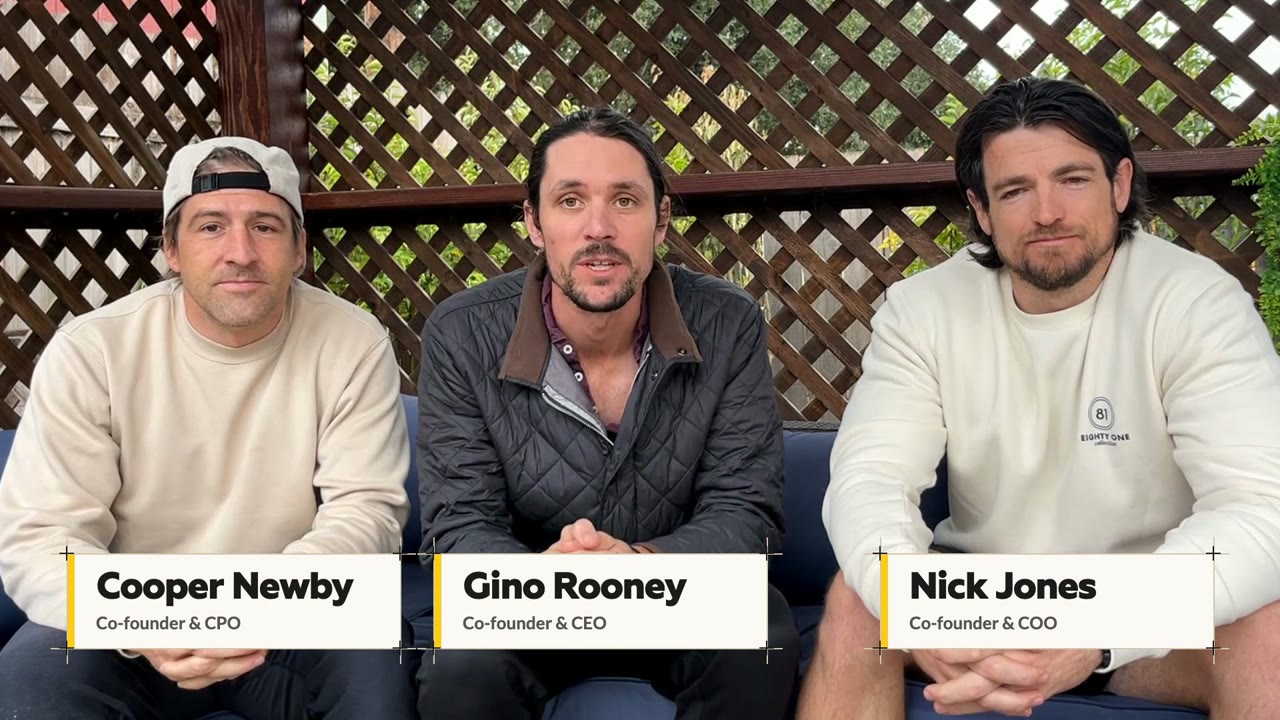
Three founders, one recurring bottleneck
Classet brought Rooney together with Newby and Nick Jones. Its early pitch centered on careers in the skilled trades. A $3 million seed round announced in December 2022 was led by Starting Line, with participation from Weekend Fund, Wayfinder, SV Angel and Liquid 2. The initial offering included career quizzes, videos, comparisons between career paths and a simpler application process.
The ambition extended beyond filling the next vacancy. Rooney described wanting people in limited-prospect jobs to find economically sustainable careers in the trades. His company's early work concerned entry as well as recruitment: helping someone understand an occupation, find a route into it and become visible to an employer.
His writing continued that interest. In September 2023 he published on apprenticeships as an alternative route to employment, while acknowledging difficulties for employers starting programs and applicants seeking places. Coming from a Stanford-trained founder, that attention to paths outside a conventional degree is a distinctive choice of subject.
By January 2025, he was describing Classet as an AI screening tool. The familiar obstacle was the time recruiting teams spent turning a large pile of applications into a smaller group of engaged, qualified people. Bluecrew's first version had used text messages to offer shifts before moving to a mobile app. Classet put a conversation at the front of the process.
“we love and hate each other enough that we wanted to work together.”
Gino Rooney, on working with the Bluecrew team again, January 2025
There is a founder relationship rendered without the ceremonial language. In that interview, Rooney said four of Classet's seven team members had been long-standing Bluecrew employees. The new company carried an unusually practical inheritance: colleagues who had already seen where the old process consumed their time.
Let the applicant talk
Classet's current product, Joy, conducts initial phone interviews and passes the results to a recruiting team. Candidates can take the call when it suits them. The company describes its service around hourly workers, skilled trades and other frontline roles, with people retaining responsibility for hiring decisions.
Rooney's February 2026 article on phone calls and trades candidates makes his preference clear. He argues that a written screening process can demand the wrong kind of performance from someone whose ability is better explained in conversation. A thin résumé may leave a recruiter with questions. A call gives the applicant a way to answer them.
- 01ApplyA candidate expresses interest.
- 02TalkJoy conducts a phone screen.
- 03ReviewThe recruiting team considers the results.
Classet's described workflow. A process illustration, not a promise of a job.
In another February article, Rooney asks buyers to examine where recruiting tools obtain their data, whether candidates understand the process and who controls the decisions. These are the questions of a founder selling automation who also needs the person being interviewed to trust what is happening. Faster contact has limited value if the candidate cannot understand the exchange.
The adjustment in his own thinking is more revealing than any product claim. Looking back in June 2025, Rooney recalled an early belief that 99 percent of an agency's work could be automated. Experience had made him more attentive to service. “Customer service is a competitive advantage in the staffing world,” he said.
That leaves his second company with a particular assignment: handle the first conversation well enough that a recruiter can use the next one better. The former warehouse worker is still working on the journey into a job. He has become more precise about which parts of that journey need a machine, and which parts need someone to answer.