BREAKING · Gerritt Graham named CEO of Scription$7.85M oversubscribed seed round closed · May 2025Total raised: $10.35MBacked by IA Capital Group & MarkdMission: pay for uptime, not breakdownsScription360 expanding across North AmericaBREAKING · Gerritt Graham named CEO of Scription$7.85M oversubscribed seed round closed · May 2025Total raised: $10.35MBacked by IA Capital Group & MarkdMission: pay for uptime, not breakdownsScription360 expanding across North America
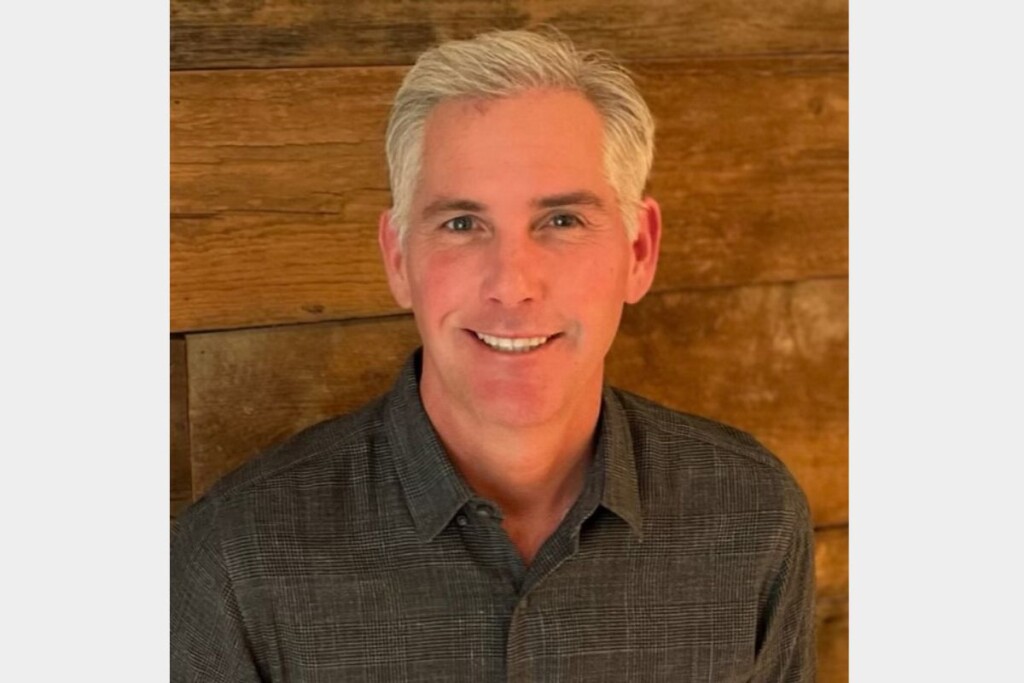
Gerritt Graham, photographed for Scription's 2025 leadership announcement. The smile of a man who has read your equipment-repair invoice.
The Profile
Gerritt Graham
He has spent twenty years selling things you hope you never need. First insurance. Now uptime for the fryer that always breaks during the lunch rush.
A subscription for the thing that breaks at the worst time
Somewhere right now a walk-in cooler is dying. A grill won't light. A dish machine is leaking onto a tile floor during a Friday dinner service, and a manager is on hold with a repair company that gets paid more the longer the problem lasts. This is the broken little economy Gerritt Graham decided to fix.
In May 2025, Graham became CEO of Scription, a Calgary company with a deceptively simple product and a genuinely strange business model. Instead of charging restaurants for repairs after equipment fails, Scription sells a fixed monthly subscription - Scription360 - that covers the equipment and rewards the service technicians for keeping it running. The breakdown stops being a billable event. It becomes a failure the whole chain is paid to prevent.
It is the kind of idea that sounds obvious for about four seconds, until you realize the entire repair industry is wired to do the opposite. Graham's whole career, oddly, has been a rehearsal for unwiring it.
Coming off a decade in the insurance industry, I understand the power of products that offer business owners stability and certainty in running their operations.
- Gerritt Graham, on joining Scription as CEO
By The Numbers
$7.85M
Seed round, 2025
$10.35M
Total raised
$100M+
Premium led at Corvus
20+
Years in sales & growth
How The Trick Works
Flip the incentive, fix the industry
The genius of Scription360 is not the software. It is the arithmetic of who gets paid, and when.
The Old Model
Equipment breaks. Operator calls for a repair. The service company earns more the longer the fix takes and the more parts it swaps. Downtime is someone else's problem.
→
The Scription Model
Operator pays a fixed monthly fee. Predictive analysis flags trouble early. Service agents are rewarded for uptime, so everyone is paid to keep the kitchen running.
The Long Way Here
A career spent selling the invisible
Graham did not arrive in foodservice the obvious way. He built a 20-year run in sales and marketing across the financial-services world, with a knack for the technology and data side of it - the stuff that turns messy real-world risk into something a business can price and plan around.
In 2018 he joined Corvus Insurance, a Boston insurtech, as Chief Commercial Officer. Cyber insurance was new and a little frightening, and Graham's job was to scale it. He did - leading the commercial market past $100 million in premium. Corvus was later acquired by Travelers, the kind of exit that puts an executive's name on the right lists.
Then came Kinetic Insurance, where wearable devices clip onto warehouse workers and nudge them out of unsafe postures before an injury happens. As EVP of Growth Strategy, Graham ran go-to-market, marketing, and distribution. Notice the pattern: cyber risk you cannot see, workplace injuries you can prevent, and now equipment failures you can predict. Each time, the product is really certainty.
So when Scription needed a CEO to take its subscription idea from a clever pilot to a North American business, it hired someone who had spent two decades convincing skeptical buyers that paying to avoid trouble beats paying to recover from it.
Timeline
2018
Joins Corvus Insurance as Chief Commercial Officer, scaling a new cyber-insurance market.
~2021
Becomes EVP, Growth Strategy at Kinetic Insurance, leading GTM for wearable safety tech.
2023
Corvus is acquired by Travelers.
May 2025
Named CEO of Scription as it closes a $7.85M oversubscribed seed round.
June 2025
Scription plots expansion in fast-food equipment maintenance across North America.
Insurtech is an extremely exciting area to be in right now as it is at the forefront of tech investment.
- Gerritt Graham, 2018, joining Corvus Insurance
The Bet
Servitization, served medium-rare
There is a fancy word for what Scription does: servitization. Sell the outcome, not the object. Rolls-Royce did it with jet engines, charging airlines for hours of thrust instead of selling them turbines. Scription is doing it for the unglamorous machinery behind every drive-thru and dining room.
Founded in 2020 and based in Calgary, Scription was built around aligning the incentives of the commercial foodservice maintenance and repair industry. Co-founder and Chief Strategy Officer Justin Villiers framed the company's plan plainly when the round closed: take the new capital, push Scription360 across North America, and bring in an industry leader to run it. That leader is Graham.
The money came from believers in the model. The $7.85M seed was led by IA Capital Group, with continued participation from Markd, which had led the company's $2.5M pre-seed in 2023. Oversubscribed is the word everyone keeps using - which, for a startup fixing fryers in an industry most venture investors never think about, is its own kind of punchline.
Worth Knowing
Three things that stick
He sells what you hope to never use. Cyber breaches, workplace injuries, kitchen breakdowns. Graham's entire portfolio is built on the quiet value of nothing going wrong.
The model rewards boredom. Under Scription360, the best outcome for everyone - operator and technician alike - is an uneventful day. No drama. No invoice for chaos.
An East Coast operator running a Calgary startup. Georgetown-educated and US-based, Graham took the helm of a company headquartered a continent away, in Alberta.
Where It Goes
The plan, in one sentence
Take Scription360 across North America, lower the total cost of risk and ownership for foodservice operators, and prove that an entire repair industry runs better when everyone is paid to keep the lights on instead of waiting for them to go out.
If he is right, the most radical thing about Gerritt Graham's company will be how unremarkable a broken cooler becomes - flagged early, fixed fast, and never the reason a dinner service falls apart.