Watch an aircraft at the gate and the machine seems to be resting. Around it, almost everything is moving. Bags travel toward the hold. A catering truck finds its position. Someone prepares the cabin for strangers who will soon believe this was always their seat. GAT Airline Ground Support built its business in this interval, when an aircraft has arrived but cannot yet leave.
- Airlines buy GAT’s ground, passenger, cargo and catering services.
- Its growth combined new contracts with a Canadian acquisition.
- PrimeFlight bought GAT in 2026 and is retaining the Sky Café brand.
There is a useful business puzzle here. Passengers judge the airline. Much of the experience can depend on people employed by somebody else. The carrier’s promise has to survive that handoff. For a ground handler, keeping the promise is the product.
01 / One flight. Several businesses.
GAT works for airlines. Its portfolio covers marshalling aircraft, handling bags, towing and pushback, cleaning cabins, staffing counters and gates, assisting passengers, and handling cargo. Sky Café adds catering. The customer buys an operation: people and capabilities assigned to particular work at particular airports.
Consider Alaska Airlines in New Orleans. GAT announced an expansion of that relationship in 2020 covering ground handling, ticketing and gate agents. In the same year, trade reporting documented JetBlue passenger handling and a WestJet catering contract for Sky Café. The service mix changes with the assignment. A ground handler’s name can sit behind several different parts of the journey.
Cargo makes the arrangement especially tangible. In a company post about Columbus, GAT described an operation supporting Delta, United, American and Alaska cargo, alongside Cargo Vision’s remote screening supervision. Four airline names could share one handler’s local expertise. For a shipper, the airline label on the shipment reveals only part of the chain responsible for getting it through the airport.
The alternatives include an airline doing the work itself or hiring another handler. Swissport offers overlapping passenger, baggage, ramp and cargo services. GAT’s proposition therefore lives in execution, station coverage and customer relationships. A long menu opens a conversation; delivering the contracted service keeps it open.
02 / Two stations, then a network
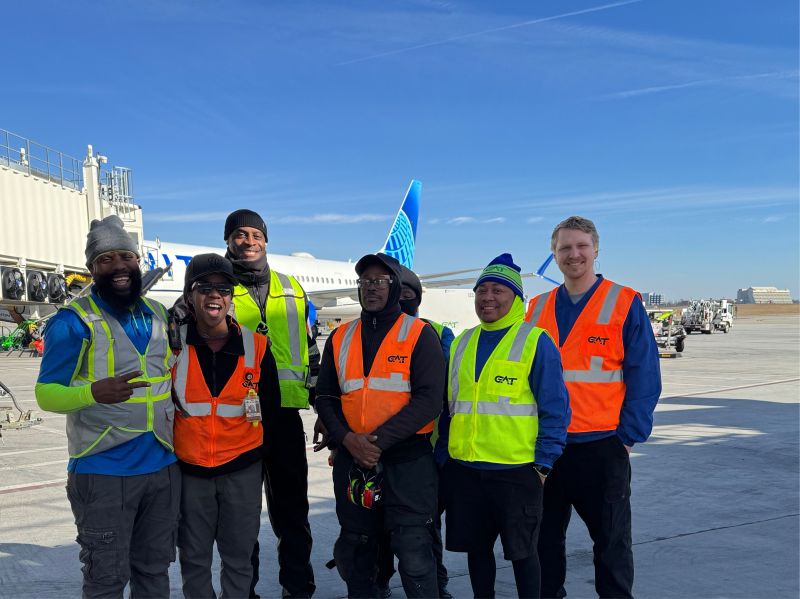
The family history begins in Mobile, Alabama, where Jean and Leon Raines owned an aviation business. After Leon’s death, Jean became chairperson in 1989 and developed ground handling operations in Mobile and Pensacola. She learned the work through airline courses and visits to stations. This was an education in loading, cleaning and dispatching aircraft.
“You have to make sure you’re providing the services you said you would,” Raines later said. That sentence describes a service company’s growth mechanism rather well. An airline that trusts your work in one city has a reason to consider you in another.
In 2017, Atlantic Street Capital bought a majority stake from the founding family. GAT then served 37 American airports. Two years later, it acquired Strategic Aviation Holdings in Canada, adding geography and catering to its capabilities. The move gave an existing airline-services business another way to serve the same industry.
03 / Move the camera. Change the conversation.
Scale creates another problem: how does management know what is happening beside each aircraft? GAT began developing Ramp Vision in 2018. Physical audits offered limited observation. Fixed terminal cameras were awkward because GAT generally did not lease the gates, and their angles could miss the work.
The answer was portable cameras. Initially, specialists reviewed footage within 24 hours against a 92-point checklist. Teams could retrieve clips for coaching and discussion. GAT’s then-CEO Mike Hough reported improved compliance where the system was deployed. The useful change was making a specific action available for review, rather than relying entirely on recollection.
Make the work visible.
Then make the feedback useful.An operating lesson from GAT’s camera approach
GAT’s published video-analytics patent describes comparing captured activity with stored procedures and producing reports or alerts. It also acknowledges a wonderfully physical limitation: trucks can block the view. Software needs a useful vantage point. My reading is that anyone copying the approach should begin with observation quality and a workable coaching process. More footage alone gives a manager more footage.
04 / A tractor has to earn its autonomy
The same interest in observable work appeared in GAT’s 2022 partnership with AeroVect. The companies announced plans to pilot self-driving ground support equipment, beginning with a cargo tractor. Their ambition extended to as many as 50 vehicles over subsequent years.
A later AeroVect interview reported that an initial pilot at San Francisco International had been completed. Treat the fleet ambition as a target. A successful pilot answers a narrower question than a completed network rollout.
There is a transferable discipline in that distinction. Airport equipment works among aircraft, people and other vehicles. A demonstration has to confront an operating environment. Any buyer evaluating such a system should ask what task it performed, where it performed it, and what evidence justifies the next deployment. The tractor gets a job description before it gets a grand theory.
05 / The work outlives the name
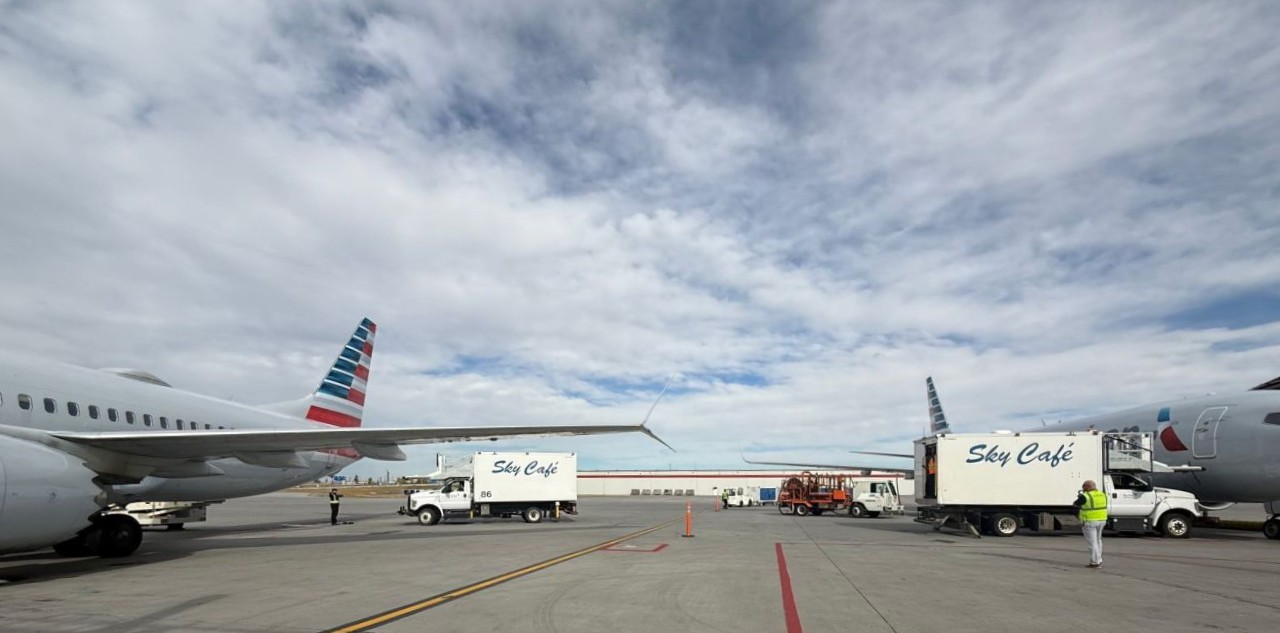
In February 2026, PrimeFlight announced its acquisition of GAT. The business came with approximately 6,000 employees and nearly 70 airports across the United States and Canada. PrimeFlight said it would integrate GAT’s other operations and branding while maintaining Sky Café.
For airline buyers, that makes the present-day question practical: which operation, service and station will support the contract? For employees, the work continues inside a larger organization. Subsequent GAT social posts directed followers toward PrimeFlight as integration progressed.
For a buyer, the useful comparison starts at the station. Does the provider cover the required tasks? How will it train people, supervise work and resolve a missed handoff? GAT’s range illustrates why those questions belong together. A catering capability does little for an airline seeking only gate agents; a broad network matters when the relevant airports and services line up.
The lesson I would borrow is modest and demanding. Grow from work a customer already trusts. Add capabilities with a clear use. Give people evidence they can act on. Those ideas depend on staffing, training and everyday follow-through. When the aircraft leaves, the company has delivered something passengers usually credit to the name painted on the fuselage. Tomorrow it has to deliver it again.