The first thing to notice about FutureSight is how much of its work is supposed to disappear. Ideas enter. Questions follow. Most ideas leave without becoming companies. In a sponsored 2025 BetaKit profile, founder John Carbrey said only about one percent of concepts survived the initial filter. That is a company-reported screening figure, rather than a startup success rate. Still, it makes for an unusual sales pitch: bring us your ambition; expect us to interrogate it.
- FutureSight co-founds vertical B2B AI companies with experienced entrepreneurs.
- Founders get capital and operating help, while sharing ownership and doing the work.
- The habit worth borrowing: test the assumption that could sink the business first.
An exit, followed by a better question
Carbrey had already experienced the conventional reward. He built Intrafinity and SharpSchool, then sold them to West Corporation in 2015. In his founding account, the sale produced an unexpected question about what success was actually for. A sabbatical helped him arrive at a different ambition: working alongside founders as they figured out what to build with their lives.
FutureSight, founded in 2021, gives that ambition an operating structure. It recruits proven entrepreneurs and helps create software companies around particular industries. An entrepreneur brings judgment, relationships and domain knowledge. The studio brings people who can research markets, build products, hire, keep accounts and help raise money. For someone contemplating a second or third company, that division of labor has an obvious appeal.
Thirteen weeks before the company
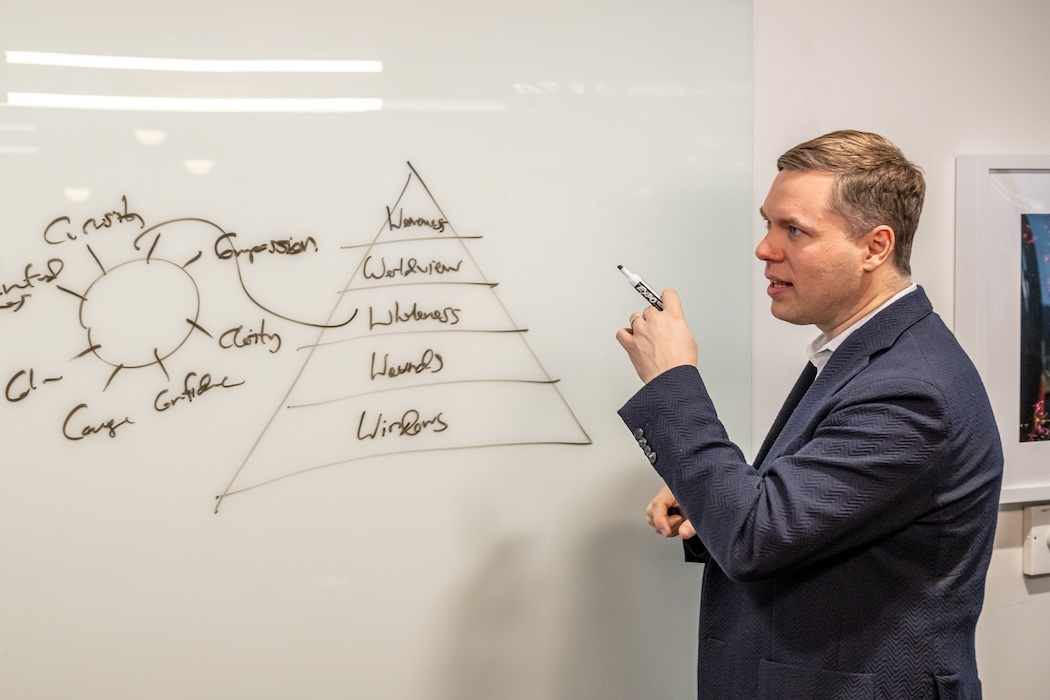
The studio’s published sequence begins with roughly four weeks of ideation. Founders and operators consider the problem, potential customers, timing and founder advantage. They sketch business designs and list risks. The next nine to ten weeks go into validation: primary research, prototypes, buyer questions and early investor feedback. These are planning windows, rather than promises about how quickly a particular business will emerge.
Look at what gets tested. Users and buyers may be different people. A problem may be painful but expensive to reach. A promising solution may be technically awkward or commercially too small. FutureSight’s process makes those questions explicit before formation, when it supplies pre-seed capital and starts a roughly 24-week phase involving early hiring, product development and customer traction.
The practical distinction is when the help arrives. An accelerator generally works with a startup already under way. FutureSight enters while the company is still a hypothesis. Its bench spans product, design, marketing, recruiting, finance, legal support and executive coaching. The bet is that sharing those capabilities lets founders spend more attention on the uncertainties peculiar to their market.
Read the ownership line
This is a co-founding arrangement, with ownership on both sides. FutureSight’s FAQ describes a significant founder stake negotiated around the opportunity and formation plan. Its August 2026 technical co-founder interview is more specific: Johnny Tong describes equity of 10%-30%, depending on the venture, expertise and responsibilities, plus an optional monthly stipend of $4,000-$5,000. Those are terms described for technical co-founders, with currency unspecified in the interview.
The cost also includes time and freedom of action. An EIR is expected to be deeply involved and generally full-time. A founder choosing this route should value having partners challenge decisions enough to share ownership with them. Someone who wants a check and complete solitude is shopping for a different relationship.
The partner has to pull
CaringAI co-founder Justin Mason describes a studio that supplies structure but leaves the founder responsible for moving. Customer outreach, market understanding and execution still belong to the person leading the venture. Support does not remove the need to ask uncomfortable questions of potential customers.
“We kill bad ideas quickly.”
FutureSight’s unusually candid homepage promise
The technical hiring process reflects that expectation. Tong describes conversations, a small project built together and whiteboard exercises. He wants people comfortable creating the first product without a finished specification. FutureSight looks for repeat entrepreneurial experience, industry knowledge, leadership and willingness to revise a view. The experienced founder must remain teachable.
Small jobs, distinct buyers
The portfolio makes the vertical strategy easier to grasp. Crewscope serves construction, industrial and mining teams. Its current product moves plans to workers’ phones and brings field information back through text messages. A crew member can report what is happening without another app or login. That is a specific distribution choice for a specific workplace.
Crewscope announced over $1 million in pre-seed funding in August 2025, led by Groundbreak Ventures, with a strategic EllisDon partnership. That financing belongs to Crewscope. It is a tangible portfolio milestone, rather than a measure of FutureSight’s own revenue or investment returns.
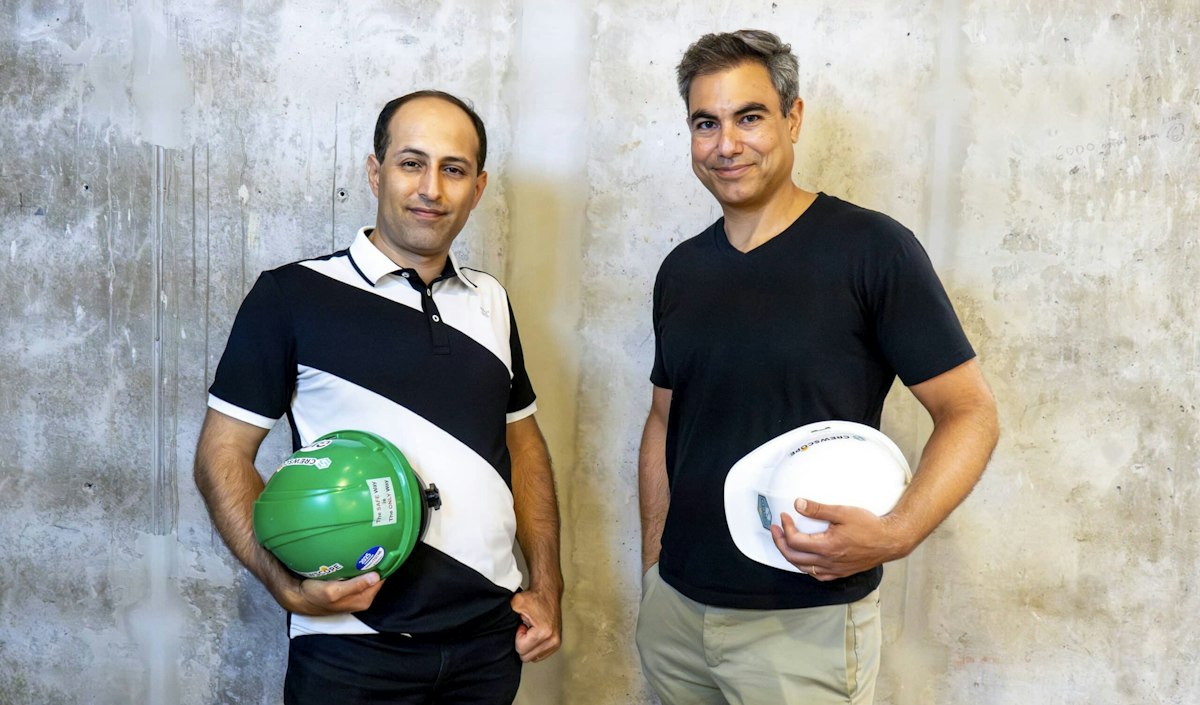
Mercata tackles another kind of information problem: helping fundamental hedge funds connect filings, transcripts and their own research. Its pitch centers on retaining what a fund knows and recognizing changes relevant to an investment thesis. Addie, meanwhile, assists college counselors. The common ingredient is AI; the buying decisions, workflows and trust requirements differ substantially. Industry knowledge matters because the software has to fit the work.
Borrow the uncomfortable bit
A founder can copy much of this discipline independently. Write down the assumption that would make the company pointless if it proved false. Interview the people who would use the product and the person who would pay. Test interest with a prototype. Agree beforehand which evidence would justify proceeding, changing direction or stopping.
FutureSight’s arrangement fits founders willing to do that work with partners, within its North American, vertical B2B AI focus. It asks for experience, commitment and shared ownership. The useful question for a prospective founder is whether the studio’s operating capacity is worth that exchange. Answering it honestly would be a reasonable first act of validation.
Keep asking questions
Explore FutureSight, its co-founding opportunities, news and events, LinkedIn and X. Watch the founder and EIR fireside chat, or explore Crewscope and Mercata.