Suppose you like an apartment, but the kitchen is too small. Another building, owned by the same company, has a better one. You inquire again. A modest change in floor plan has somehow become a fresh introduction. The company owns both buildings. Why does it need to meet you twice?
- One renter record follows conversations across properties.
- Shared teams handle repeatable work; specialists handle the rest.
- AI, applications, and resident tools connect to an operator’s existing systems.
That small absurdity explains Funnel Leasing. The Florida software company builds tools for apartment owners and managers whose customers move between buildings, channels, and stages of life. Its central idea is that the person should remain recognizable throughout. Start there, and a surprisingly large part of the leasing business becomes available for rearrangement.
The building was the wrong filing cabinet
Funnel began as Nestio. In 2011, co-founders Caren Maio, Matt Raoul, and Mike O’Toole were offering apartment hunters a way to collect listings and collaborate with roommates. An earlier concept resembled a review site for buildings. Even at the beginning, the founders were revising their answer to a familiar frustration: apartment hunting produced too much scattered information.
By 2020, Nestio had become Funnel, and Tyler Christiansen had succeeded Maio as CEO. The customer had changed. Apartment operators were buying the software. The original problem, however, remained recognizable. Useful information kept getting separated from the person who needed it.
Funnel’s answer is a shared guest card, the industry’s name for a prospect’s record. Messages, preferences, and interactions belong to the renter across the portfolio. A leasing colleague can pick up a conversation without asking everyone to reconstruct it. For someone considering several communities, that is a pleasantly unremarkable experience. For the operator, it permits a different division of labor.
The org chart comes with it
Consider Camden’s account of its operating redesign. Executives listened to employees describe their jobs and found work that did not fit their roles. Camden grouped two or three communities into “nests,” served by a centralized leasing team. Funnel’s CRM, AI, and contact-center tools supplied shared context.
Camden projects approximately $4 million to $5 million in annual savings once the broader initiative is stabilized. It also reports higher leasing compensation and lower turnover. Those results belong to an operating change involving people, processes, and technology. Treating them as the return from installing an app would miss the interesting part: the company changed the work itself.
Company case study. Broader operating redesign supported by Funnel.
There is a useful warning in Funnel’s customer forum recap. QuadReal found 10,000 open tasks in its previous CRM and tested three replacements before choosing Funnel. Later, it adjusted the boundary between centralized and onsite work after staff feedback. Essex’s customer sentiment initially fell before recovering. The practical lesson: test the handoff, listen, and revise. Centralization needs an editor.
“It’s hard to have unhappy people create happy customers.”
Mike Gomes, former Chief Experience Officer, Cortland
An AI with somewhere to put the answer
Funnel’s product range now follows that conversation from first inquiry to renewal. The CRM handles prospect and resident records, communications, appointments, and contact-center work. Applications and fraud tools support leasing decisions. The resident portal handles such everyday business as payments, maintenance requests, and renewals. Reporting lets managers examine activity across properties.
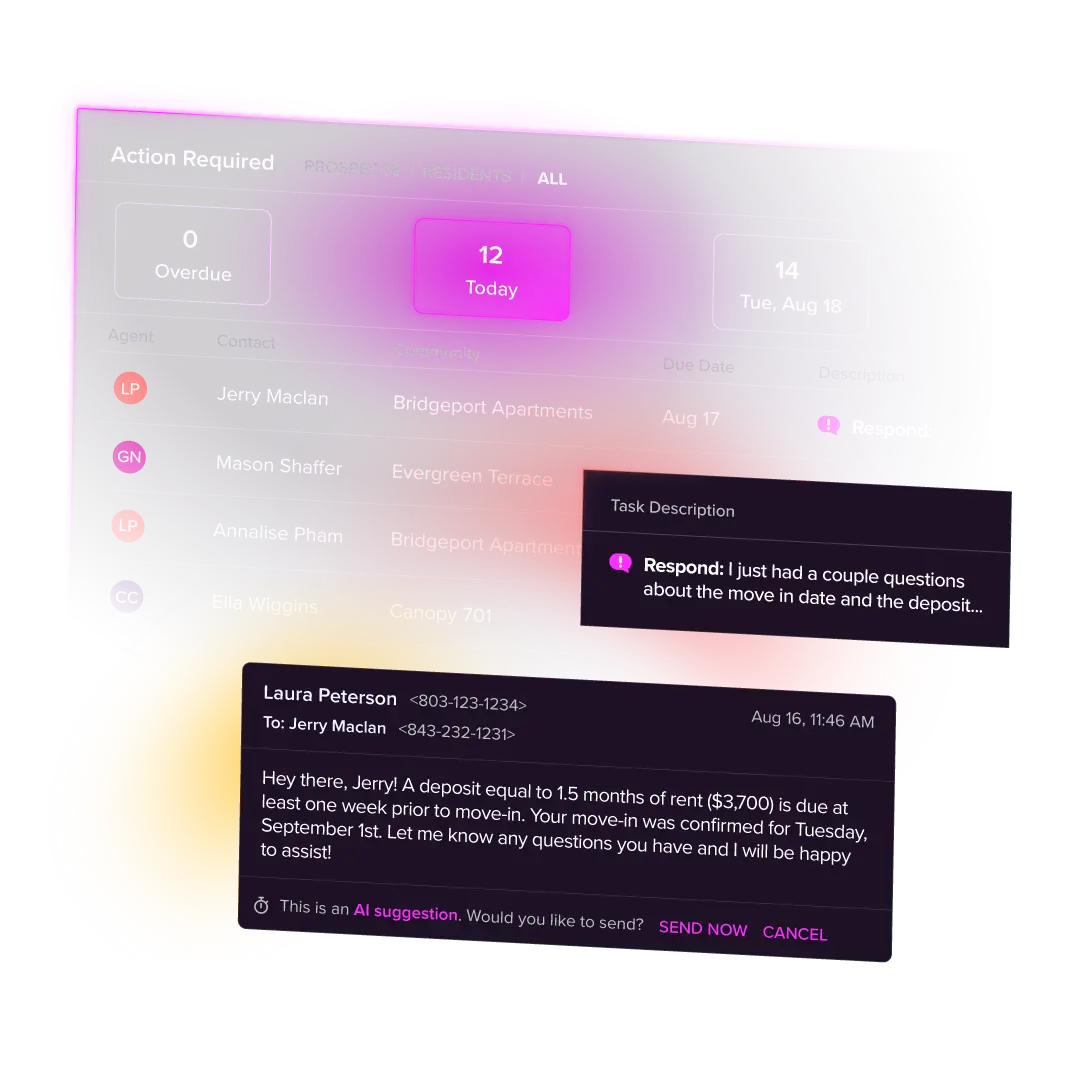
In April 2025, Funnel launched standalone Fenix AI with conversational AI company Sierra and acquired selected LeaseHawk assets, including voice and contact-center technology. That opened an entry point for operators who wanted AI before adopting the whole CRM platform.
The September 2026 expansion brought Fenix across new packages alongside Funnel Fabric, which connects outside systems and internal knowledge. Workflow Studio lets operators define sequences involving software and people. The ambition is concrete: an answer should lead to an action, with the relevant information available when a person takes over.
This puts Funnel among both AI leasing vendors, including EliseAI, and established property-software providers. Its particular position is the front office: renter-facing work and the teams doing it. Integrations with Yardi, RealPage, and Entrata let operators retain their underlying property systems. The buying question is whether the bottleneck is one unanswered inquiry or an entire portfolio’s fragmented workflow.
The bill includes changing the work
Funnel sells business software to multifamily owners, operators, and third-party managers. Current packages begin with the Agent Platform, combining CRM, communications, Fenix, and Fabric. The optional Renter Platform adds consumer tools. Both are sold through sales consultation. Earlier offers included per-unit subscriptions and optional payment per AI resolution; those terms should be distinguished from today’s package proposal.
The implementation bill also contains time: agreeing on ownership, training teams, and checking integrations. Some data exchange happens at intervals; Funnel documents hourly pricing and availability feeds for certain PMS connections. A shared record does not make every connected system instantaneous.
For a small landlord with a handful of apartments, a portfolio-wide coordination system may solve too large a problem. For an operator unwilling to change responsibilities, the organizational gains are unlikely to arrive simply because an inbox looks tidier. A useful pilot measures response times, conversion, staff workload, and renter experience together.
Pink, with a purpose
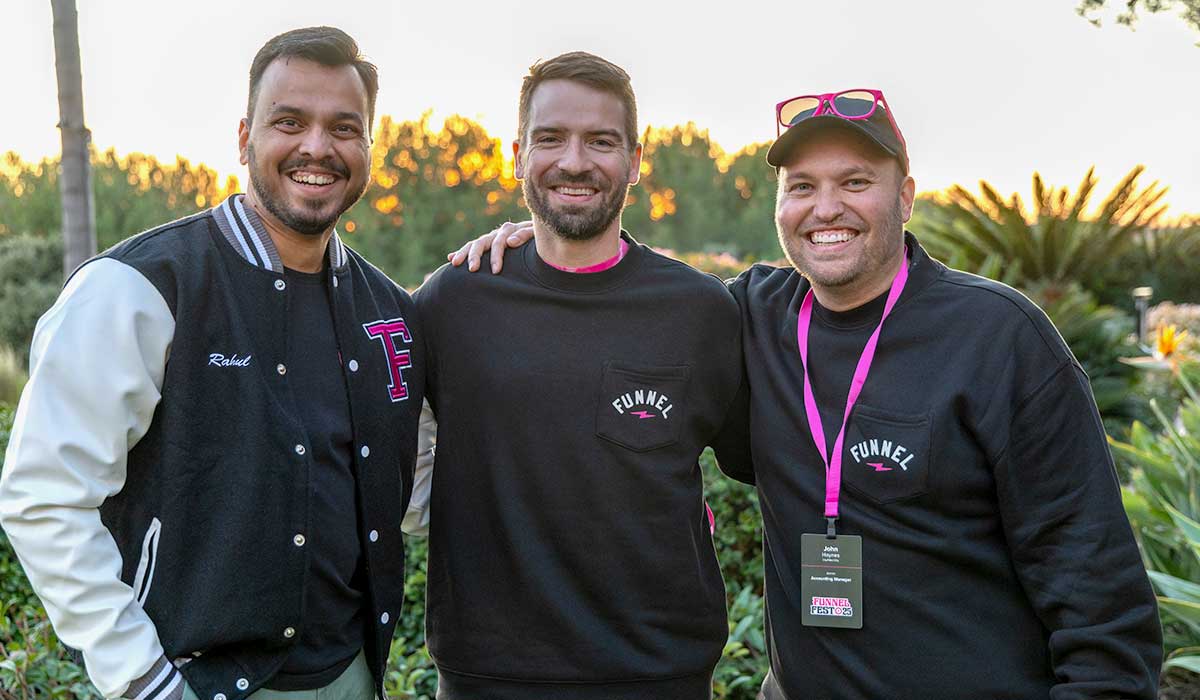
Funnel gives its culture an appropriately conspicuous acronym: P.I.N.K., for Prosocial, Integrity, Novel, and Kick-a**. Its nonprofit HOME receives $1 for each lease signed through the company’s online leasing product, according to its 2026 Entryway announcement. That attaches a small housing contribution to an ordinary business transaction. It also returns the story to a person finding somewhere to live. The building matters. Remembering the person matters, too.