Peter Byrnes was trying to give money away. According to Fundraise Up’s account of its beginnings, the online donation experience was slow, clunky and frustrating. It is an oddly revealing failure. A shop expects to work for a customer’s money. A charity, having persuaded someone to be generous, can still lose them at the form.
Byrnes and fellow founders Yuriy Smirnov and Anton Isaykin built Fundraise Up around that gap in 2017. Their premise borrowed from retail: make the last steps easier, and more intentions should become transactions. The mission might be noble. The interface still has to behave.
- Donation checkout that personalizes asks and encourages recurring gifts.
- Software for nonprofits, designed to connect with their existing CRM.
- Transaction-based fees: no upfront subscription, but a cost attached to giving.
The form was the obstacle
Fundraise Up sells the machinery of digital giving: checkout, campaign pages, website donation components, reporting and a portal where supporters manage their gifts. It sits between a charity’s appeal and its donor database. Its specialty is the moment somebody reaches for a wallet.
The choice is subtler than placing a large Donate button on a page. Suggested amounts can adapt to a visitor. A one-time gift can prompt an invitation to give monthly. Familiar payment methods can save typing. Each is a small intervention in a moment when goodwill is plentiful and patience is finite.

Predictive AI helps select those asks and prompts. That is a practical distinction from using AI to write an appeal: the prediction operates inside the donation experience. The product also addresses less glamorous obstacles, including payment failures and fraud. Good fundraising software needs a little persuasion and a great deal of plumbing.
Six weeks to earn UNICEF’s trust
UNICEF USA offers the useful test of this idea. Its digital push faced an uncomfortable combination: revenue was growing, but its monthly-supporter file was shrinking. More money today did not necessarily mean a healthier base tomorrow.
Choosing a young supplier introduced another problem. “There was a lot of hesitation,” recalled Helene Vallone, the organization’s vice president of direct response. Vendor scrutiny mattered. So did the proposed six-week implementation. An A/B test changed the conversation: the organization compared the new experience with its existing platform before adopting it.
“There was a lot of hesitation.”Helene Vallone · UNICEF USA
Fundraise Up’s published case study reports an additional $3 million in annual revenue through recurring Upsell. It also reports that 82% of donors covered processing fees, and Reminder Elements saved more than 26,000 donations. These are customer-specific, company-published results. They make a case for testing; they do not promise the same return to every charity.
from recurring Upsell
processing fees
Who pays for the convenience?
The commercial arrangement is part of the pitch. Fundraise Up’s current pricing page advertises no setup fees, fixed subscriptions or long-term contracts. Revenue comes from a percentage of donations processed, alongside separate payment-processing costs. The company earns when giving happens.
Earlier published pricing listed a 4% platform fee plus processor charges, with possible volume discounts. Today’s page emphasizes performance-based pricing without a universal published percentage. A buyer needs the applicable rate before doing the arithmetic.
Donors can volunteer an extra amount toward transaction costs. The company advertises an average effective platform cost of roughly 1% after fee coverage. Its documentation is explicit: coverage offsets fees; it does not remove them. An elegant prompt cannot abolish an invoice.
Donations collected
- platform & processing fees
+ voluntary fee coverage
= net proceeds
The useful comparison is net revenue against the existing system. If donors rarely cover costs, or a charity’s present checkout already performs well, the additional fees may outweigh improvements. That is an economic question, best answered with the organization’s own donation mix.
A checkout beside the CRM
Fundraise Up describes itself as a fundraising platform rather than a CRM. Native connections to Salesforce, HubSpot and other systems carry donation and supporter records into the tools teams already use. APIs and webhooks offer further options. Integrations reduce manual transfers, but field mappings still deserve care.
Its market includes mid-sized and enterprise nonprofits; named customers include the Canadian Red Cross, American Heart Association and Salvation Army UK. The company’s AI product page advertises more than 3,500 nonprofit users. Its competitors include GoFundMe Pro, Givebutter and Donorbox, with overlapping features and different packaging.
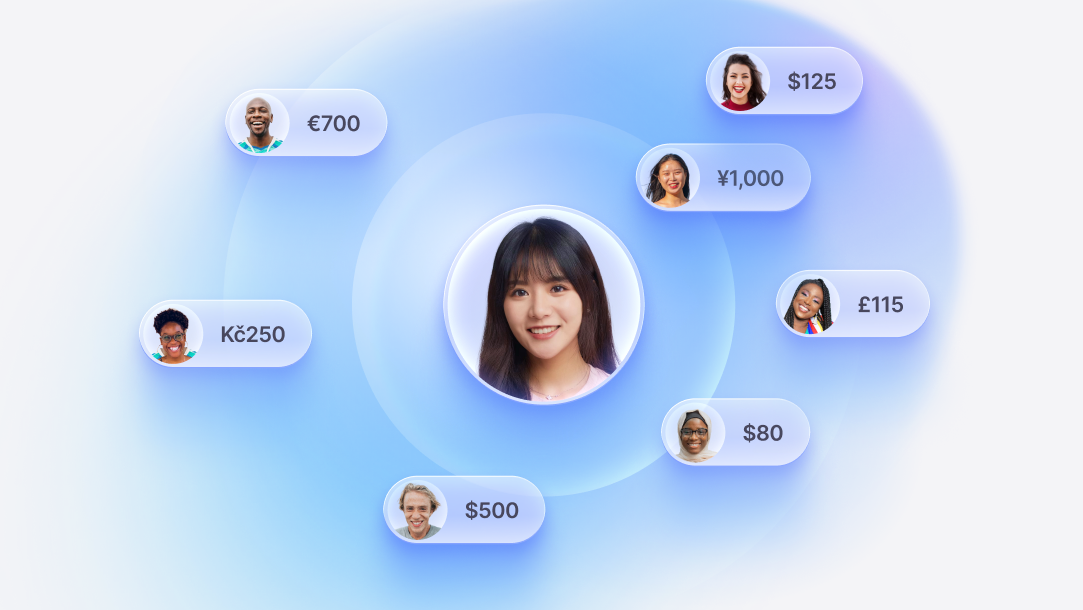
The distinction worth examining is fit. A team with an established CRM may value a separate giving layer. A small organization wanting one system for everything should compare that arrangement with broader suites. Supporters crossing borders also need the right currencies, languages and available payment methods.
The experiment that stayed level
There is a quieter detail in Fundraise Up’s published experiments. A payment-layout test ran for 20 days across 20,000 campaign-page visitors in March and April 2025. It found no statistically significant drop in key metrics. The company proceeded with the cleaner design.
That is a useful corrective to perpetual growth theater. Some experiments protect revenue while improving a product. Readers can copy the method: establish a baseline, split traffic, measure completion and net proceeds, then keep the changes the evidence supports. More advertising is an expensive way to postpone inspecting the form.
The next donor may arrive by conversation
A $70 million minority growth investment announced in January 2025, led by Summit Partners with Telescope Partners participating, backed product development and international expansion. The company describes a distributed culture built around experimentation, ownership and candid collaboration. Those are stated values; the published tests offer a concrete glimpse of the experimentation.

September 2026 brought Agentic Giving. AI-readable profiles let assistants discover campaigns and direct supporters into authorized donation flows. The usual experience still ends at a checkout; fully conversational completion depends on supported donor-side technology. Donors must explicitly confirm their gifts.
The front door may change again. Fundraise Up’s recurring wager remains recognizable: once someone decides to give, stop making generosity do paperwork.
Try the giving experience
Website · Product demos · YouTube videos · Blog · Investment news