Before François Locoh-Donou had a career in technology, he had chickens. Growing up in Togo, he sold eggs around the neighborhood and played football with friends. When a move to France approached at fifteen, he tried negotiating two conditions with his mother: the poultry enterprise would continue, and he would play for Paris Saint-Germain. She agreed. The football arrangement turned out to involve a suburban amateur club and the possibility of being discovered. The scouts never came. Technology eventually made a more dependable offer.
There is something pleasing about an executive origin story with a livestock clause. It gives the familiar procession of engineering degrees, promotions and board appointments a little dirt under its fingernails. Today, Locoh-Donou is chairman, president and chief executive of Seattle-based F5. He is also co-founder and chairman of Cajou Espoir, a cashew-processing business in rural Togo. Those responsibilities sit in very different economies. Both concern where value goes, and who has a chance to create it.
The engineer who wanted to sell
His technical education took him through physics engineering in Marseille and optical telecommunications in Paris. At Photonetics, a French optoelectronics company, he worked in research and development. A technology-transfer assignment brought him to Boston. He wanted to stay in America and move closer to customers. His employer preferred to keep him an engineer. Ciena offered a different route.
He joined Ciena in 1997, then left for Stanford’s MBA program in 2000. He returned in 2002, after the internet boom had soured. The attraction of business school, in his telling, included the people: classmates whose experiences reached well beyond the engineering world he knew. Consulting and banking were available possibilities. He discovered that running teams appealed to him more.
It was a useful discovery to make before acquiring an expensive taste for somebody else’s career. His subsequent Ciena responsibilities crossed marketing, regional management, products and operations. By November 2015, he was chief operating officer, with responsibility spanning sales and services as well as development and supply chain. His career had become an education in how a technical product actually reaches a customer.
That range matters. A laboratory can establish what a technology does; customers establish whether anyone will pay for it. Moving between those settings asks an engineer to hear objections that cannot be resolved by a better specification. Locoh-Donou’s progression suggests an appetite for that broader problem: getting people with different expertise to make something work together.
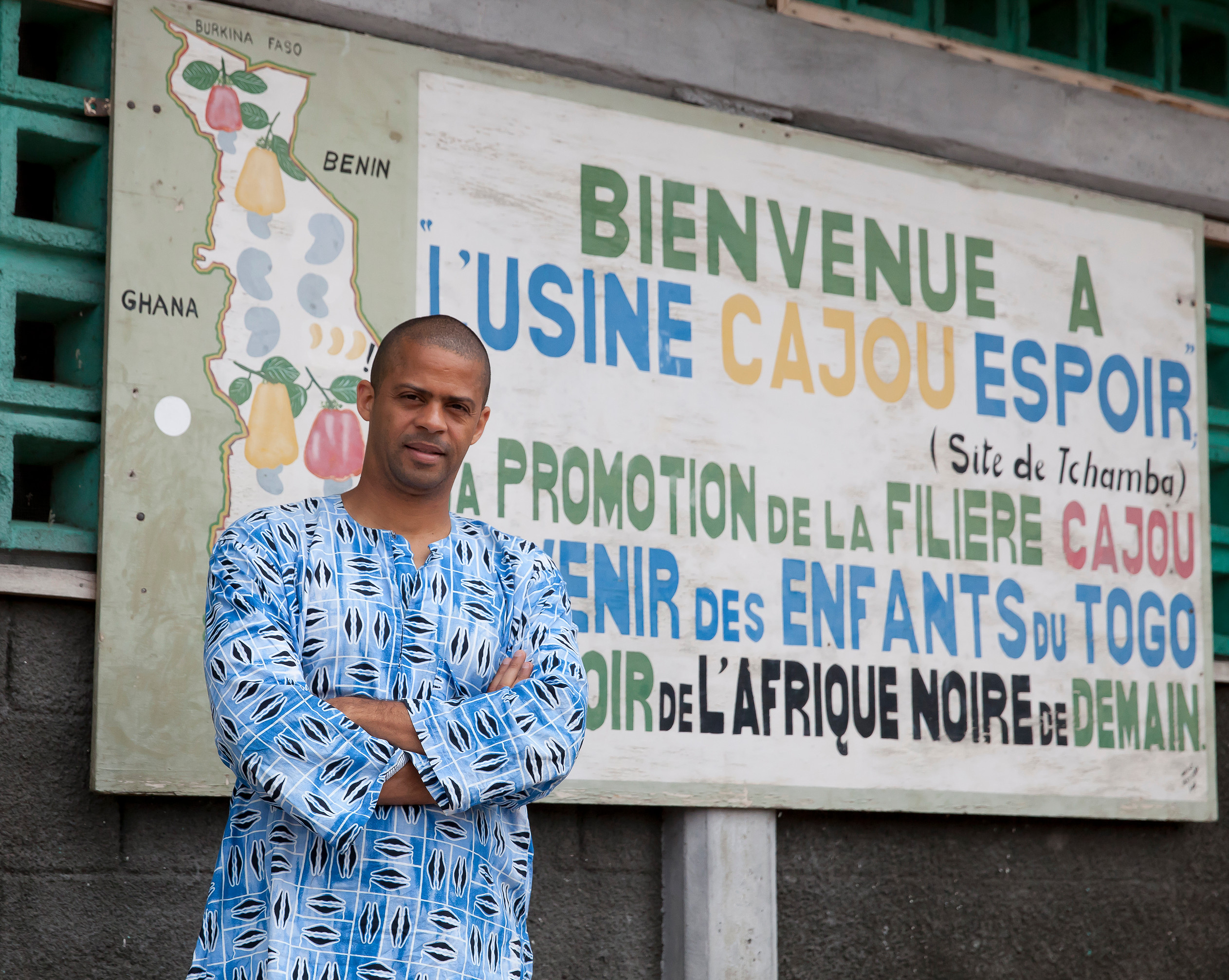
A cashew should leave more behind
In 2004, Locoh-Donou and Maurice Edorh co-founded Cajou Espoir. The name means “Cashews of Hope.” The business addressed an awkward economic arrangement: nuts grown in West Africa could travel to Asia for processing before reaching consumers elsewhere. Growing a crop and capturing its value were separate activities, often separated by an ocean.
The founders wanted more of the processing, and the employment it generated, to happen in Togo. Locoh-Donou had already invested in a poultry farm there in 1998. Cajou Espoir extended his interest in agriculture into a business with a deliberate community purpose. Its own account of that purpose includes an obligation to contribute to the places where it operates.
He has described practical changes that made factory jobs more accessible: a nursery, and working hours that ended at four so women could get home before dark. Employees helped choose community investments, including school benches and village electricity. Each decision has an unglamorous specificity. A shift ending at the wrong hour can defeat a recruitment policy before the policy has finished congratulating itself.
In his account of the factories, influence also emerged among people without managerial titles. Workers sought out colleagues who would teach, listen and help. This is a rather economical way to discover leadership. Watch whom people approach when they need something explained, then compare that map with the official organization chart.
“I experienced management by force early on.”François Locoh-Donou, 2017
Authority has to earn its keep
Growing up under dictatorship gave him a lasting aversion to authority exercised for its own sake. He has connected that experience to a preference for explaining context and empowering employees. The personal history gives his management language a particular edge. An instruction can be perfectly clear and still be senseless.
At a Seattle Chamber of Commerce gathering in 2018, he organized his thinking around three responsibilities: giving time and attention, creating inclusion, and clarifying an organization’s social purpose. These operate at different distances. A manager can help one person directly, shape conditions for a whole workforce, and influence what the business contributes beyond its walls.
He also acknowledged the awkward part of changing culture: making visible decisions about what behavior would be tolerated. He described F5 as imperfect and committed to the work. That admission leaves room for scrutiny. A company’s professed values become interesting when they cost something, require a choice, or survive a difficult quarter.
Buying the parts of a different F5
Locoh-Donou became F5’s president and CEO in April 2017. The company’s established position in networking hardware faced an industry in which applications increasingly operated across different computing environments. His task was to move the business toward software and services while keeping delivery and security central to its identity.
The acquisitions made the direction tangible. In March 2019, F5 announced an agreement to buy NGINX for approximately $670 million in enterprise value. NGINX brought software for application delivery, an open-source community and a relationship with developers. F5’s announcement explicitly addressed the divide between network operations and development teams. The proposed combination would put more of those tools under one roof.
Shape Security followed. Announced in December 2019 at approximately $1 billion in enterprise value, the deal closed in January 2020. Its contribution included defenses against automated abuse and credential stuffing, where stolen login details are tried against other accounts. The everyday stakes were recognizable even when the terminology was less so: keeping someone else from getting into your account.
Then came Volterra. The January 2021 announcement specified about $440 million in cash and $60 million in deferred consideration and assumed unvested incentives. Its technology supported applications distributed across clouds and other locations. Together, these moves show a company buying capabilities around a persistent customer problem: making applications available and protecting the traffic flowing through them.
NGINX and Shape: approximate enterprise values. Volterra: cash plus deferred consideration and assumed unvested incentives. Values are announced terms, not measures of performance.
Kindness still has to do the work
The cultural project ran alongside the buying. A 2025 Kellogg management case by Richard Jolly and Charlotte Snyder examines Locoh-Donou’s approach to transformation at F5. It centers on the relationship between a culture that puts people first and expectations of strong performance, including changes to leadership and an emphasis on inclusion.
That pairing is worth taking seriously without treating it as a settled formula. Employees need clarity about results as well as permission to speak. Acquisitions add colleagues with their own habits and loyalties. Calling everyone one team is the easy administrative part. Building working relationships across those histories takes longer.
His board position at Capital One adds another vantage point. He has been a director since 2019, and the bank lists him as chair of its compensation committee and a member of its governance and nominating committee. Technology, incentives and oversight meet there in a different setting. The same executive who advocates empowerment also participates in the formal machinery of accountability.
The factory that had to close
Cajou Espoir’s recent history complicates any tidy success story. In a July 2026 account, Locoh-Donou described raw-nut competition that made local processing uneconomic. Tchamba closed for roughly six months; Blitta remained closed for eighteen. The business built to create jobs had to stop operating factories.
The response included looking beyond the kernel. A new use for cashew apples brought thirty jobs back to Blitta, processing fruit for export to Sweden. The company was also pursuing other products and trials. Those are modest, concrete steps beside the scale of the original problem. Reopening with thirty jobs is a different proposition from declaring a mission accomplished.
There is a demanding question inside that episode. How does a business honor its purpose when continuing on the same terms would weaken its ability to survive? The episode gives his language about care and performance a practical test. Purpose requires enough financial durability to keep offering people work. A factory’s purpose has to survive purchasing decisions, too. The next shipment matters as much as the founding idea when production depends on it.
Another title, another unfinished job
In March 2026, Locoh-Donou added F5’s chairmanship to his executive responsibilities. In June, F5 launched an AI Security Platform and announced its acquisition of SurePath AI. The stated aim includes discovering enterprise AI use, testing systems and protecting deployments. Applications have acquired new behaviors; their security requirements have moved with them.
His aspirations have also found a public audience beyond customers and investors. At AFROTECH in 2025, he spoke to Black professionals about preparation and learning. He has described “extra” as a guiding word in his working life, drawing on his father’s persistence in pursuing an education. The point is effort that becomes a habit, something a younger professional can actually practice.
The chickens, the engineering laboratories, the software acquisitions and the cashew factories resist being compressed into one neat career lesson. They do, however, keep returning him to useful questions. What can be made here? Who gets the opportunity? What must change for the work to continue? A boy selling eggs would have recognized the need to find customers. The rest has taken a longer apprenticeship.
- F5 leadership biography ↗
- François Locoh-Donou on LinkedIn ↗
- Cajou Espoir: the business in Togo ↗
- The business of doing good: his 2018 essay ↗
- Planting Hope, Growing Opportunity: July 2026 ↗
- Listen: his 2018 Seattle speech ↗
- Watch: No Ordinary Career, his AFROTECH keynote on YouTube ↗
- Watch: CIONET’s 2020 leadership interview ↗
- Kellogg: transformation through culture ↗
- F5’s June 2026 AI security announcement ↗