In Massachusetts, the difference between an old habit and a new one is $40.50. The Superior Court’s instructions offer two ways to obtain a newer hearing recording: pay $10 to listen online through For The Record, or pay $50.50 for a duplicate CD. The streaming version stays available for a year. The disc remains a disc, with all the ceremony that entails.
Neither price buys a better hearing. Both concern access to what was already said. Yet that little menu exposes an entire industry’s problem: preserving a proceeding and making it useful are separate jobs. For The Record, usually shortened to FTR, has spent three decades moving from the first toward the second.
- Capture: courtroom audio and video, with voices recorded across multiple channels.
- Find: synchronized speech-to-text, playback and annotations.
- Control: storage, permissions and ordering designed for court procedures.
- Connect: now part of Tyler Technologies, with case management integration the next proposition.
A disc, a login and a price difference
FTR’s customers are institutions with unusually demanding memories: courts, judicial agencies, law enforcement and transcription firms. Its users include the judge reviewing testimony, the clerk handling an order, the attorney preparing an argument and the litigant trying to understand what happened. A recording has to serve several people without giving every person the same rights.
Massachusetts makes that distinction plain. The clerk’s office is the custodian of court audio and reviews requests. An online account is a doorway into a process, rather than permission to rummage through every hearing. FTR supplies the machinery; the court retains authority over the record.
The attraction is practical. Someone can listen on a phone, tablet or computer. There is less physical media to obtain and handle. The price difference is specific to this court’s published options, but the design question travels well: how much work do you make people do after you have already saved their information?
The microphone has a long memory
FTR’s story began before cloud software became fashionable. Its company history dates the name to 1993 and credits Tony Douglass with creating and installing an electronic courtroom for Australia’s Wood Royal Commission into police corruption in 1994. An inquiry into institutional misconduct is a rather pointed place to learn the value of an accurate record.
FTR Gold arrived in 1998. Digital video followed in 2003. The company later added online playback and distribution. Today FTR says its technology powers more than 30,000 courtrooms across over 80 countries. That is a company-reported deployment footprint, not a count of current cloud subscribers.

Douglass’s background includes forensic audio and video analysis. The leadership team also draws on AV engineering, software development, security and court operations. Those disciplines meet in a deceptively simple question: did the system actually hear the person speaking?
The current Gold product supports up to 16 audio channels and four channels of HD video. It offers recording, live monitoring, playback and annotation suites, plus an interview suite for law enforcement. Multiple audio channels give users separate material to review when voices overlap. The quality of the original capture remains consequential however clever the next layer becomes.
From capture to a usable record
FTR Justice Cloud gathers the later jobs into a court-specific platform: capture, storage, monitoring, playback, speech-to-text and controlled distribution. The point is to keep a recording attached to the people and processes that need it. A file sitting safely in storage may still be an administrative nuisance.
Gold continues to serve on-premises recording, and FTR presents Gold and Justice Cloud as a path for modernization in stages. A court can therefore approach the cloud without treating all its existing recording equipment as a historical embarrassment. The product range also includes a portable kit, courtroom design and implementation services, and ongoing support.
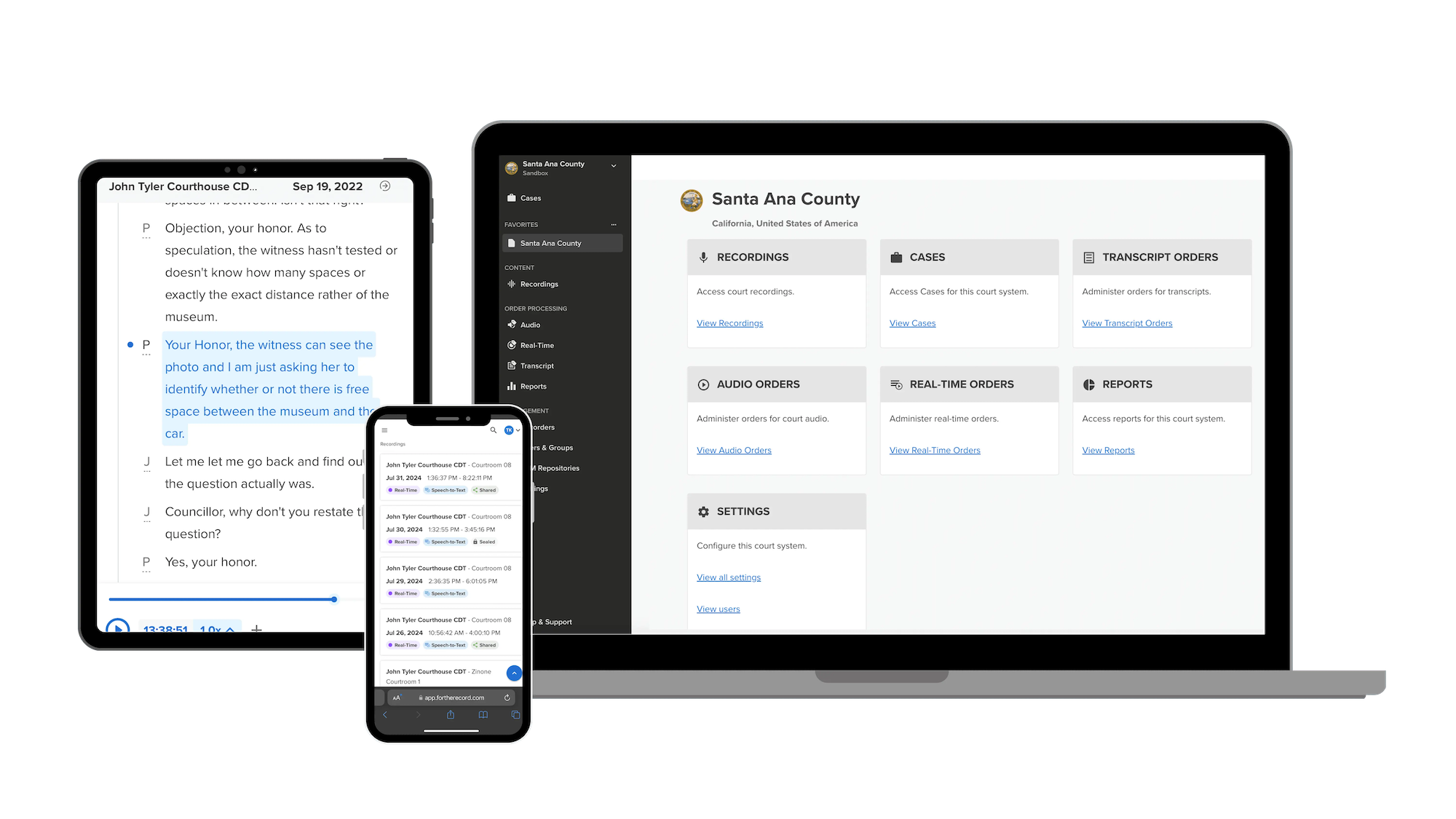
For an attorney, searchable text can help locate an exchange before replaying it. For a clerk, a managed ordering process can organize requests. For court staff, monitoring can surface recorder issues. These uses explain why the company belongs in enterprise justice software as well as courtroom AV: the valuable object is the proceeding, but the daily work concerns finding and managing it.
- 01CaptureAudio + video
- 02PreserveStorage + controls
- 03FindText + timestamps
- 04ReviewReturn to audio
- 05DeliverApproved access
The draft needs a way back
FTR RealTime supplies live, searchable speech-to-text synchronized with the recording. A user can follow the text and return to the audio. That connection deserves more attention than the glamour of automatic transcription: a fast draft becomes useful when someone can check it.
FTR advertises accuracy of up to 95%. “Up to” is doing real work. It describes a vendor claim, rather than a guarantee for every microphone, accent or exchange. The product page calls the text a draft and treats the underlying recording as the definitive reference.
A certified transcript belongs to a separate process. Massachusetts describes its official transcripts as written records prepared from electronic recordings by a transcriber or reporter. FTR’s QuickDraft materials likewise describe AI output as assistance for court reporters and transcribers when certification is required. Buyers should decide which task they need completed before confusing quick text with an approved legal document.
A searchable draft earns its keep when it leads you back to the words actually spoken.
Editorial observation
This is also where the operating conditions matter. Unclear captured speech limits what anyone can verify. Sealed material needs access rules. Recording practices and certification requirements depend on the court. The software’s capabilities must fit those procedures; a product demonstration cannot settle them.
The price has several lines
FTR sells software, cloud services, courtroom implementation and support. It is a business serving institutional buyers, with public users sometimes paying separately to obtain approved content. The $10 Massachusetts fee tells you about one access arrangement. It tells you little about the cost of outfitting a courthouse.
A California Judicial Council report provides a more concrete glimpse. Its supplemental January-June 2022 entry for San Francisco lists $10,945 for 11 FTR Gold Recording Suite 7 licenses, $1,375 for 11 annotation licenses and $6,655 for annual premium support covering licenses and equipment. A separate digital signal processor line is $25,212. The reported package totals $44,187.
Those historical line items are useful precisely because they resist a tidy price tag. Audio infrastructure, software and support are different purchases. A buyer copying the approach should cost the whole workflow, including the equipment that feeds it and the people who keep it running.
FTR has specialist competition. JAVS sells court recording, AV equipment, integration and AI tools; VIQ offers recording and transcription services alongside access management. FTR’s distinguishing case is its long courtroom footprint, its Gold-to-cloud path and now its position inside Tyler’s justice portfolio. Those are reasons to investigate fit, rather than evidence that one vendor wins every procurement.
Tyler buys the missing conversation
Tyler became a partial owner of FTR in 2015. In February 2026, FTR announced an acquisition agreement at a $258 million enterprise value. Tyler completed the transaction on April 14 and disclosed approximately $212.5 million in cash purchase price. The two figures describe different financial measures.
The strategic idea is to connect the spoken record to case management. A case file organizes the matter; a recording preserves the conversation that happened within it. Tyler describes the combination as a way to bring previously fragmented information together. That is an integration ambition, not proof that every promised connection has already been delivered.
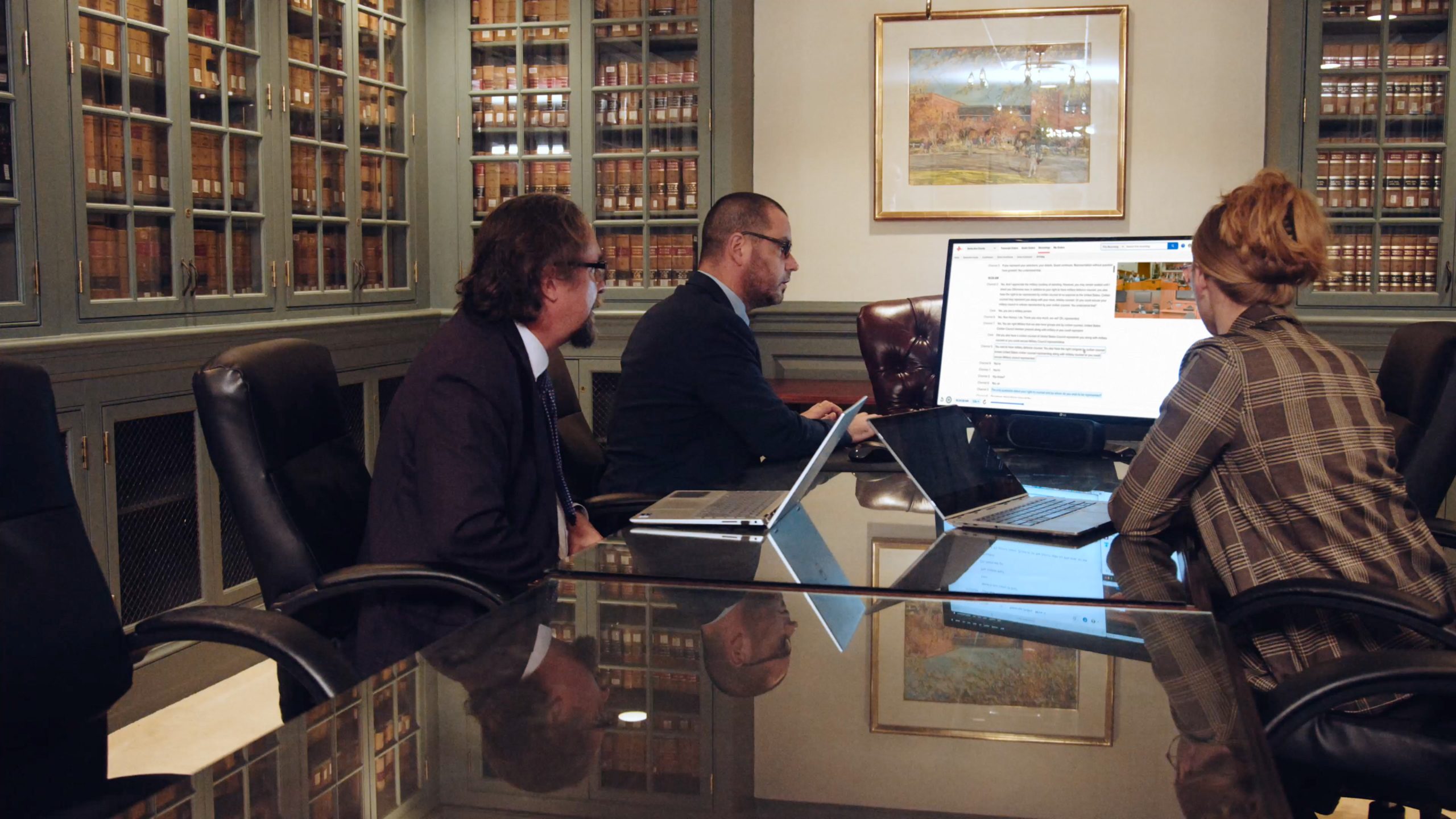
Start with the clerk’s question
In August 2026, FTR described a recurring question at demonstrations: “How would this work in our court?” Its answer is a business review for each Justice Cloud deployment, examining procedures, governance and the outcomes the court wants. That is a sensible service to sell alongside software with so many consequential permissions.
The pandemic had already forced a concrete change in the operating environment. FTR developed virtual recording and a Teams-based solution for Maricopa County Superior Court as hearings moved out of physical rooms. The court’s need to preserve proceedings survived the change of venue.
The lesson a reader can borrow is modest and demanding: follow information past the moment it is collected. Ask who must find it, who can see it, who verifies it and what they need to do next. A courthouse may possess every word of a hearing. The useful achievement is letting the right person reach the right words without an expedition.
Open the record
Explore the products, court access instructions and demonstrations.