In 2012, a young media buyer at the ad agency Crispin Porter + Bogusky was handed a familiar brief: reach college students for brands like Domino's Pizza. The channels existed - the campus newspaper, the radio station, the poster wall, the billboard near the dining hall. The problem was that buying any of it meant cold-calling one school at a time, negotiating with a rotating cast of 20-year-old ad managers, each with their own rates and rules. Alex Kronman, himself a recent grad and a former editor-in-chief of Colorado College's paper, The Catalyst, looked at that mess and saw a switchboard waiting to be built. He left the agency and built it. The company is Flytedesk.
Today Flytedesk operates the largest campus media network in the United States. It sits between roughly 2,300 student media organizations on one side and national brands, agencies and political campaigns on the other, and its core promise is deceptively simple: buy all of college media in one transaction instead of two thousand phone calls.
01 / The problemA market too fragmented to buy
Brands spend an estimated $70 billion a year trying to reach college students, and much of it lands through channels that ignore the campus experience entirely - generic social ads, streaming spots, the same feeds students share with everyone else. Meanwhile the media that students actually live inside - their own newspaper, their own radio host, the poster outside their lecture hall - stayed almost impossible to buy at scale. Every campus was its own tiny, idiosyncratic market. That fragmentation is exactly why brands kept saying the same thing to Kronman.
The genius of Flytedesk was to treat that chaos as inventory rather than an obstacle. It aggregates the supply - print, digital editions, radio, out-of-home, coasters, posters, sponsored social - and presents it to a buyer as a single, searchable marketplace. A brand manager can define an audience, see where ads will physically appear, place the order, pay, and later get proof it ran. What used to take a media team weeks of outreach compresses into an afternoon.
02 / The buildTwo thousand suppliers, one storefront
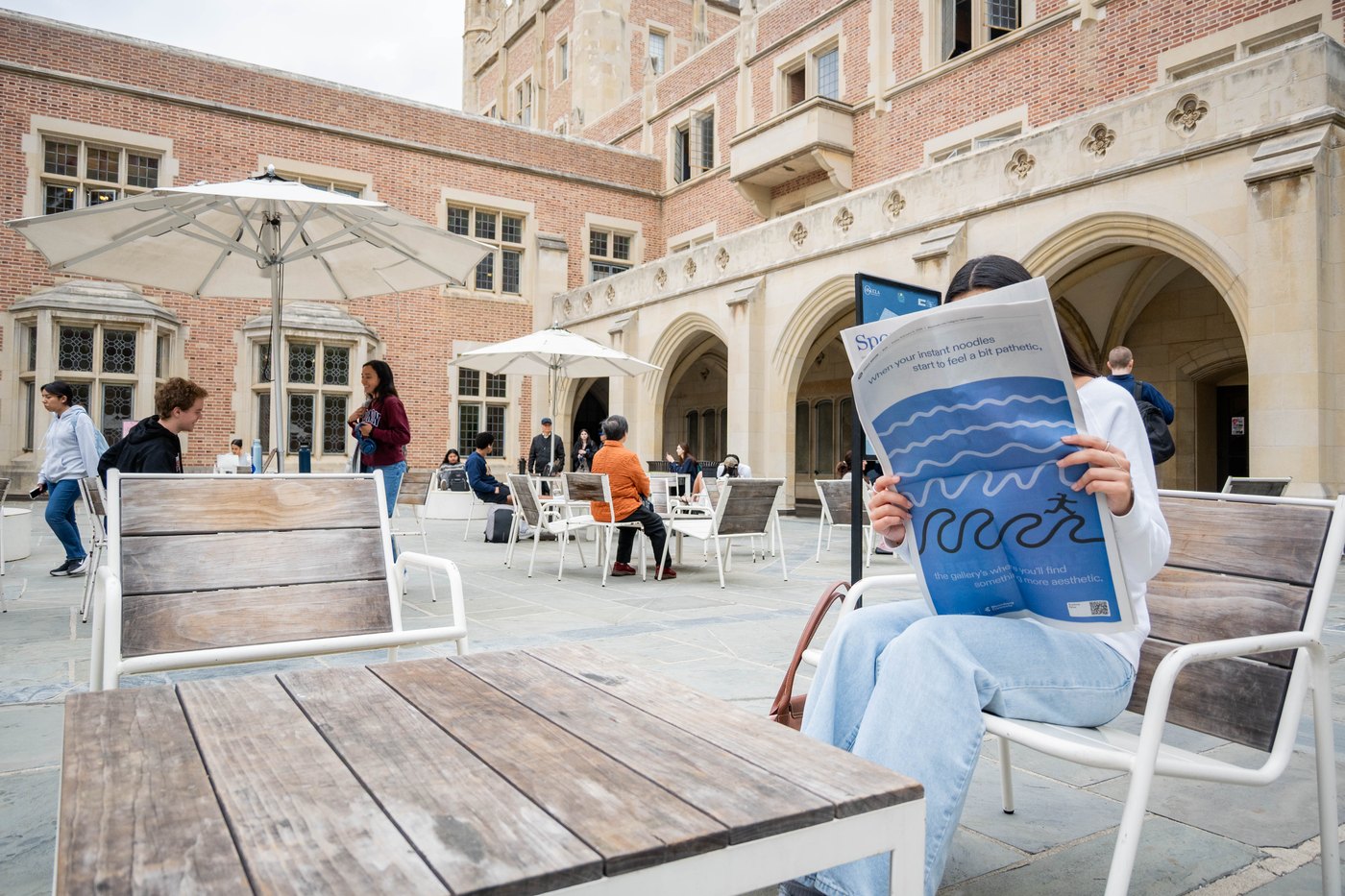
The channels Flytedesk assembles read like a tour of campus life. It is a strange, wonderful catalog, and its breadth is the point - a national campaign can span dozens of formats across dozens of schools without leaving the platform.
On the supply side, that catalog includes names any journalism student would recognize - The Stanford Daily, Penn State's Daily Collegian, the Iowa State Daily - alongside hundreds of smaller outlets. Crucially, Flytedesk does not try to run these newsrooms or override their standards. Each outlet keeps its own editorial policies, pricing and formats. The platform's job is discovery, transaction and verification, not control. That restraint is what earned it the trust of a community that has learned to be wary of outsiders promising to save student media.
The verification step is easy to overlook and quietly central. Anyone can sell a campus poster; proving it actually went up on the wall is harder, and in a market historically run on "trust me, we ran it," that receipt is a product in itself. It is the difference between a favor and a measurable media buy - and it is a big reason Fortune 500 marketers were willing to route budget through student channels at all.
03 / The customersUber, Trojan, and a lot of PACs
Flytedesk's client roster is a study in range. National brands including Uber, Adobe, Google, Target, Lyft, Nintendo and Grubhub have used it to reach students, as have consumer-packaged-goods companies, financial-services firms and, memorably, condom brands like Trojan. Then there is a vertical few outsiders expect: politics. Campaigns and PACs have at points made up around 30% of ads on the platform. When you own the pipe to 20 million young voters, election season becomes a season of its own.
Why do those buyers care about campus specifically? Because the college years are when brand loyalties get set - the bank account, the rideshare app, the food-delivery habit picked up at 19 and kept for a decade. Reaching a student through their own newspaper or campus billboard carries a credibility that a mid-scroll social ad rarely does. It is native to the place. That is the value Flytedesk is really selling: not just impressions, but impressions delivered inside the environment students trust.
04 / The businessA marketplace that takes a cut
The model is classic marketplace economics. Flytedesk takes a commission - a percentage of each campaign that flows across the platform - with rates that vary by scale. It aggregates fragmented, low-tech supply, adds discovery and trust, and sells reach to buyers who could never have assembled that supply themselves. Later it extended the same logic to the other side of the market, licensing management software directly to colleges so student media can build, price and monetize their own inventory.
Investors bought the thesis early. Flytedesk went through Techstars in 2015, and by 2018 had raised around $4.5 million, with backers including Steve Case's Revolution through its Rise of the Rest fund - a program built specifically to fund startups outside the coastal hubs - and Right Side Capital Management. Chuck Porter, the agency chairman who first watched Kronman wrestle with the problem, was among the believers. Total funding reached roughly $5.3 million.
The expertise behind the company is worth naming, because it explains why Flytedesk earned trust on both sides of a market that distrusts outsiders. Kronman had sat in both chairs. He had run a student newsroom as editor-in-chief of The Catalyst, so he understood how a campus paper actually works and what it needs to survive. He had also bought media at a major agency, so he understood exactly why national brands found campuses impossible to touch. Flytedesk is essentially the product that person would build - one fluent in the language of both the newsroom and the media plan, and unwilling to bulldoze either.
05 / The testWhen the campus closed
Every marketplace has a hidden fragility, and Flytedesk's arrived in March 2020. Its inventory was the campus itself - and overnight, the campus emptied. Students went home, printing paused, and the physical media that made the network special had no one to reach. The company laid off staff. It also did what durable marketplaces do under pressure: it leaned into the part of the business that could still run remotely, doubling down on software that lets student media manage and monetize their own operations regardless of what the ad market was doing that quarter.
It is a clean lesson in concentration risk. A network is only as resilient as the audience underneath it, and when that audience is tied to a single physical place, closing that place closes the business. The pivot toward tooling for colleges was less a reinvention than a hedge - a way to keep serving the same community when the ad dollars paused.
06 / The positionWhere it sits in the market
College media is not an empty field. Refuel Agency represents 3,400-plus student media partners; Campus Media Group and MediaMate work the same beat. What sets Flytedesk apart is its posture: software first, agency second. Where traditional reps sell through people and relationships, Flytedesk sells through a platform that any buyer can self-serve and any campus can plug into - and it hands verification back as proof. Its broader competition is not really the other reps at all. It is every digital channel fighting for the same college budget, and its counter-argument is that the campus is the one place a brand can still reach students where they are actually paying attention.
For a brand manager, the pitch is convenience and credibility in one buy. For a student newspaper, it is a lifeline: a way to earn real revenue from national advertisers without staffing a sales team or surrendering editorial control. Flytedesk's wager is that both of those needs outlast any single ad cycle - that as long as there are campuses, there is a market for reaching them, and someone has to run the switchboard.