The first useful thing Fingerprint put inside a children's game was an adult. Not an animated adult, or one of those stern permission screens that appears just as a child is having fun. A real parent could get a glimpse of what a child had done, then send a voice note or a line of encouragement back into the game. The feature had a slightly comic name, Mom-Comm. Its premise was serious: the phone was becoming a child's playroom, and parents had little idea what happened after the download.
The short version
- Fingerprint Digital began in 2010 and launched its first learning games in 2011.
- It moved from individual apps to curated, branded subscriptions for companies including Samsung.
- Its Kidomi library joined Sandbox Kids when Sandbox & Co. acquired Fingerprint in 2021.
Nancy MacIntyre, a former LeapFrog executive, had noticed two different kinds of bewilderment. Parents faced a vast app store with few clues about quality. Small developers could build a good game and still have no reliable route to families. Fingerprint's answer was a network: make some games, admit other developers' games, recommend the next one, and give parents a way to see the learning behind the taps. Co-founders Daniel Klaus and Kevin Wendle came from K2MediaLabs, which helped get the company started.
A message from the other side of the screen
When Fingerprint Play arrived in December 2011, its early lineup included firefighters, veterinarians, fairy princesses and a music game. Children could report accomplishments with prepared messages. Parents could answer with audio or text. This was a neat answer to a peculiar problem: children wanted an absorbing game; their buyers wanted reassurance that the time spent with it counted for something. The parent feature was also a discovery tool. A recommendation engine could suggest more games from the network based on play patterns.
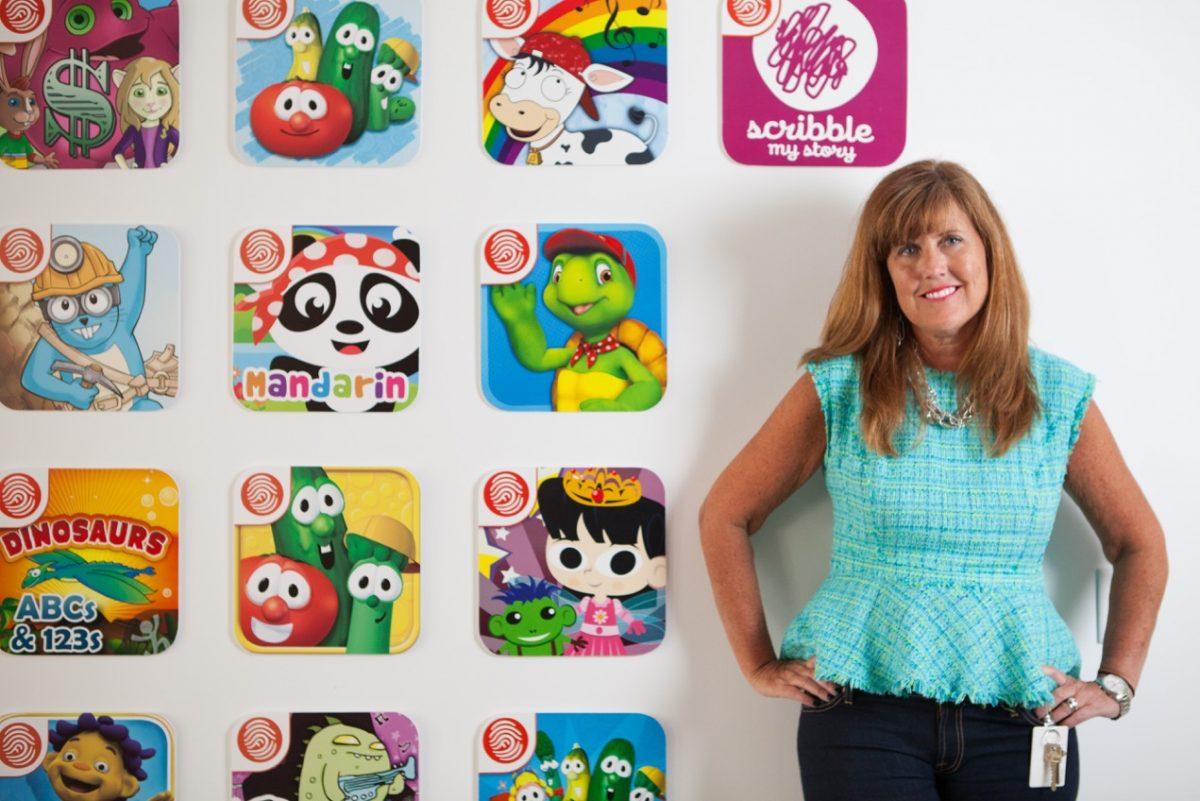
The early response looked promising. In its first weeks, the company reported more than 270,000 play sessions and two million minutes. By September 2012, Fingerprint said 14 apps had been played for more than 20 million minutes. Corus Entertainment, with children's properties of its own, invested. The cost of pursuing a platform was rising: Fingerprint had raised just under $7.8 million in total by then, according to contemporary reporting. A $10.85 million Series B led by DreamWorks Animation followed in 2014. Fingerprint said the network was reaching roughly three million users.
The game was never enough
An app can be a hit without becoming a habit. One contemporary reviewer of Fingerprint's games found the animation improving but did not see her young player repeatedly returning. That observation points to the hard part of the business. The winner in children's media is often the familiar character a child asks for again, and a single independent studio cannot always buy that kind of recognition. Fingerprint's company-building move was to gather the characters and the makers in one place, then make that place available wherever families already owned a screen.
It began operating custom networks for other companies: Samsung's KidsTime, later Samsung Kids; Sylvan Learning's SylvanPlay; and AstroPlay. The platform combined content licensing, recommendations, parent controls and the technical work of delivering many apps under one brand. Samsung's 2016 announcement described hundreds of games and books, curated with Fingerprint's educational experts, behind a service that cost $7.99 per month after trial. That was a price for the Samsung service, not a published Fingerprint licensing fee. The company's own contracts and margins were not disclosed.
The platform also solved a developer's distribution problem. MacIntyre described the typical partner as a tiny shop that could produce appealing work but needed help finding an audience. Fingerprint screened titles for quality, fun and device support. In a 2018 interview, she explained that apps for the network had to shed advertising, in-app purchases and online sharing features that were unsuitable for the child-focused environment. That editorial labor was part of the product. Trust, unlike a game, does not come in a download.
“There are tens of thousands of kids’ apps out there, and for parents just discovering what apps are good ... is problematic.”Nancy MacIntyre, 2011
From aisle to all-access pass
Fingerprint kept expanding the shelf. In 2015 it acquired Scribble Press, a tool with which children made their own digital books, and Cognitive Kid, whose apps ranged from history to dinosaurs. The additions brought the reported library to about 800 apps. Scribble Press had already been used in tens of thousands of classrooms. This was a different form of learning game: the child made the book rather than merely finishing it.
By 2018, MacIntyre said Fingerprint had 3,000 apps from 300 developers in 60 countries. The figures changed over time and were company reports, but the direction was plain. Fingerprint had become a content operation, a software platform and a distributor at once. Its customers included families, but increasingly they were the businesses that wanted to sell a family subscription without building the library and plumbing themselves. Verizon's GizmoTab and Highlights Every Day were among partner services. MacIntyre reported that paid subscriptions across those services had quadrupled to 250,000 in a year.
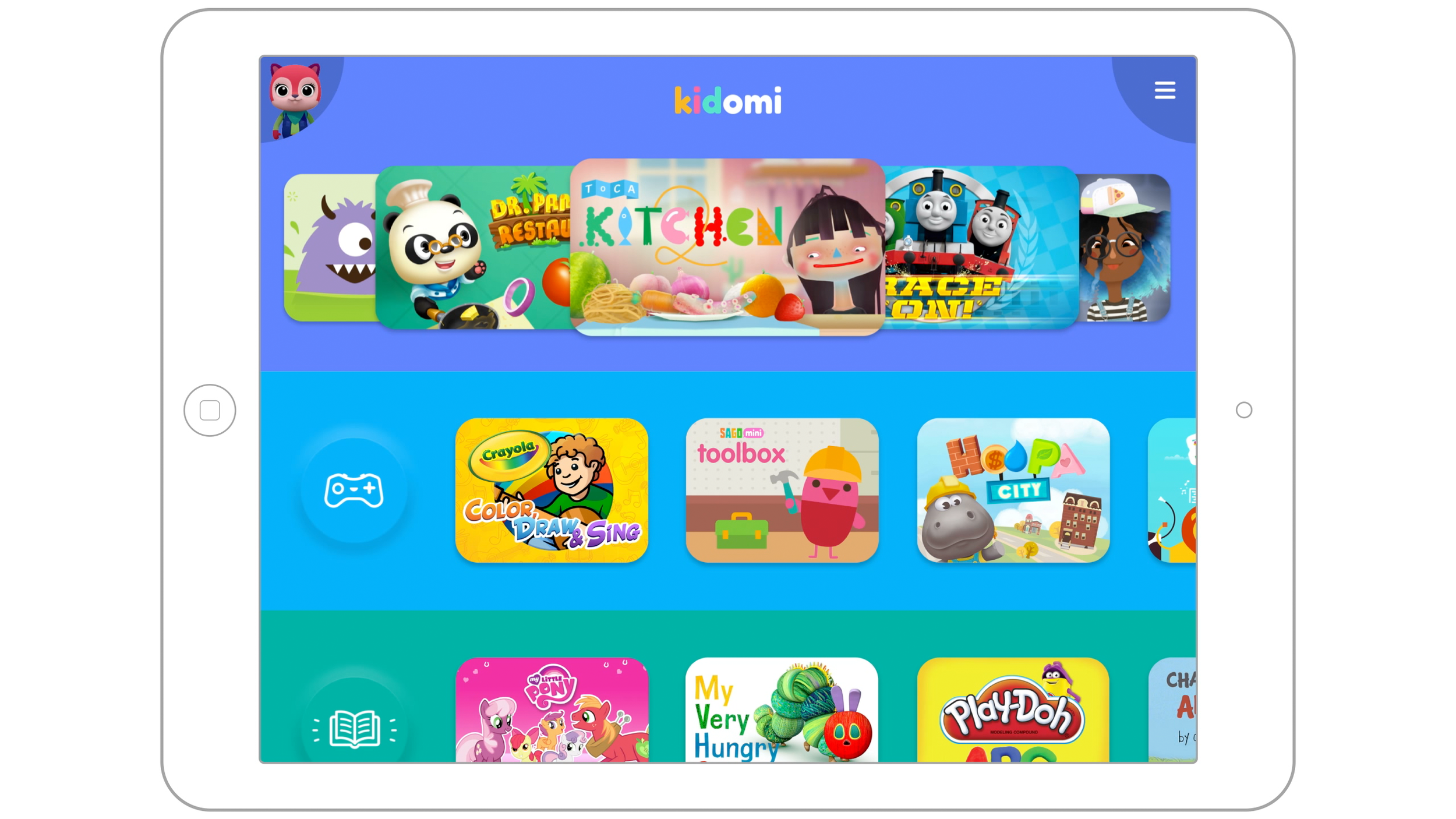
Kidomi was the company putting that idea under its own name. The 2018 subscription brought games, books and video into one interface. A parent could set profiles and time limits. One independent review liked the curation and controls but found moving between apps awkward; a library of third-party products does not automatically feel like one product. That is the cost of aggregation. The benefit is that parents can try a broad catalog without purchasing each title separately. The drawback is just as concrete: when the subscription ends, access to that catalog ends with it.
What the shelf was worth
Fingerprint's path is useful because its most durable invention was organizational. A small studio can copy the first move: watch what confuses the buyer, make progress visible, and bundle compatible work from partners. It can also copy the discipline of rejecting content that violates the promise of the shelf. The harder part to copy is the reach. Fingerprint had media investors, a growing catalog, contracts with developers and distribution through hardware makers and carriers. Without those, a subscription library is merely a pile of apps asking the same parent for another monthly payment.
The 2021 sale to Sandbox & Co. put Kidomi beside Hopster and Curious World inside Sandbox Kids. Terms of the acquisition were not announced. The combined portfolio, not Fingerprint alone, reported more than 500,000 families playing monthly across over 100 countries. MacIntyre was named to lead the new division. Fingerprint had begun with a voice in a game; it ended as part of a larger system for filling a child's screen. The small voice mattered because it told the company who else was in the room.