The awkward part came after the sale. Cognida.ai had built a predictive modeling platform, aimed it at business users, and found customers willing to buy. Then the customers needed help. They needed people to work through hypotheses, handle the experimentation, and make the software useful inside their businesses. For Feroze Mohammed, an executive with years of experience in technology delivery, the purchase was the beginning of an education.
There is a small comedy in this predicament. A demonstration can make a difficult job look agreeably simple. The audience sees the result; the working day contains everything around it. Someone still has to understand the question, connect the data, and decide what to do next. Mohammed’s account of Cognida’s early years is frank: the product found buyers, and the business still had to change.
“We morphed over time,” he says. The platform remained, but Cognida began approaching customers with business solutions and the people needed to implement them. That adjustment gives his founder story its shape. He had spent much of his career organizing technology work at scale. Now he was discovering what a smaller AI company would have to take on for itself.
A long apprenticeship in making things work
Mohammed grew up in a small town in Odisha, in eastern India, before moving to Hyderabad for his master’s studies. He earned a Master of Computer Applications at the University of Hyderabad. His education later included the Indian School of Business’s PGPMax program and executive education at Wharton. The path joined technical training with the study of managing a business.
At CMC R&D, he worked on products. He then joined Sierra Atlantic while it was still a young company, meeting its founder, Raju Reddy. His responsibilities there ranged across product development, integration, delivery, and emerging markets. The experience put the thing being built and the organization building it within the same field of view.
Sierra Atlantic became part of Hitachi Consulting. Mohammed’s work expanded into global delivery and international business leadership. In 2017, he appeared on a Delhi forum panel about the convergence of information technology and operational technology. The topic was concrete: connecting digital systems with the machinery and processes of business. Years before Cognida, the connection between software and operations was already part of his working life.
- CMC R&DProduct development
- Sierra AtlanticProducts, integration and global delivery
- HitachiInternational technology leadership
- 2021 / 22Cognida begins; first client follows
- 2026Automate joins Cognida
Looking through the windscreen
When he began Cognida in late 2021, with its first client arriving in early 2022, Mohammed wanted to concentrate on insights from data. His earlier work had shown him how those insights could change a business. He also saw a crowded market in reporting what had already happened. Predictive and prescriptive analysis offered a different direction: helping a business anticipate events and choose what to do.
Even the name carried the plan. Cognida.ai stands for Cognitive Insights from Data using AI. It is a compact company name with quite a lot of homework tucked inside it.
The original product offer was designed to make predictive modeling accessible to business users. Buying software, however, did not remove their need for specialist help. Cognida kept its underlying tools and changed the offer around them. Revenue growth, operational efficiency, and customer experience became the kinds of business problems it brought to the conversation. The customer could start with a job to be done.
The small deal with a complicated guest list
Mohammed’s explanation of the opportunity becomes more pointed when he discusses large technology-services companies. In his view, their incentives can make smaller AI projects awkward. An account manager pursuing a deal worth millions may have limited enthusiasm for one worth a few hundred thousand dollars, even when the smaller assignment requires considerable expertise.
That assignment can need a data scientist, a computer-vision specialist, and someone familiar with language models, each contributing for part of the project. The team has to combine those skills without turning a narrow customer problem into an enormous staffing exercise. Mohammed sees room for a company organized around that kind of work.
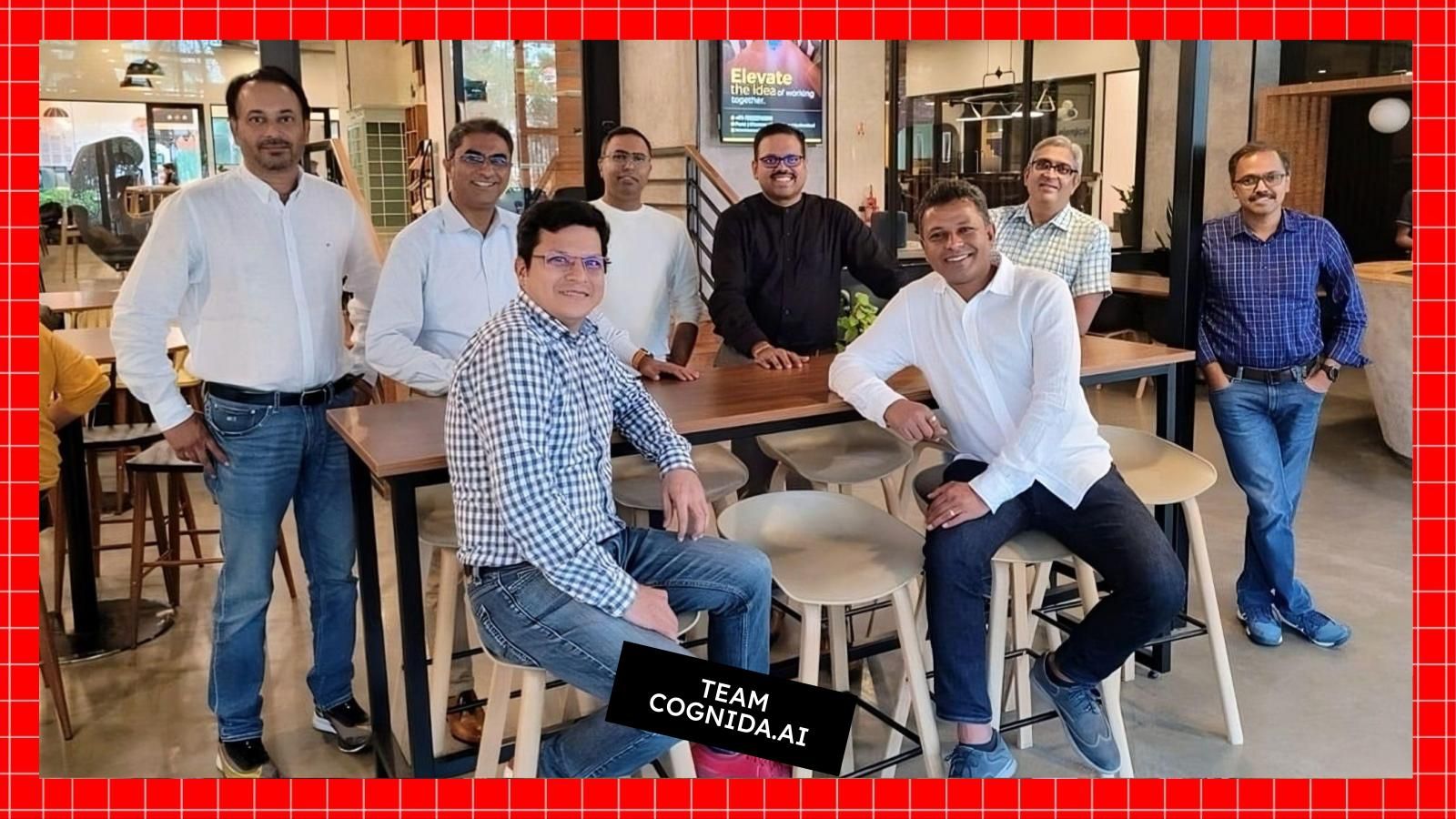
It is a revealing argument from someone who has worked inside large delivery organizations. He is thinking about the commercial incentives and the composition of a team as much as the technology. Cognida’s starting resources included an approximately $4 million seed round, which he described as coming largely from friends, family, believers in the venture, and the founders themselves. The initial bet depended on software and the ability to put it to work.
The price of staying useful
A working AI system also needs attention after deployment. Mohammed has described a business model with three parts: getting the solution established, charging for its software, and providing continuing specialist support. In March 2025, he put the per-client mix at roughly 75 percent initial setup, 15 percent recurring software revenue, and 10 percent ongoing services. He expected recurring components to become a larger share of the business over time.
The setup work included understanding a customer’s processes and identifying useful applications. One format he described was a two-day workshop that left the customer with two working use cases. It gave the discussion something tangible to turn around. A plan is easier to argue with when part of it is already running.
- Initial setup
- Recurring software
- Ongoing services
His thinking about pricing went further. In some engagements, he said, Cognida was already using success fees. He imagined a future in which an AI services provider could operate a business process for a customer and charge in relation to usage or the value delivered. That was a direction he was considering, with the responsibilities of an ongoing operator built into it.
There is an appealing severity to the idea. A supplier tied to outcomes has to remain interested in what happens after installation. The commercial relationship keeps the customer’s actual work in view. For Mohammed, whose career spans products and delivery, that combination appears to be a place worth building.
The numbers belong to the working day
In February 2025, Cognida announced a $15 million Series A led by Nexus Venture Partners. The investment was intended to support its solution library, platform development, implementation teams, and market expansion. The funding gave Mohammed more resources to pursue a model already being tested with customers.
By September that year, he reported more than 40 enterprise clients and a team exceeding 250 across North America and Asia. When asked about a favorite company memory, he chose a manufacturing forecasting project. In his account, the team delivered it in 12 weeks and improved forecast accuracy by 45 percent. The satisfaction he described came from colleagues working through unfamiliar techniques and seeing the result matter to a customer.
Led by Nexus Venture Partners, to expand Cognida’s enterprise AI work.
Those figures describe a particular stage of the company. The more personal detail is his choice of memory. Asked to pick a moment, he returned to a team and a customer problem. It fits the recurring subject of his interviews: the labor involved in making a technical possibility work somewhere specific.
The people around the table
His public posts offer smaller glimpses of the organization he wants to build. He has highlighted a communication workshop led by Deepika Mahidhara, and described a US all-hands that included employees’ families. Both details expand the picture beyond engineering assignments and funding announcements.
“When we communicate better, we connect better.”
Feroze Mohammed
Communication has a practical place in this work. Specialists have to explain possibilities to customers, while customers have to explain how their businesses operate. A forecast, for example, becomes useful through a conversation about the decisions it should inform. Mohammed’s attention to that exchange makes sense beside his emphasis on implementation.
He has also described leadership dinners in Palo Alto and San Francisco, including one co-hosted with Workato. His account dwells on candid discussion of integrations, governance, and adoption. The table becomes another place to learn what enterprises are encountering. The networking is there, of course. So is the opportunity to hear a problem before it has been tidied into a presentation.
An invoice makes a stern critic
In June 2026, Cognida’s partnership with Klarity brought business-process context further into its approach. The aim was to understand how an enterprise actually works before designing its AI systems. Mohammed argued that a company’s accumulated knowledge of decisions and processes could become a lasting advantage.
On August 24, Cognida announced that it had acquired Automate from Within, formerly Klarity. The accounting and operations platform had already processed millions of business documents, according to the announcement. Cognida knew it through an existing partnership. Nick Tiscornia continued as general manager and Rama Pagadala as senior vice president of engineering, with the team joining Cognida.
An accounting workflow is an exacting place to pursue Mohammed’s ambitions. Contracts, invoices, purchase orders, approvals, and accounting policies come with consequences. Automate’s appeal lies in bringing those rules and controls into the system. A charming answer will receive a cool reception if nobody can explain how the books arrived at it.
Mohammed named the essentials plainly: “It is context, controls, and accountability.” The acquisition takes his company further into work where a system must be understood, checked, and relied upon. His story began with customers needing help after a software sale. It now reaches an equally practical question: who keeps the work dependable once the technology becomes part of the business?