The useful thing about an old Windows application is that it has no interest in your pitch deck. It will not admire the model, applaud the demo or politely expose an API. It sits inside a customer’s business, doing a job it learned years ago, and waits for somebody to click the correct gray button. Faizaan Chishtie has built his latest company around that stubborn little fact.
Minicor, the San Francisco company Chishtie co-founded with Saheed Akinbile, gives AI companies a way into desktop systems that were never designed to receive machine-generated work. A team describes the workflow. Minicor turns it into an endpoint. Behind the tidy request, software operates a real Windows environment, watches what happens, recovers from failures and records the run. The aim is less theatrical than a robot clicking around a screen. It is to make the robot dependable when the customer is no longer watching the demo.
The company joined Y Combinator’s Spring 2026 batch and says it is processing thousands of workflows a week. One customer went from proof of concept to production in three weeks. Those are neat sentences. Chishtie’s route to them was magnificently untidy.
Chapter one
The suit, the sofa and the U-Haul
Chishtie describes himself as a software developer at heart. The affection began early: in grade six, he and friends experimented with batch files at school, then he moved on to Java. At the University of Ottawa, the builder impulse acquired a little ceremony. He once put on a suit to pitch a roommate-matching app. It had a launch-party fantasy attached. Like many student ideas, it offered the luxurious feeling that distribution would be somebody else’s concern.
Microsoft internships gave him a more convincing future. He had been recruited, flown to Redmond and paid well, especially once American dollars became Canadian ones. For a software engineering student, the established path looked both flattering and sensible. Yet remote work during the pandemic loosened its hold. Chishtie considered graduate study in theoretical computer science. He briefly considered music; two of his songs were signed, he later said, before he removed them. Then a friend invited him to join a startup through NEXT Canada.
The idea began as AI-assisted interior decoration before the current AI boom made those words a compulsory garnish. Customers did not pay. The founders offered decoration as a service and celebrated their first $140. Conversations produced a more useful complaint: younger customers liked the furniture but could not afford to buy it. The company pivoted to rental.
Demand appeared. So did furniture. Sofas are inconsiderate software objects: they require inventory, storage, transport and occasionally a $600 U-Haul. The customer economics were generous because the company economics were not. Chishtie put in his own money, declined a Microsoft job and expected venture capital to arrive before the cash disappeared. It did not arrive in the required quantity or on the required schedule.
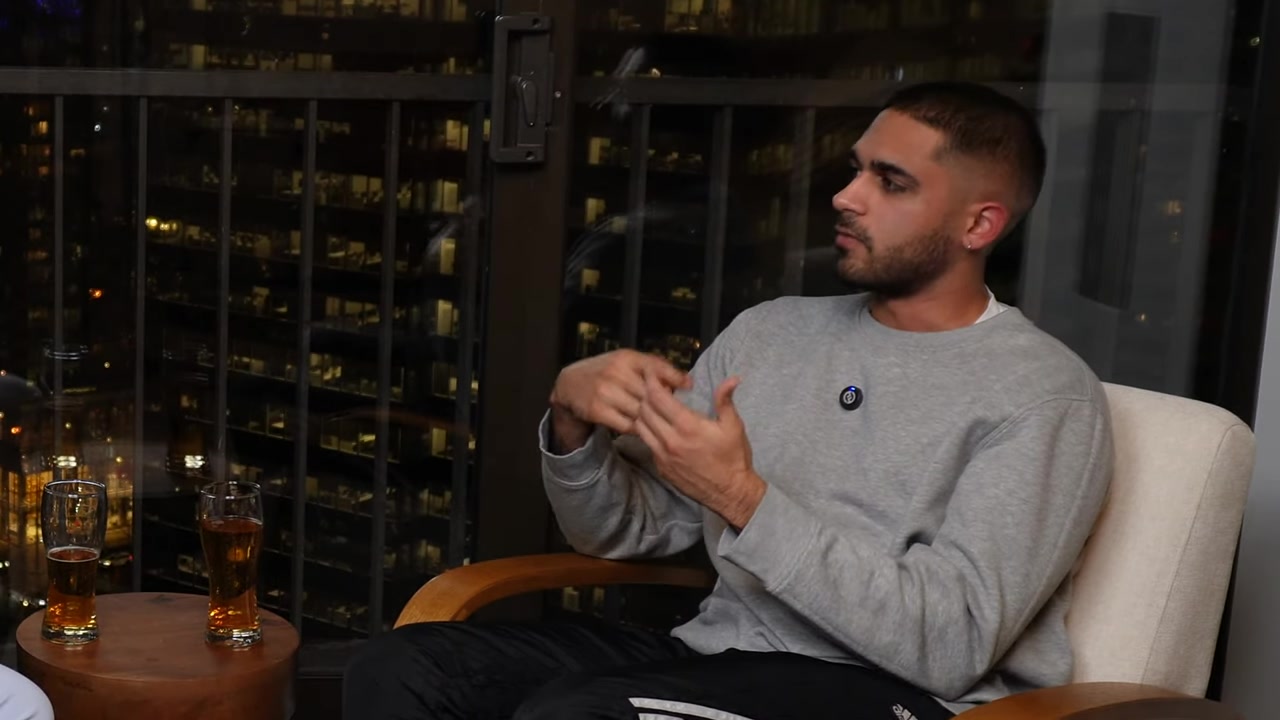
“Software developer at heart, I’ve always loved code.”Faizaan Chishtie, Bad Advice podcast
The business closed in 2022. Chishtie moved to Toronto carrying debt and a new, inconvenient education: a startup can have customers, momentum and accelerator logos while still possessing a fatal relationship with arithmetic. The experience also taught him to distrust cosmetic scale. A service can reveal demand. A warm investor conversation is not a financing process. A customer enjoying a bargain does not certify the business supplying it.
The reset
Back inside the machinery
After Homeboard, he returned to engineering. He worked at Secoda and Typecast, then joined Phoenix as an early engineer. The path sounds linear when compressed into a sentence. It did not feel linear to him. In a candid 2025 interview, Chishtie described the whiplash of losing the first company, leaving one young engineering role and wondering whether he belonged in software at all. Phoenix became the turn. The founders asked first about how he had built revenue, skipped the conventional technical performance and hired him into a small engineering team.
There, the two halves of his résumé began to cooperate. He could code, but he had also moved furniture, sold a service, spoken to investors and learned what an implementation feels like from the customer’s side. Integrations sat at the center of that overlap: unglamorous connections between systems, full of exceptions that arrive after the architecture diagram has been admired.
Akinbile had been in the picture much longer. The pair met in a UX class in 2019 and built Software For Love during the pandemic. The student-led nonprofit matched volunteer technologists with community projects; its 2021 report counted 50 volunteers and more than $5,500 in donations. They learned how each other worked before a cap table made the question expensive.
They discussed the seed of a company during a 2022 walk in Ottawa. Chishtie began building in earnest the following year, at first around observability and error recovery for API integrations. He called Akinbile and argued for an hour and a half that they should do it together. Akinbile initially helped as a friend. Chishtie knew the relationship had changed when his friend began roasting the implementation. Criticism, in the right hands, is a form of moving in.
The pull
A customer chooses the company
The decisive pivot did not arrive in a strategy retreat. A prospect moved unusually fast when the team promised to connect to an on-premise desktop system. The request exposed a more urgent problem than general integration tooling. AI companies were winning interest in legacy industries, then discovering that the system of record was a desktop application with no usable API. Their product could generate the answer. It could not put the answer where the customer needed it.
This is where the old software becomes commercially interesting. Replacing a core system is slow, risky and often somebody else’s project. An AI vendor needs the current deal to work with the current screen. The only available interface may be the same one a person uses: windows, fields, buttons and whatever surprising dialog box appears on a rainy Tuesday.
Desktop automation has existed for years. Reliability at scale is the less settled part. A workflow that fails one time in a hundred looks excellent in a demo and terrible after thousands of runs. Minicor’s bet is that execution infrastructure, observability, video replay and recovery should be part of the product rather than an engineer’s recurring punishment.
The team also learned to narrow the buyer. “Our key unlock was figuring out who exactly our customers were,” Chishtie wrote after the YC batch. The crucial qualifier was whether an AI company sold to enterprises. In that setting, a legacy integration was not a vague modernization wish. It was the obstacle between a live sales pipeline and a deployed product.
What to steal
The services are trying to tell you something
There is a practical founder lesson in Minicor’s route. Chishtie once resisted the suggestion that an integration platform would require services. It sounded impure, difficult to scale and inconvenient to investors. Later, accepting implementation work helped the team understand what customers actually needed. The service was not the destination. It was field research with an invoice.
A second lesson concerns specificity. “Integrations” can describe half the software economy. “AI companies blocked from enterprise deployment because a customer uses a legacy Windows application” describes a moment, a buyer and a reason to act. The smaller sentence contains the larger business because it explains why the purchase happens now.
The third lesson is about co-founder fit. Chishtie and Akinbile did not meet through a speed-dating form. They had already navigated university work and a volunteer organization together. Minicor’s public hiring copy says the team maintains a strict no-ego policy. The phrase is easy to print. Their shared history gives it a chance of surviving contact with a broken automation at two in the morning.
The model may be new. The system of record is often old. The business belongs to whoever can make the introduction.The Minicor opportunity, in one sentence
Chishtie is now in San Francisco, hiring engineers and talking about product-market fit after two years of searching. Minicor has changed names, buyers and product surfaces along the way. The through-line is less fashionable: he kept returning to the systems between systems, the place where a polished product meets a customer’s actual operations and discovers all the bits the demo omitted.
Enterprise software is a museum where every exhibit is still on payroll. The mainframe, the desktop client and the AI agent occupy the same building because no curator is brave enough to close a profitable wing. Chishtie’s aspiration is not to win an argument about which era should prevail. It is to let them work together reliably enough that the customer can get on with the day.
That may be the more durable form of modernization. The oldest software in the room does not need to become charming. It needs a dependable interpreter. After the suits, sofas, U-Hauls, rejections, warm introductions and very long customer calls, Chishtie appears to have found the job.