A prescription has a peculiar social life. A doctor writes it for a reason; the reason changes; the prescription stays. Add a second condition, another specialist, a hospital discharge, a new lab result. Soon the question is no longer whether each medicine once made sense. It is whether the whole arrangement still does.
FeelBetter, a company with teams in Boston and Tel Aviv, has made that question its business. It sells healthcare organizations software that sorts patients by medication-related risk, suggests changes for clinical review, and follows the patients after a decision. Its buyers include health systems, accountable care organizations and long-term care providers. Its working audience is often the clinical pharmacist: the person expected to make sense of the drug list while the clock insists on moving.
The short version
- FeelBetter puts patients with complicated regimens into a ranked review queue.
- Its software joins drug data with diagnoses, labs and care history, then proposes actions for clinicians.
- A 2024 retrospective study found useful risk ranking and pharmacist agreement with 89.2% of reviewed high-priority warnings.
- The real test is whether a care team can act on those recommendations and improve outcomes in its own setting.
The patient hiding in the list
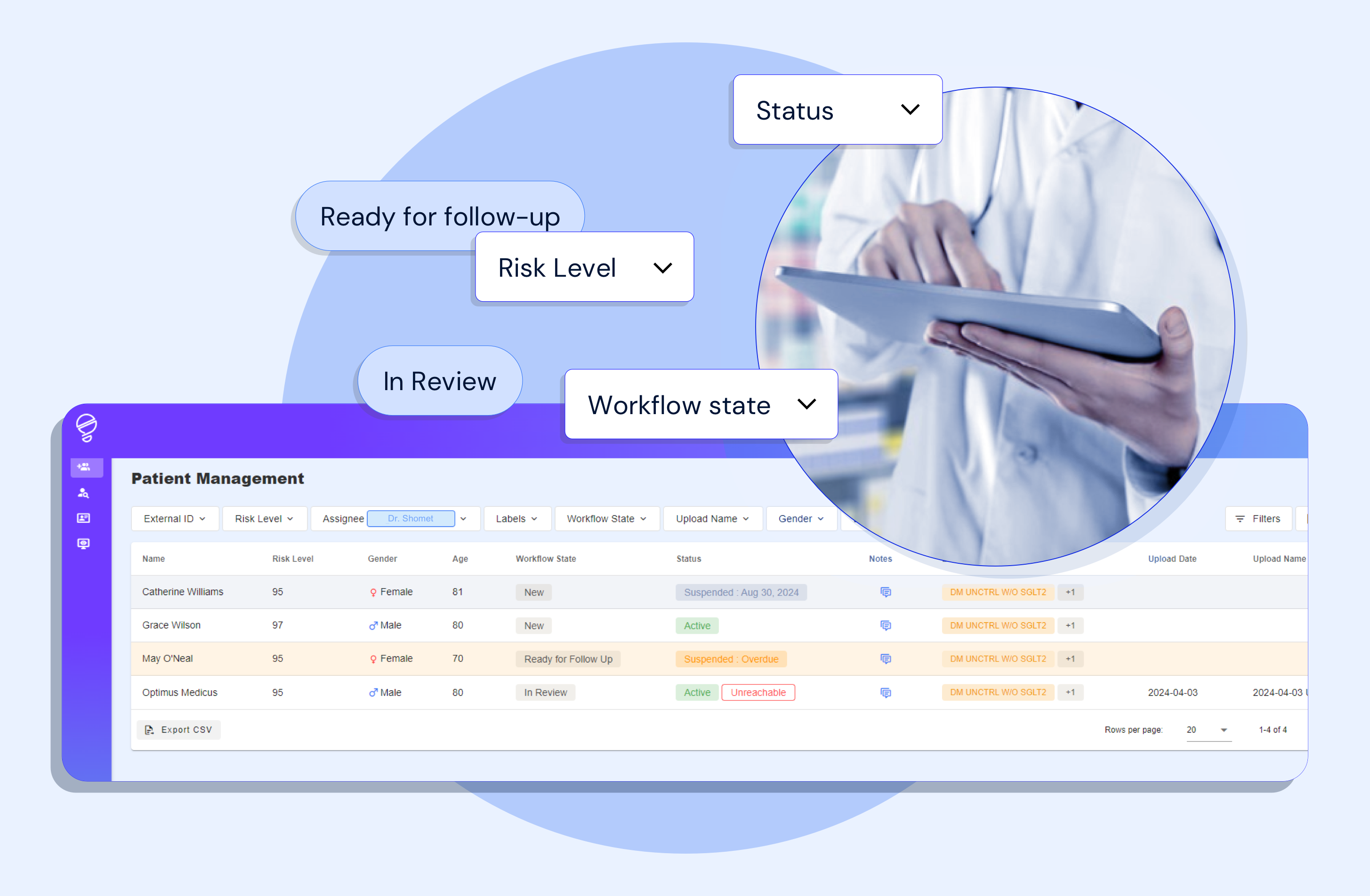
On the company's product walkthrough, a fictional patient named May is 75, has nine chronic conditions and takes 14 medicines. It is a convenient example, but hardly a fanciful one. In a published evaluation of FeelBetter, the median patient had eight medications and 14 items on an electronic health record problem list. A chart like that does not offer a single neat mistake to correct. It offers a moving set of trade-offs.
Traditional prescribing alerts tend to catch the moment a drug is ordered. They are useful for a collision between two medications, but much less suited to the slow accumulation of an entire regimen. A full manual review can see more. It also consumes scarce pharmacist time. FeelBetter's pitch is to decide which charts deserve that time first, then bring the evidence and possible interventions into one place.
Find patients at risk of medication-related deterioration.
Give pharmacists a workable patient queue.
Offer patient-specific changes to consider.
Track what happens after intervention.
The four product names sound like a management seminar, but their order is sensible. A risk score without a route to the right clinician is a number stranded on a screen. A recommendation without follow-up is merely a suggestion with good manners. FeelBetter tries to connect all four stages inside existing clinical workflows, including electronic records and claims data.
The useful difference between prediction and proof
In 2024, researchers at Brigham and Women's Hospital published a retrospective evaluation involving 108,817 older patients with multiple conditions and medications. FeelBetter's model sorted patients into risk levels for emergency department visits and hospitalizations. In the top one percent of predicted hospitalization risk, the odds of a hospitalization over the following three months were 17.3 times those of the middle reference group. It also produced medication warnings for a smaller set of 200 selected patients. Two experienced pharmacists judged 1,151 of 1,290 reviewed warnings correct - 89.2 percent.
Study measures are from a single academic medical center. The study tested prediction and recommendation accuracy; it did not test whether using the system improved patient outcomes.
That last distinction is the hinge. A model can find someone likely to enter a hospital and still fail to prevent the trip. The study was conducted at one academic center, and its authors said a prospective test of outcomes was the next step. FeelBetter announced such a collaboration with Brigham and Women's investigators in 2024. Publicly available evidence should be read in that sequence: first, can it identify risk and make defensible suggestions; next, can clinicians use those suggestions to change what happens?
“A tool designed to automate manual processes and scale the personalized support physicians and clinical pharmacists provide to patients.”Jim Barr, Atlantic Health System
What persuaded a buyer to widen the circle
Leumit Health Services in Israel began using FeelBetter in 2022. By May 2024, it was expanding the platform from pharmacists to primary care physicians. The announced reason was a year of real-world results from more than 170,000 patients. Leumit and FeelBetter reported 24 percent fewer preventable hospitalizations among high-risk polypharmacy patients and a 350 percent increase in clinical interventions. They also said pharmacist capacity had increased fivefold. Those figures describe a reported deployment; they are not the same as a randomized comparison. Still, the organizational decision is revealing: after a pharmacist-led start, the buyer wanted more clinicians to have the tool.
Atlantic Health System made a different but related bet in 2024, announcing use across its aligned accountable care organizations. These groups have a financial and clinical reason to keep patients well outside the hospital. A preventable admission is costly to the system and worse for the person admitted. In that market, a tool that helps a pharmacist intervene earlier has a clearer buyer than a general-purpose AI assistant in search of a use case.
Long-term care made another test bed. Americare piloted FeelBetter across eight facilities and 370 residents, then announced a broader partnership in November 2024. FeelBetter also integrated with PointClickCare, a common platform in that sector. The setting matters: residents' conditions change, prescriptions cross handoffs, and the staff member who notices a decline may not be the one who wrote the medicine. An extra dashboard would be a poor answer. A useful tool has to live where the care team already works.
A company built around the clinician's minute
Co-founders Liat Primor, the chief executive, and Yoram Hordan, the operations and technology leader, came from pharmaceutical and technology backgrounds. The company describes a team of physicians, clinical pharmacists, engineers and health leaders. That mix is visible in the product design: software does the sorting and drafting; licensed professionals remain responsible for the clinical decision. Its commercial model is enterprise software integrated into a buyer's workflow. Public pricing is not posted, so a buyer would need to examine contract cost beside time saved, intervention rates and patient outcomes.
FeelBetter raised $5.9 million in July 2023, bringing its announced total to $8 million. Its own site now says the platform has served more than 400,000 patients across health systems, accountable care groups and long-term care. It also advertises MedBuddy, an AI pharmacotherapy assistant, with beta early access listed for the first quarter of 2026. The product promises patient insights and proposed clinical actions in seconds; the public page does not establish a general release.
What can another care organization copy? Start with a population where medication complexity and preventable utilization are both high. Rank patients before filling the pharmacist's queue. Make every recommendation explain its clinical trigger and evidence. Record whether the clinician acted, then watch the patient's course. The idea is simple enough to fit on a card. Doing it safely takes good data, a willing care team, and enough pharmacist capacity to turn a flagged patient into an actual conversation.
The interesting thing about FeelBetter is that it treats attention as a clinical resource. A hospital can buy more alerts with almost no effort. It cannot buy another hour in a pharmacist's day so easily. The company is trying to make that hour count.