The first customers had an inconvenient habit: they used the product in environments its creators had not quite imagined. Ezhilarasan Natarajan could have described CoreStack’s arrival as a clean procession from good idea to happy buyer. Instead, he acknowledged that the initial rollout brought problems. The team had to understand the constraints and adjust. For a founder selling software that promises to impose order, this was a useful introduction to disorder.
“Our customers’ environment was quite different than what we initially envisaged,” he said. There is an entire enterprise software business tucked inside that sentence. The diagram looks tidy. The customer has older systems, existing tools, people with different priorities and rules that cannot simply be wished away. Natarajan’s task was to make his idea work in that company, rather than in the company the diagram preferred.
He goes by Ez. The nickname is pronounced “Easy,” which gives the founder of a cloud governance company a modest linguistic advantage. His subject can otherwise sound like a committee has been left alone with a dictionary. Cost, compliance, consumption, operations: each word represents a real responsibility, and together they can make an exciting technology feel like an expanding collection of chores.
Natarajan built CoreStack around those chores. His argument is that businesses can use new technology more confidently when they can see what it is doing, what it costs and whether it follows their rules. It is a practical ambition with an interesting consequence. The person who helps an organization control its cloud may also help it do more with it.
An education in moving things
A native of Chennai, Natarajan graduated from the University of Madras in 1998 with a gold medal in computer science. His early career took him through Alcatel-Lucent, i2 Technologies and Texas Instruments. Systems needed to be migrated and integrated. New computing arrangements had to coexist with what companies already owned. Long before CoreStack, he was working in the awkward space between a promising destination and the machinery required to get there.
At Mindtree, that work grew into cloud services. Between 2010 and 2012, he relocated to Seattle to lead work on the company’s Microsoft partnership supporting Azure’s growth. Work on China’s Azure and Office 365 services followed, as did involvement in Australia’s Optus Yes Cloud project. These were geographically different assignments with a shared concern: making large computing services function in the circumstances of actual customers.
He later held a vice president role at Capgemini. By the time he became a founder, his experience included engineering, service delivery and business leadership. That background helps explain the particular opportunity he pursued. He had spent years around the organizations supplying and operating technology. CoreStack would address the organizations trying to consume it without losing track of the consequences.
The venture began as CloudEnablers in 2015, with Natarajan and three other founders: Thiruvalluvar NB, Sabapathy Arumugam and Krishnakumar Narayanan. The CoreStack product followed in 2016. They brought long corporate careers to a young company and initially financed the work themselves. The founding wager was that enterprises would use multiple clouds, and would need a coherent way to govern them.
A product earns its place
The early proposition was concrete. Enterprises were facing unpredictable bills, services that had spread without consistent oversight, slow provisioning of development environments and improvised approaches to audits. CoreStack aimed to coordinate existing services and tools, adding automation across them. For Natarajan, the point was to make what customers already used work together more effectively.
The team called its approach Cloud as Code. Underneath the phrase was a recurring enterprise requirement: make policy and operational intent something software can apply consistently. A company choosing several cloud providers should still be able to enforce its own expectations. Otherwise, every additional option brings another set of arrangements to supervise. Choice is delightful until it requires its own administrative staff.
Natarajan was open about another early error: the team had built many features while giving user experience too little attention. He treated that as a reason to correct the product. There is something reassuringly ordinary about this admission. Even experienced engineers can become absorbed in what software can do and overlook the person who must persuade it to do anything.
His stated preference for Jeff Bezos as a business figure to have in his corner was tied to customer focus and the ability to scale. Early customers and partners mattered as more than names on a presentation. They supplied feedback, credibility and access. Microsoft’s co-selling relationship, he explained, helped a young company establish trust with demanding enterprise buyers. Technical competence still needed someone willing to open the door.
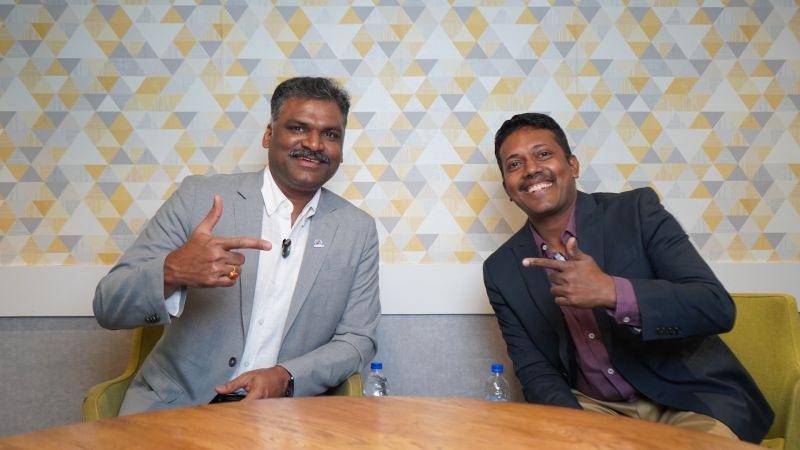
There were less technical forms of company building, too. Asked about a favorite team activity in 2017, he chose exploring neighborhood microbreweries. The detail sits nicely beside the language of automation and standardization. A team may spend its working day reducing operational variation and still have perfectly good reasons to investigate the local beer selection.
The king, the two notes and the next morning
In his public reflections, Natarajan returns to a moral story he learned when young. A king receives two notes from his father, to be opened at opposite extremes of fortune. The lesson is that the moment will pass. Natarajan uses it to explain how he tries to hold success and failure without allowing either to occupy his head indefinitely.
He says friends and colleagues can sometimes read this as insufficient appreciation of a win. His explanation is more particular: he enjoys the achievement, then tries to release it. A former boss gave him a distinctly less regal version of the same lesson, comparing a celebrated seven-course dinner with what happens the following morning. Corporate wisdom occasionally improves when someone removes the presentation slides.
His account of leadership also emphasizes whether employees feel empowered, whether their experience is a good one, and whether they feel part of the business. These are questions he says he asks of himself. They offer a more revealing description of his stated ambitions as a manager than a list of adjectives would. Authority brings an obligation to help others advance.
That concern makes an interesting companion to his product philosophy. Software needs controls that let people act with confidence. A company needs people who feel they have room to contribute. The parallel is an interpretation, but it is a useful way to read the two sets of ideas together: the conditions surrounding work matter as much as an instruction to work faster.
“Governance is an enabler.”
Ezhilarasan Natarajan, 2025
The bill gets bigger. So does the brief.
By November 2021, CoreStack had raised a $30 million Series B led by Avatar Growth Capital. Total funding announced at that point was $45 million. The company had more than 100 enterprise customers and was governing over $1 billion in cloud consumption. Those figures described a business with paying organizational customers and substantial infrastructure under oversight. They also supplied evidence that governance could support a software company of its own.
Recognition followed. In May 2022, Natarajan was named a finalist for EY’s Entrepreneur Of The Year Mountain West award. CoreStack continued to expand its products and partnerships. Yet the financial milestones require some care. Its October 2025 announcement of a $50 million package from Post Road Group described funded debt, with potential additional capacity. That is a different financing instrument from the earlier Series B.
The company said the package would support innovation, market expansion and acquisitions. In November 2025, Natarajan also spoke of an ambition to reach an IPO in the following few years. It was a statement of direction, with profitability and growth among the work ahead. Ambition gives a business a destination; it does not book the arrival date.
In March 2026, CoreStack acquired BetterCloud, extending its governance strategy into SaaS applications. The companies reported a combined base of more than 2,000 customers and partners, over $6 billion in annual cloud consumption governed and $35 billion in SaaS spend managed. These are different measures of the environment around the business. They describe the scale of the oversight problem, rather than revenue collected by CoreStack.
combined, globally
consumption governed
managed
Company-reported combined figures. Each measures a different part of the business’s reach.
Integration brought other people into the foreground. Raj Kunnath was announced as President of BetterCloud, responsible for operations and integration, while BetterCloud founder David Politis joined as a strategic advisor. Natarajan’s role now included bringing established expertise and customer relationships into a shared direction. Buying a company is an event. Making its work fit is a longer assignment.
Now the software can act
In a 2025 podcast conversation with Karthik Chidambaram, Natarajan framed governance as a way to combine speed with doing things properly. The argument becomes more demanding as AI enters enterprise workflows. A person can review a recommendation. An automated agent may proceed to act. The oversight question consequently reaches beyond keeping an inventory of software.
CoreStack’s October 2026 account of its FinOps+ expansion makes that shift tangible. Its September release introduced TokenOps to help teams see supported AI-service spending and connect usage to agents, users and API keys. The stated coverage includes Amazon Bedrock and direct Anthropic usage. The business question is familiar even when the units are new: who spent the money, and what work did it support?
That month, CoreStack also announced a Carahsoft partnership to broaden US public-sector access to its products. Distribution and procurement remain part of the founder’s job alongside technical invention. A tool must be understandable, purchasable and usable in the organization that needs it. The lesson of the early rollout keeps finding new applications.
There is a small personal ambition in Natarajan’s earlier account of himself: he wanted to try swimming in an ocean. It is a pleasingly physical challenge for someone whose work involves so much invisible infrastructure. His professional ambition has grown more elaborate, but it still comes back to making unfamiliar conditions navigable. The cloud grows. The software learns new tricks. Ez keeps working on the rules that might let people use both.