At an amusement park, the customer notices the attractions. Somewhere behind that experience, a price has to be correct, a location needs its own information, and a change made at headquarters must reach the right website. The trampoline is the easy part to photograph. The machinery connecting the business is harder to see.
That hidden machinery is a useful way into Evince Development. The software company, founded by Maulik Pandya in 2012, works across applications, commerce and enterprise systems. Its most revealing assignment may be a franchise website: a project where the interesting question is who makes all the pieces agree.
- Custom engineering for businesses, startups and agency partners.
- Work spans commerce, classroom software and port operations.
- Buyers can choose a project, hourly work or a dedicated team.
01 / Somebody has to connect it
For Urban Air, Evince worked alongside TrebleTree. The division matters. TrebleTree led strategy, design and the frontend experience. Evince handled backend development, WordPress Multisite architecture, integrations and scalability. Calling the result simply a website misses the assignment’s operational weight.
The case study describes pricing inconsistencies, manual location updates and limits on franchise content control. Evince connected systems including Salesforce and SOCi, and built workflows for pricing and location information. A franchise network needs local differences without losing central control. Every exception makes that balancing act more interesting.
Think of it as a distribution problem. Information has to travel to many destinations without becoming many conflicting versions of itself. For a buyer, the lesson is practical: ask which team owns the architecture, which owns the interface, and who handles the connection between them. Those responsibilities deserve names before development starts.
Design + frontend
Integrations
02 / Follow the work order
Ocean Terminal Services offers a less glamorous, equally instructive example. The California port equipment maintenance business had an Access-based legacy system. Evince’s replacement joined web and mobile tools around work orders, inventory, inspections, billing and mechanic payroll. Here, the unit of software design was a job that somebody actually completed.
A mechanic could create a work order and request approval in the field. Billing needed to account for different customer tariffs. Invoicing involved EDI files, the structured records exchanged between business systems. Completed tasks fed payroll. The platform used .NET Core and C#, with cloud infrastructure on AWS.
These details explain the market Evince occupies. A generic task app might record the repair. A separate accounting tool might record the invoice. Custom engineering becomes useful when the rules between those events are particular to the business. The value sits in reducing the translation work people otherwise perform between systems.
“Empowering Entrepreneurs”Maulik Pandya’s stated vision for Eatance, announced June 2020
03 / A service company tries a product route
In his eighth-anniversary letter, Pandya described a company that had expanded from one client into several industries. He also introduced Eatance, an entrepreneur-focused brand offering on-demand applications. The letter appeared during pandemic lockdowns and explicitly discussed vendors losing income and startups struggling. It provides a concrete reason for the new emphasis.
Pandya outlined support extending from application development to consulting, maintenance and marketing. The ambition was to reduce the effort and expense of getting a business online. This added a product route alongside bespoke engineering: entrepreneurs could begin with an application proposition rather than commission every component from the beginning.
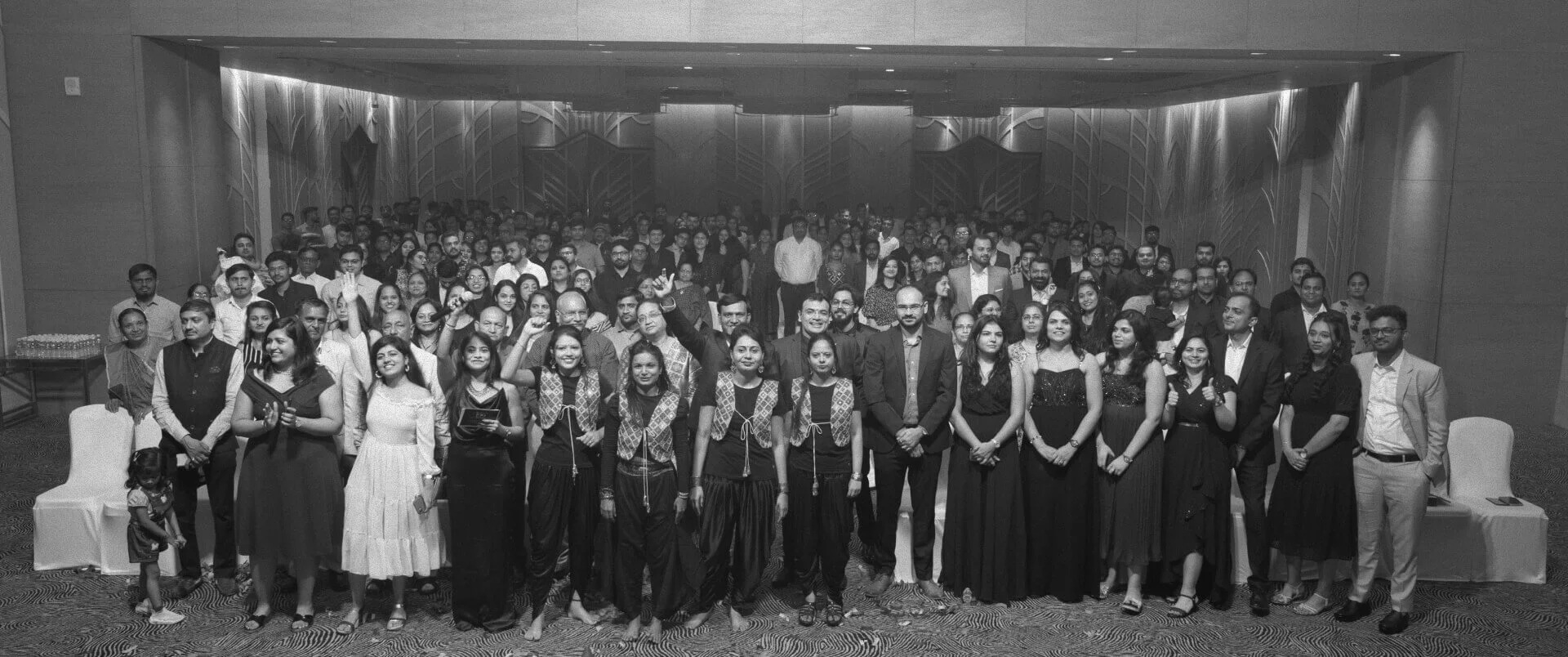
Today its menu includes AI, mobile development, interface design, commerce and modernization. Its public materials list Microsoft and Shopify partnerships. Those connections indicate relevant platform experience; the more useful purchasing question is still whether the proposed team has solved the buyer’s particular problem.
04 / The price of a clear brief
The business model accommodates different levels of certainty. Fixed-price work is aimed at defined requirements. Time and materials allows the brief to evolve. A dedicated team gives a client continuing engineering capacity. The choice changes how decisions, revisions and costs travel through a project.
Clutch lists an hourly range of $25-$49 and a $10,000 minimum project. In a February 2023 interview there, Inception Fertility reported spending about $65,000 on three websites. The client described a resolved Cloudflare proxy issue and singled out migration for improvement. These are historical observations, not a current quotation or evidence that every project behaves alike.
Directory-listed range. Scope, team and contract determine the actual bill.
The useful detail is the snag. Software can pass through design and development only to encounter trouble where one environment meets another. Buyers can copy a simple habit: put migration, external dependencies and the person responsible for each handoff into the brief. A launch plan needs those items as much as a feature list.
For an agency partner, there is another appeal: buying backend expertise while keeping responsibility for the client-facing design. The Urban Air collaboration illustrates that arrangement without pretending one company did everything. It also gives prospective customers a useful test. Ask a supplier to describe its contribution with that level of precision. A named integration, a defined architecture and a clear boundary between collaborators tell you more than a wall of customer logos.
05 / Start with the awkward connection
Evince’s Clymb case study extends the pattern into education. It describes interfaces adapted across school grades, personalized resources and integration with Clever for student onboarding. Once again, the task includes getting an application to work with an institution’s existing arrangements. The screen is one part of a larger system.
An internal team, a specialist agency or an existing software package may be the better choice when requirements fit familiar tools. A dedicated external team also needs available client decision-makers. An unsettled brief makes fixed pricing harder. Evince’s own engagement options make those conditions visible.
For buyers considering its AI offering, the same questions apply: what data enters, which action follows, and who owns the outcome? Evince’s portfolio gives those questions something concrete to attach to. Start with the awkward connection in the business. That is where the engineering conversation gets useful.