Eric Panecki once ran a business cleaning up after college parties. It is a pleasingly practical place to begin a career in real estate: somebody has enjoyed the premises, and somebody else must work out what happens next. Before that came shoveling snow and mowing lawns. The common ingredient was finding work he could make his own.
He eventually entered private lending, helping finance investors who flipped houses. He wanted the freedom that drew many of his customers into property. The employee chapter lasted roughly nine months, by his later account. Soon he was involved in a house flip in Montclair, New Jersey, moving from arranging money for other people’s projects to carrying the demands of a project himself.
That movement has become a recurring pattern in his career. Panecki gets close enough to a transaction to encounter its difficulties, then builds a business around part of the process. Property acquisitions led toward financing; financing led toward operating a lender. Each move expanded the number of people whose decisions had to fit together.
A shoebox, then a first hire
Panecki and David Choi launched Leverage Companies in fall 2018, while both were in their mid-twenties. Their first office earned Panecki’s affectionate comparison to a shoebox. They lacked the established relationships that bring an investment firm a steady supply of attractive opportunities, so identifying potential sellers became an early priority.
A three-family house in Paterson provided a breakthrough in spring 2019. It was the company’s first profitable deal and helped make an acquisitions hire possible. Later that year, a data analyst and developer joined. The young firm was putting money back into the people who could help it find and complete the next transaction.
The memorable detail is the sequence. A property produced a profit. The profit helped support an employee. Another hire helped turn an idea about data into a working platform. For this company, growth acquired a human shape before it acquired an impressive address.
“By no means are we self-made.”Eric Panecki
Learning several jobs at once
Panecki studied economics at West Virginia University, attending from 2012 to 2016, and later earned an MBA at Fairleigh Dickinson University. His working history includes mortgage origination at Absolute Home Mortgage, real estate sales at Silver and Oak, and lending at Asset Based Lending. He also worked in construction and property management at Maio Construction.
Read those jobs together and the later business becomes easier to understand. A property needs a buyer, financing, work, and someone responsible for its ongoing operation. Panecki’s résumé touches each of those demands. It also places him in roles where a promising idea has to survive appointments, paperwork, costs, and another person’s deadline.
A finance education supplies one language for that work. Managing a property supplies another. Neither relieves an operator of the need to explain a decision to the people who must act on it. The career that followed put those explanations near the center of his job.
The call nobody scheduled
The partnership with Choi has its own less ceremonious origin. In a Deals & Dollars episode about how the hosts met, they recount Choi accidentally cold-calling Panecki. It is an introduction with rather less choreography than a carefully arranged founder dinner.
The episode also remembers John Libretti’s nerves before his first call with Panecki. By the time the three sat down to introduce the renamed podcast, they were talking together about a community they intended to build. A stray call had become part of a much larger set of conversations.
There is something reassuring about the untidiness. Partnerships are usually presented through the polished language of complementary skills. Here, the opening scene includes an accident. What matters afterward is whether the people keep finding reasons to work together. Choi and Panecki did, and the partnership became visible across acquisitions, finance, and media.
A sale, a purchase, a larger table
Some of those relationships can be followed through actual transactions. On March 3, 2023, Panecki and Choi were the sellers of a seven-unit multifamily property at 6423 Hudson Avenue in West New York. The recorded deal price was $1.15 million. Chris Cervelli and Gary Baez represented them.
In May, Panecki joined Choi, Austin Deraaff, Jake Deraaff, and Evan Mizrahi in a White Plains multifamily purchase. The deal covered 29 units and carried a price of $3,587,843. October brought a $14.3 million Westchester transaction involving 79 units, with Anthony Pontoriero also named among the buyers.
These are group transactions, and the names matter. A purchase price alone can make investing look like a solitary act of nerve. The participant list restores the collaborative work: people finding the opportunity, agreeing on the structure, and sharing responsibility for what follows. Panecki’s career is populated by those recurring partners.
His financing work has its own participant lists. In July 2024, a $10 million construction loan was arranged for a mixed-use project at 155 Newark Avenue in Jersey City. It involved 27 residential units and ground-floor retail. S3 Capital Partners was the lender; John Libretti was the mortgage broker. Panecki, Matt Neptun, and Choi were named as co-brokers from Brick City Capital.
The distinction between lender, borrower, and broker deserves keeping. Each carries a different responsibility. Panecki’s place in this transaction was among the people arranging the financing, an example of how his work could connect a development project to capital without making every participant the same sort of investor.
Sales, with the problem left in
On a podcast conversation with entrepreneur Parker Little, Panecki described sales in unusually mechanical terms. He thinks about the customer’s problem and the possible ways to solve it. With a property, those possibilities might include buying for cash, helping arrange a sale, listing it, or working through seller financing.
He also recognized that houses carry emotion. An equation is useful, but the person across the table still has a reason for being there. A seller may need a particular outcome that a standard offer does little to address. Asking what the actual problem is changes the conversation before anyone starts congratulating themselves on their pitch.
This is a revealing combination in Panecki’s public conversations: an interest in the structure of a deal alongside attention to the person trying to complete it. The practical question remains open long enough for more than one answer. That habit travels well between acquiring properties and arranging loans.
Making the room worth entering
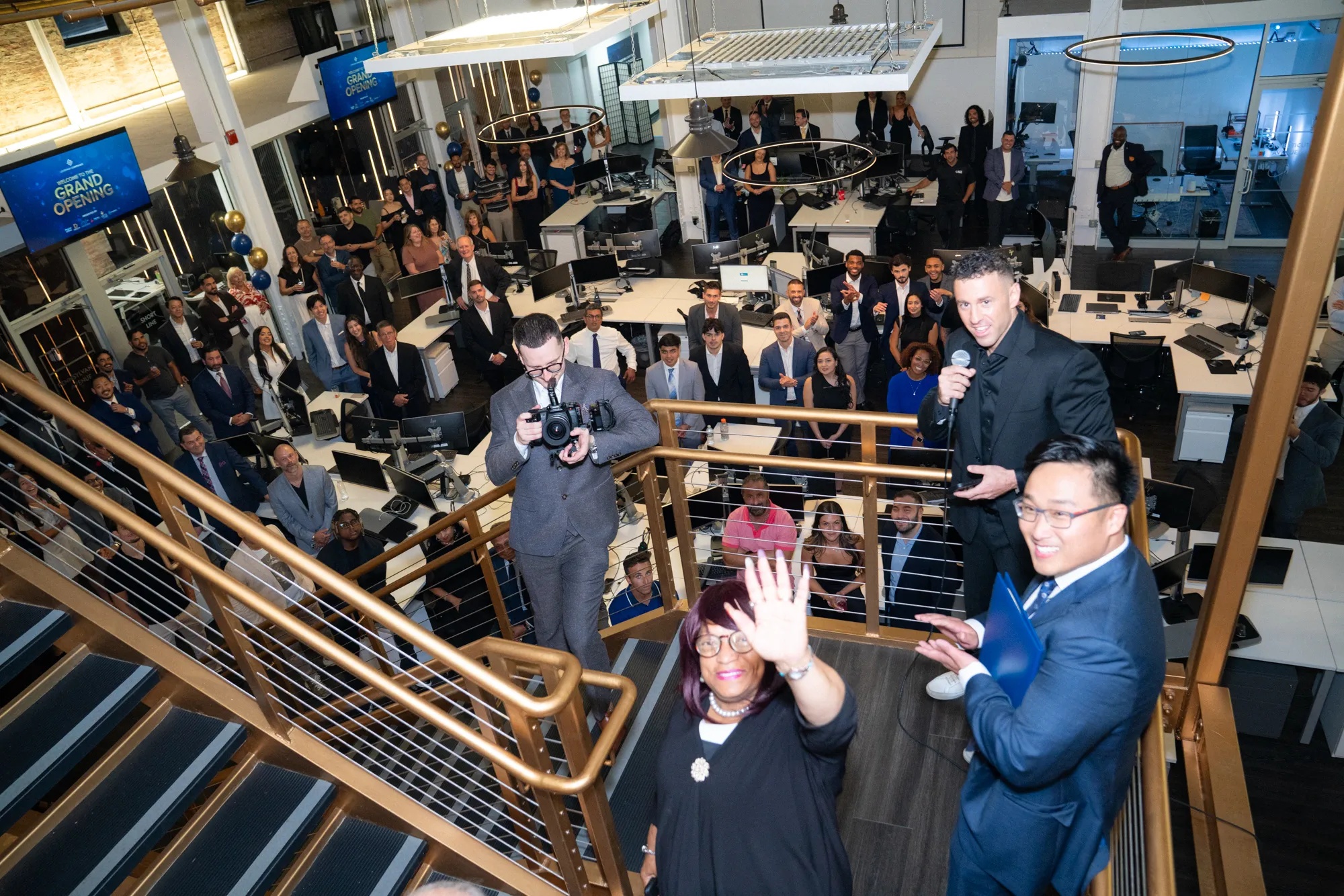
Deals & Dollars carried that interest in relationships into an event. Its inaugural networking gathering attracted more than 350 commercial real estate professionals. Panecki called the idea “the anti-networking networking event.” The organizers wanted a gathering they would have wanted to attend themselves.
They expanded the available tickets twice. Kathy Anderson, a founding partner of Progress Capital, spoke afterward about collaboration in a relaxed setting. Libretti said the event had begun with a phone call. Once again, a conversation became something that required considerably more room.
Industry networking has a peculiar burden: everyone arrives hoping to meet somebody, while nobody particularly enjoys feeling like a prospect. The event’s premise addressed the surroundings in which those meetings happen. Place, timing, and the people in the room were part of the offering. Panecki was helping design an encounter, with the same practical attention he brought to a transaction.
Other operators get the microphone
The Deals & Dollars podcast is hosted by Choi, Panecki, and Libretti. Its conversations range across investing, operating companies, and technology. A recurring interest is how guests started, found their deals, and turned those deals into a business. The show extends the partnership into a format where the questions can be heard by people outside the room.
One episode with Chris Stout, a multifamily investor and construction operator, explored delegating problems, building a reputation in construction, and pitching investors. Those subjects fit the working world Panecki occupies. Capital has to be raised, responsibilities assigned, and a reputation maintained through execution.
Giving other operators time to describe their methods also makes the show a record of different approaches. A construction specialist will see a property through different obligations than a lender. A host can follow both, asking where the difficulties appeared and how the guest handled them. There is useful company in hearing that other people’s projects also require work.
The cost of choosing a lane
Brick City Capital’s lending business evolved from a wider menu toward a focus on debt-service-coverage-ratio loans, usually shortened to DSCR. In his account of the transition, Panecki said the company dropped bridge and construction lending to concentrate on rental financing. The change initially removed 75 to 80 percent of the sales team’s business.
That is a substantial cost to attach to a decision about focus. The firm also moved away from providing services under other companies’ brands and built more of its own lending infrastructure. Taking control of the borrower experience meant taking responsibility for the systems and people behind it.
The progression helps explain Panecki’s present job. As Brick City Capital’s CEO, he oversees lending operations, underwriting strategy, and the borrower experience. His responsibilities place him where the offered terms meet the work needed to deliver them. For a customer, a well-worded promise has limited value until the transaction reaches the closing table.
- Understand the property
- Review the credit
- Coordinate the file
- Deliver the financing
A schematic of the operating responsibilities behind investor lending.
The yes has to survive the numbers
In an April 2026 conversation, Panecki described himself as the more operationally minded partner. He cautioned investors against collecting properties for the satisfaction of a larger door count. Cash flow, vacancy, maintenance, and unexpected costs deserve attention before another purchase becomes a milestone.
He also described a daily investment committee and repeated discussions with the valuation team. Those controls, he said, grew out of mistakes. A busy pipeline creates its own difficulty: the company still has to reject a deal when it falls outside its requirements, even if the opportunity looks close to acceptable.
Brick City Capital received the National Private Lenders Association’s Innovator of the Year award in 2025. Recognition supplies a public milestone. Panecki’s account of reviewing values and maintaining discipline supplies a quieter view of the work. A lending business has to make decisions repeatedly, long after an award photograph has been taken.
Leverage now brings lending, residential investment, education, and community work into the same organization. Its Newark base remains part of that identity. Panecki’s career keeps returning to a practical question: what must happen for this deal to work? Sometimes the answer is a partner, sometimes a hire, sometimes a different structure. Sometimes the useful answer is to wait.