A black T-shirt asks very little of the world. It should fit, survive the wash, and return to duty without looking as though it has suffered a personal disappointment. Eric Mear thought the shirts in his wardrobe were failing that modest examination. In 2016, he founded BYLT Basics. A decade later, the complaint has acquired shops, sporting partnerships, and a considerably more complicated job description.
The appealing detail is the scale of the original grievance. Mear was looking at an item people buy almost without thinking. A basic shirt occupies the unglamorous end of a wardrobe, somewhere between a habit and a household supply. Build a company around one, though, and every ordinary detail becomes part of the business: the weight, the hem, the collar, the next wash.
His career makes more sense when it begins before the shirt. There was already another company, another fabric product, and an early encounter with the peculiar speed at which an object can travel across the internet.
A business before the basics
Mear attended USC’s Marshall School of Business from 2008 to 2012. His public career record places the founding of MISC in 2008 and Privacy Pop in 2010. He remained Privacy Pop’s president and founder until March 2019, overlapping with BYLT’s early years. Apparel arrived in a career that was already under way.
The idea had a roommate attached. At USC, Mear shared a dorm room with someone whose noisy returns from nights out had become a problem. He began drawing a solution, then built an early prototype for an entrepreneurship class. In 2012, he described pitching the idea to Kevin Sperry during a vacation in Hawaii. Sperry brought in Danny Ninete, and the product launched that year. Privacy Pop also won $5,000 in USC’s New Venture Competition that May, money Mear said would go toward inventory.
Privacy Pop made tents that fitted around mattresses, enclosing a familiar piece of furniture to create a private space. The premise was pleasingly literal: if you wanted a little room around your bed, here was a little room around your bed. A US design patent issued in April 2013 names Mear alongside Kevin Sperry and Danny Ninete as inventors of a “Bed tent for privacy,” assigned to Privacy Pop LLC.
The patent supplies an unusually tangible piece of his early biography. Before anyone could inspect a BYLT collar, there were drawings of a tent and the shape of an enclosure. It is a reminder that the word entrepreneur can conceal an extraordinary amount of practical specificity. In this instance, somebody had to work out what went around the mattress.
In March 2016, production company Sparkhouse described what happened when its promotional video for Privacy Pop appeared on Facebook: 200,000 views in five days and more than three million within a month. The video used rotating product shots, brisk editing, music, and titles to show how the tent worked. The object had a small demonstration built around it, and people watched.
Those figures belong to the video, rather than a sales ledger. Their value in Mear’s story is the glimpse they give of his earlier work: a physical product, explained visually, finding an audience online. BYLT began that same year. He had already experienced the difference between making something and making it legible to strangers.
The shirt that survived the argument
BYLT’s origin contains a small disagreement. Mear, who had no fashion industry background, found a fabric at a trade show that interested him. Vendors thought it was too heavy for T-shirts. He went ahead. The resulting Drop-Cut Lux became the brand’s signature starting point, with a shaped hem, slim fit, stretch, and wrinkle resistance.
His chief marketing officer, Davide Mattucci, has described the irritation behind that decision: Mear regularly wore black T-shirts and disliked how they deteriorated after repeated washing. The company grew from that complaint into pants and layering pieces. It is an origin story with a useful absence of grandeur. The customer with the problem was close enough to inspect in a mirror.
The vendors’ objection makes the decision memorable. Weight is something a person feels before finding the language for it. On a screen, a black shirt can resemble every other black shirt. In the hand, differences become less abstract. Mear’s later move toward physical stores gives that early choice a second setting: a place where the fabric can make its own introduction.
A partnership with a calendar attached
Rob Gronkowski was already wearing BYLT when he and Mear met on New Year’s Eve before their 2023 partnership. That sequence gives the relationship a human starting point. The clothes were in use before the arrangement had a public announcement; a conversation preceded the campaign.
Gronkowski described feeling comfortable with Mear and wanting to work with people who shared his willingness to put in the effort. The former football player’s working life included business commitments and travel between California and Florida. That supplied an everyday context for an apparel company selling clothes meant to accompany more than one part of a day.
When BYLT announced the partnership in November 2023, the terms included Gronkowski’s participation in product development and support for the family businesses Gronk Fitness and Ice Shaker. Custom apparel and customer experiences were part of the proposed relationship. Mear’s choice connected a recognizable athlete to activities that continued after his playing career.
“Gronk represents everything we want in a partner.”
Eric Mear · November 2023
The distinction matters to the story of the founder. A sporting name can be placed on almost anything. Giving a partner a role in developing products makes the relationship more specific. It offers the possibility of a useful discussion about what clothes need to do when the stadium is no longer the principal workplace.
In November 2024, Formula One driver Alex Albon’s official website announced another BYLT partnership. The situations it described were revealing: arriving at a circuit, flying to another destination, playing golf. Mear emphasized Albon’s precision and performance. The driver’s work supplied the public attention; the journey around that work supplied the wardrobe.
Read together, these partnerships put Mear’s original shirt in a broader social setting. There are flights, meetings, and time off between the conspicuous moments. Those quieter transitions are where everyday clothing earns its keep. Even a famous person eventually has to pack a bag.
The garage gets a shop window
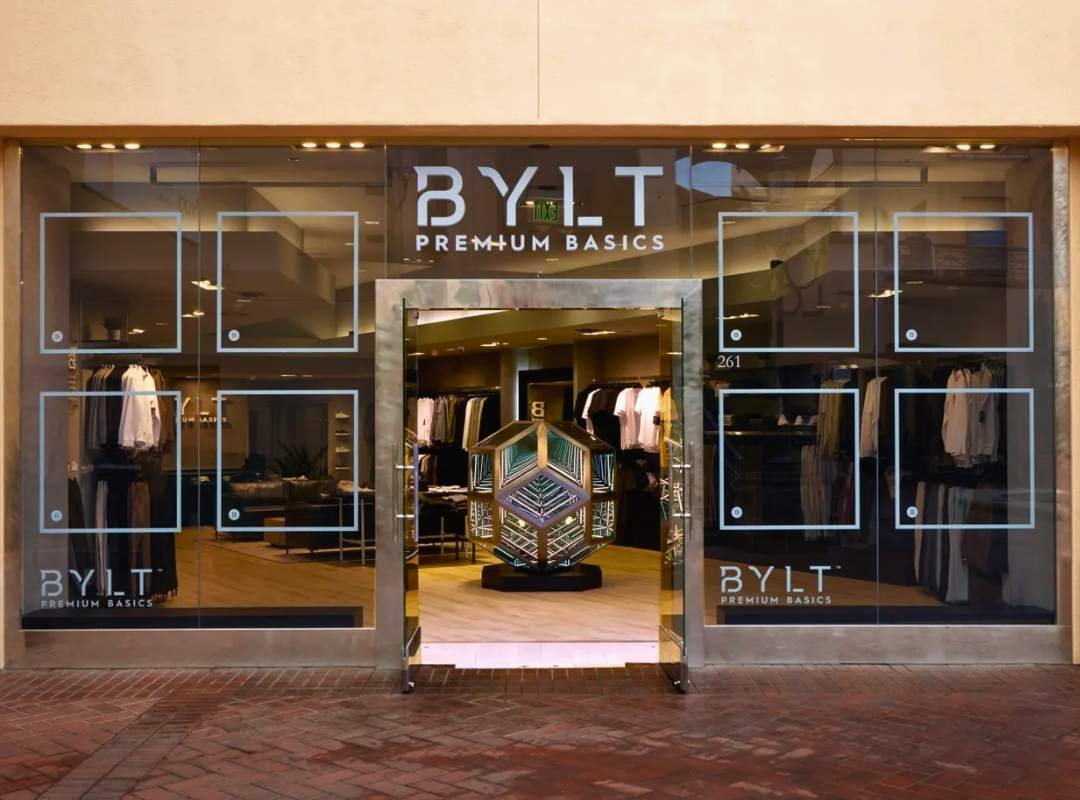
BYLT opened its first physical locations in Irvine and Newport Beach in 2023. By April 2026, the company was describing a business with 15 US stores and an ambition to reach 60 over the following five years. The expansion added a new practical question to Mear’s career: how should a company established online become familiar on a shopping trip?
A store gives the customer a different kind of evidence. Sleeves can be pulled down. A hem can be assessed without consulting a size guide. Someone can decide that a fabric feels right, or put it back immediately. The encounter is useful precisely because it allows so little distance between the promise and the object.
The company’s April announcement set out plans for seven additional stores during 2026 and a first New York City location in Brooklyn in the first quarter of 2027. It also outlined a wholesale initiative involving selected Bloomingdale’s stores, alongside distribution relationships in Canada and Australia. These were dated plans, with execution still ahead of them.
The organization was changing, too. Its leadership roster included president and chief operating officer Jared Koenig, previously at Oakley; product leader Joe Trachta, with experience at Oakley and TravisMathew; finance chief Chris Taylor, previously at Boardriders; and Mattucci, whose background included Adidas, Under Armour, and Columbia Sportswear.
For Mear, that is a different stage of building. The founder who chose an unfamiliar fabric now works with people whose experience covers the less visible machinery of apparel. A customer sees a shirt on a rack. Behind that simple presentation sit product decisions, financial planning, and the work of putting the right stock in the right place.
A different reason to keep score
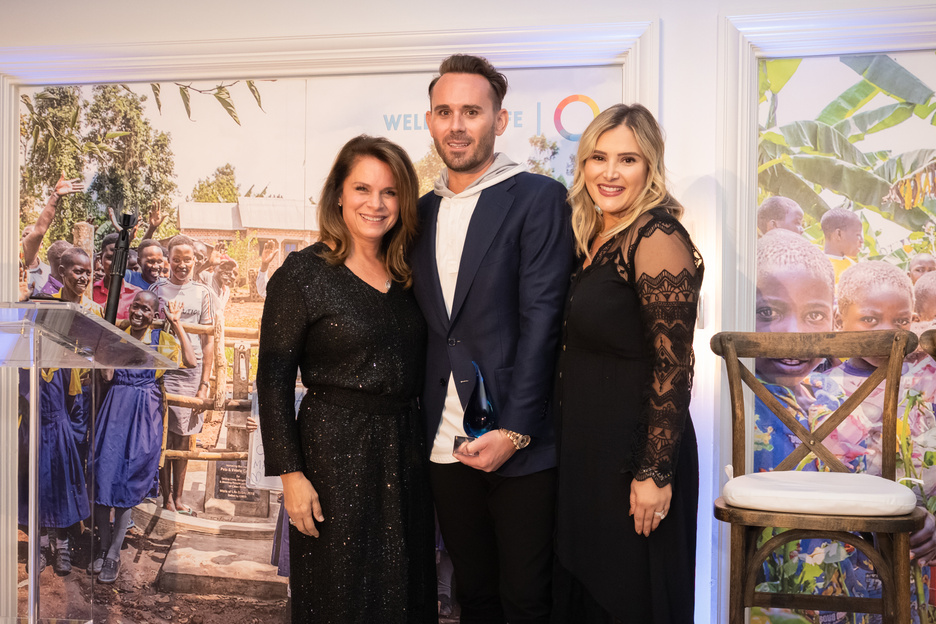
There is another photograph in Mear’s public story that has little to do with a shop opening. At Wells of Life’s 2022 Legacy Circle Gala, Eric and Michelle Mear received the Corporate Partner of the Year award for BYLT Basics. The recognition placed the company in the organization’s work supporting access to clean water in rural Uganda.
In 2025, BYLT announced the first BYLT Open, a charity golf tournament scheduled for April 11 at Pelican Hill in Newport Beach. The purpose was Los Angeles wildfire relief and support for other local charities. The planned field brought sporting and entertainment figures together around 36 foursomes, with sponsorships and an auction adding to the fundraising.
“I started BYLT out of my garage in Southern California.”
Eric Mear · March 2025
Mear connected the event to the region that had shaped the company and to people affected by the fires. His explanation was local and direct: use an activity associated with that Southern California life to bring people together and help. The setting could serve a purpose beyond displaying a polo shirt.
By June 2026, Edward Charles Foundation was describing the BYLT Foundation as a fiscally sponsored project founded by Mear, with a mission supporting youth opportunity. It promoted another golf gathering that month. Those activities give the relationships around the company a further use, bringing the business’s community into the same room, or onto the same course.
Mear’s story began with objects close to hand: a bed, then a shirt. Its later chapters depend increasingly on other people: product specialists, retail teams, athletes, and community partners. The ordinary T-shirt remains an appropriate place to end. A customer picks it up, checks the weight, and decides whether it belongs in tomorrow’s routine. After all the expansion, that small judgment still has to go well.