He came to politics by way of fiction workshops and a high-school play. Now he writes the column the online left loves to argue with - and keeps reading anyway.
Most mornings, a few thousand words leave Eric Levitz's keyboard and end up syndicated across half the internet - Vox, MSN, Yahoo, Apple News, the inbox of someone who swears they disagree with him. The throughline is rarely a hot take. It is an argument, built brick by brick, that arrives somewhere you did not expect when you started reading.
Levitz is a senior correspondent at Vox, where he covers American politics and economics and writes "The Rebuild," a newsletter and column fixated on a single stubborn question: what would it actually take for the Democratic Party to win, and keep winning? It is a beat with no shortage of pundits. Levitz's edge is that he treats the question like a fiction writer treats a plot - as something that has to hold together, not just feel good.
That instinct is not a metaphor. Before he ever filed copy on a campaign, Levitz earned an MFA in fiction writing from Johns Hopkins and had plays staged in Baltimore and Washington, D.C. The pivot from playwright to political correspondent sounds like a swerve. Read his work and it looks more like a straight line: structure, voice, and a refusal to let a scene end on a cheap note.
He spent roughly eight years at New York Magazine's Intelligencer turning that craft on the day's politics, building a reputation as the writer who would follow the data past the applause line. When the conclusion annoyed his own side, he printed it anyway. When it annoyed the other side, same. The result is a body of work that reads less like a brand and more like a mind changing its position in public, with the receipts attached.
The beat is wide on paper - elections, the economy, the internal weather of the left - but the method is narrow and consistent. Levitz starts from numbers and ends at an argument, rather than the reverse. A piece on the 2026 economy becomes a case about which choices were avoidable. A dispatch on Silicon Valley and immigration becomes a map of who won a fight nobody fully admitted was happening. He is allergic to the column that tells readers what they already believe back to them in nicer words.
What keeps the writing from curdling into mere contrarianism is the thing underneath it. Levitz is open that his work is not neutral; he describes a fundamental obligation to inform readers accurately, not to perform balance. That distinction - between a point of view and a thumb on the scale - is the whole game for him, and it is why he can write something that reads as left-wing on Monday and lands as a critique of the left on Tuesday without contradicting himself.
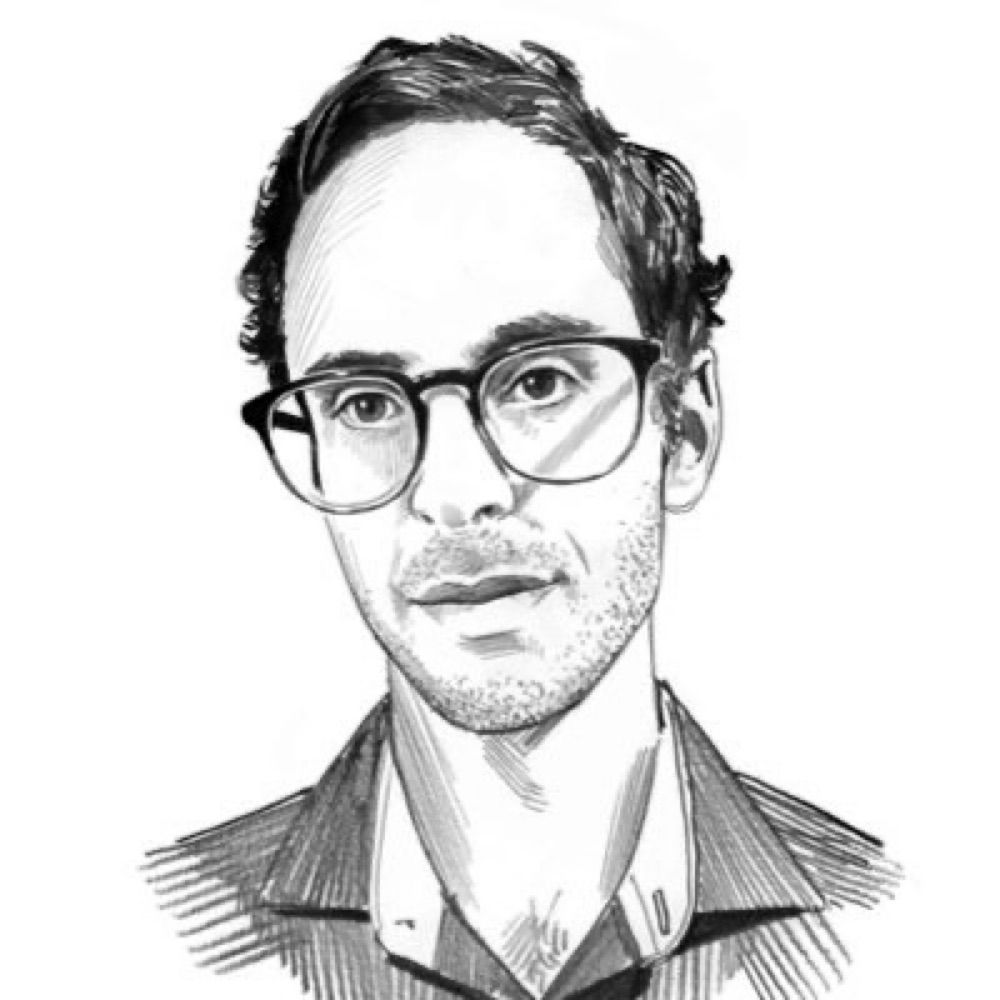
The first thing Levitz ever wrote that strangers watched was a play for the Spring Play Showcase at Kingswood Oxford, the Connecticut school he left in 2006. He credits the place's English and creative-writing programs for the habit that defines his journalism now: putting a sentence under pressure until it earns its place.
He carried that to Johns Hopkins twice over - a bachelor's in creative writing, then a master's in fiction - and for a while the plan was art, not argument. Then journalism happened. In 2013 he started at Curbed New York, the unglamorous, deeply useful school of writing fast about the city. By 2016 he was at New York Magazine, and the fiction writer had quietly become one of the most-cited political voices online.
The transition cost him something he is honest about: comfort. He has spoken about overcoming interview anxiety across his career, the slow work of getting good at the part of the job that is not writing. The reward is a voice that sounds like a person thinking, not a position paper performing.
By 2024 the migration was complete in a different sense. Levitz left New York Magazine for Vox, joining its politics team as a senior correspondent and almost immediately launching "The Rebuild." The move read as a bet - on a publication built around explaining things, by a writer who had spent a decade refusing to let explanations stay comfortable. He has since returned to where it began, speaking at Kingswood Oxford's 2025 Baird Journalism Dinner about the squeeze on the trade and why he still thinks it is worth entering.
If you feel yourself resisting new information because it challenges your assumptions, that's a cue to dig deeper.
— Eric Levitz, on the discipline of changing your mindIf you want to understand how Levitz thinks, look at the piece that briefly set the internet on fire. In October 2023 he published an essay arguing that a left which refuses to condemn mass murder is, in his word, doomed. It went viral in both directions at once - vociferous disagreement, deep praise, the rare op-ed that everyone seemed to have read before lunch.
The fight was not really about a single conflict. It was about a principle he keeps returning to: what he calls egalitarian universalism, the idea that the equal worth of every human life is the floor, not a negotiable plank. In the same essay he drew a careful line between explaining violence and justifying it - acknowledging the desperate conditions in Gaza, the 80% youth unemployment, the food insecurity, while refusing to let any of it excuse atrocity. It was a characteristic move: hold two true things at once, and let the reader feel the tension instead of resolving it cheaply.
That refusal to flatten things is the texture of his work. He will grant the strongest version of the position he is about to argue against. He will name the inconvenient data point his own side would rather skip. The prose stays measured even when the subject is incandescent, which is part of why it travels - calm is rare currency in political writing, and Levitz spends it deliberately.
Lately the existential question has turned inward, toward the trade itself. He has been blunt that artificial intelligence can produce content faster and cheaper than humans, partly by cannibalizing the past work of journalists, and that the economic floor under serious reporting is thinner than it was. His answer is not nostalgia. It is recruitment: a new generation of people who feel the pull toward telling the stories a society needs, walking into the field with their eyes open.
My work is not objective in the sense of taking a neutral position, but my fundamental obligation is to inform readers accurately.
Democratic elections cannot compel public officials to serve their constituents' interests if those constituents have inaccurate information about what their government has been doing.
Either one upholds the equal worth of all human lives, opposes war crimes, and despises far-right ethno-nationalist political projects or one doesn't.
Society needs journalism as much as it ever has. It's still a great job if you can get it.
He is a trained novelist and playwright. The pundit you argue with on X workshopped fiction before he ever sourced a policy fight.
His advice to aspiring journalists, delivered deadpan: maybe consider professional gambling - it may be the safer career.
His byline has been licensed thousands of times across Vox, MSN, Yahoo, Apple News and Medium. The reach is enormous; the ego, by all accounts, is not.
The newsletter's name says the mission out loud. "The Rebuild" is not a vibe - it's a to-do list for a party.
AI can produce content faster and cheaper than humans can, in part by cannibalizing journalists' past work. Part of the solution is a new generation eager to tell the stories our society needs to hear.
— Eric Levitz, Baird Journalism Dinner, 2025