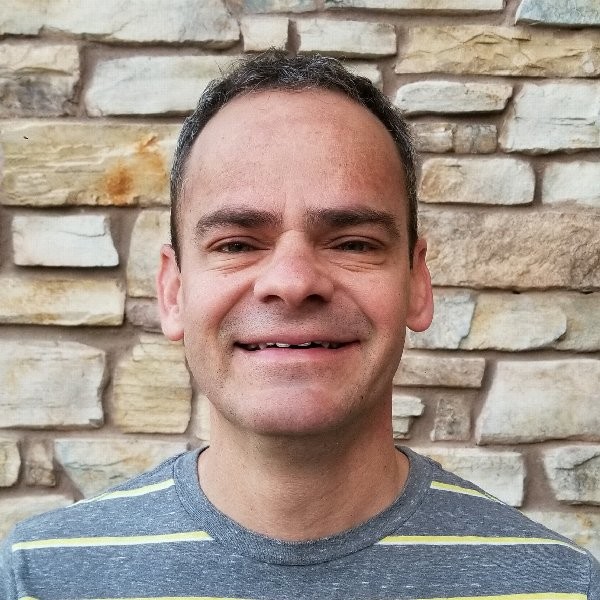
Most CEOs sell a product. Eric Abbate was selling a different way to make almost any product - grown inside a tank by engineered microbes, powered by sunlight, watered by recycling.
Start with the strangest sentence in his story. The company Eric Abbate ran wanted to manufacture cosmetics, food ingredients, and bioelectronic components in the same building - not by mixing chemicals, but by feeding microbes and letting biology do the assembly. The brand was Solar Biotech. The legal entity carried a quieter name, Pictor Biotech Inc.
That ambition has a name in the trade: precision fermentation. You design a microorganism to secrete the molecule you want, ferment it at scale, then separate and purify what comes out. The same toolkit that brews beer, pointed at industrial chemistry. Abbate's bet was that this could be cheaper, cleaner, and more flexible than the petrochemical plumbing it aimed to replace.
He did not arrive at that bet as a salesman. He arrived as a scientist. Abbate earned a PhD in Molecular and Cell Biology from the University of California, Berkeley, between 1998 and 2003 - the deep-end training of someone who learned biology one experiment at a time before he ever thought about balance sheets.
By the time the world met him as a chief executive, he had already spent years inside the machinery of industrial biology. At Inscripta, a genome-engineering company in Pleasanton, California, he served as a staff scientist and then Director of Analytical Biochemistry, running the high-throughput screening team that measures whether an engineered strain actually does what the design promised.
Screening is the unglamorous heart of the field. You can design ten thousand genetic variants on a computer. The question that matters is which one, in a tank, makes more of the thing you want. Abbate's job was to build the systems that answer that question fast - and at scale.
In 2023 that work crystallized into a paper. Abbate was the corresponding author on "Optimizing the strain engineering process for industrial-scale production of bio-based molecules," published in the Journal of Industrial Microbiology and Biotechnology. It carried 26 authors, all from Inscripta. He was the name at the bottom you write to.
The paper opens with a number meant to make you sit up: biomanufacturing could contribute as much as $30 trillion to the global economy by 2030. Then it gets practical, laying out the Design-Build-Test-Learn loop - the four-step rhythm of modern strain engineering - and how to compress each stage with computation, automation, and machine learning.
That four-word loop is the closest thing Abbate has to a personal philosophy in print. Design a strain. Build it. Test it. Learn from the result, then design again. Repeat until the microbe earns its keep. It is patience disguised as a flowchart.
Then he changed seats. At Solar Biotech he started as Director of Technology Development - the person who turns science into something a plant can run - before being promoted to CEO. It is a rare arc. The same person who once optimized an assay was now responsible for raising money, hiring, and convincing the world that a tank in Virginia could out-compete a refinery.
Biomanufacturing could contribute as much as $30 trillion to the global economy by 2030.
// Opening claim of the strain-engineering review Abbate anchored, 2023
BioNodes, not just a factory
Solar Biotech's calling card was the idea of modular plant architecture - units it called BioNodes, stitched together by what the company described as proprietary "SynBio hyperintegration algorithms." Strip away the jargon and the pitch is simple: instead of one enormous bespoke factory, build standardized, repeatable bioprocessing modules you can deploy where you need them.
The sustainability claims were the headline. Production was designed to be carbon-neutral and water-neutral - running on solar power, reusing recycled water, and aiming for low operating costs. In a field that often promises green outcomes and delivers expensive ones, that combination was the whole point.
Founded in 2019, the company planted its biomanufacturing facility at 5516 Industrial Park Rd in Norton, Virginia - a small town in the state's coal country. A synthetic-biology plant in Appalachia is its own kind of statement: the future of industry, dropped into a place built by the industry of the past.
What it set out to grow
- Biodesigned cosmetics
- Functional food ingredients
- Bioelectronic components
- Other bio-based molecules and products
One platform. A startling range of outputs - the promise, and the difficulty, of a general-purpose biofactory.
A Berkeley Education
A PhD in Molecular and Cell Biology from UC Berkeley, 1998-2003. The foundation: learn how cells actually work before you try to make them work for you.
Inscripta & Genome Engineering
Director of Analytical Biochemistry, leading high-throughput screening for genome-engineering applications - and corresponding author on a defining 2023 review of industrial strain engineering.
From Tech Lead to CEO
Joined Solar Biotech as Director of Technology Development, then rose to chief executive - carrying lab fluency into the boardroom.
A career measured in scale-ups
A field guide to Abbate's world
A synthetic-biology plant in coal country. The future of industry, dropped into a place built by the industry of the past.
// On Solar Biotech's home in Norton, Virginia
When the capital ran dry
Ambition and biology are not the only variables. Money is. In June 2024, Solar Biotech, Inc. - alongside Noblegen Inc. - filed for Chapter 11 bankruptcy in Delaware, under case number 24-11402.
The reasons given were the familiar trio that has felled many hardware-heavy startups: a difficult capital market, the loss of a major client, and the lingering drag of the pandemic on cash. Building physical fermentation plants costs real money, and the runway closed before the model could prove itself at full scale.
The filing was not framed as an ending. The company entered Chapter 11 with a stated plan to sell its assets and "reboot" - a word that carries a particular charge in a startup obituary, suggesting the technology might outlive the corporate shell that first carried it.
It is the part of the story least flattering to put in a pitch deck and most honest to keep in a profile. The science was real. The vision was coherent. The market, for now, said not yet. That tension - between what biology can do and what capital will fund - is the defining drama of the entire precision-fermentation sector, and Abbate lived it from the chief executive's chair.
His company's processes were engineered to be both carbon-neutral and water-neutral - sunlight in, recycled water around.
The product vision spanned cosmetics, food ingredients, and bioelectronics - all from one biological platform.
The 2023 strain-engineering paper he anchored carried 26 authors, every one from Inscripta.
The brand was Solar Biotech; the legal entity behind it was named Pictor Biotech Inc.
He climbed the same company twice over - from Director of Technology Development to CEO.
His plant landed in Norton, Virginia, population small, in the heart of Appalachian coal country.
Abbate is a useful figure to watch precisely because he sits at the seam where the field always strains: brilliant biology meets stubborn economics. He learned the science deeply, helped write its industrial playbook, then tried to pour it into steel and sunlight.
Whether the BioNodes idea reboots under a new owner or quietly dissolves, the underlying wager remains live across dozens of companies: that one day the factory of the future will smell less like a refinery and more like a brewery. Eric Abbate spent his career trying to make that day arrive sooner.