Consider the empty restaurant table. At seven o’clock it is an opportunity. By closing time it has become something that can never be sold again: yesterday’s dinner. A discount can help, provided it reaches someone who would otherwise eat elsewhere. That small coordination problem sits at the center of Entertainment Promotions, the company many Americans remember as a thick book of coupons.
Hughes and Sheila Potiker founded Entertainment in Detroit in 1962. The familiar book connected local businesses with households looking for a cheaper outing, while schools and community groups sold memberships to raise money. The clever part was the arrangement: a supporter could help a cause and receive something useful in return. Everyone had a reason to pass the book along.
- Pay for access to discounts across the U.S. and Canada.
- Merchants offer savings to attract customers; corporate clients package offers as rewards.
- Schools and community groups sell memberships through Entertainment’s fundraising program.
Three people walk into a coupon
Entertainment serves three overlapping markets. Consumers buy access to savings. Merchants want visits and repeat business. Organizations want a benefit they can offer their own audiences. A restaurant coupon can therefore be a household purchase, a fundraising product or part of a company’s customer-retention program. The offer stays recognizable while the route to the customer changes.
For businesses, Entertainment advertises free promotional programs alongside a separate pay-for-performance option. Its pitch addresses unused capacity: open tables, unfilled seats and available appointments. Free distribution still requires the merchant to fund the discount. The useful question is whether the resulting purchase produces more contribution than the business would have earned without it. A busy Saturday and a quiet Tuesday present different arithmetic.
The corporate offering goes further. Entertainment’s Rewards & Incentives operation curates savings for acquisition, loyalty and recognition programs, including private-label experiences. Its stated expertise is direct merchant contracting and local offer selection. This places it between consumer coupon services and the business suppliers that provide benefits behind another brand’s name. A customer may value the reward without giving much thought to who assembled it.
“The best savings solution is one where everybody wins.
Hughes & Sheila Potiker, founders
The day the book stopped being enough
Longevity did not protect the company from financial trouble. In March 2013, Entertainment filed for Chapter 7 bankruptcy and closed its Troy headquarters. Local reporting described workers arriving to discover their jobs were gone. This was a business interruption with human consequences, well before the announcement that its flagship membership would become exclusively digital.
A group led by Lowell Potiker, the founders’ son, bought the assets that spring. His siblings Jori and Brian were also involved. Jones Day, the law firm representing the buyer, records the acquisition of substantially all the assets through a bankruptcy sale. The brand continued, but the sequence resists a tidy technology fable. Bankruptcy came first; a later digital transition was another chapter.
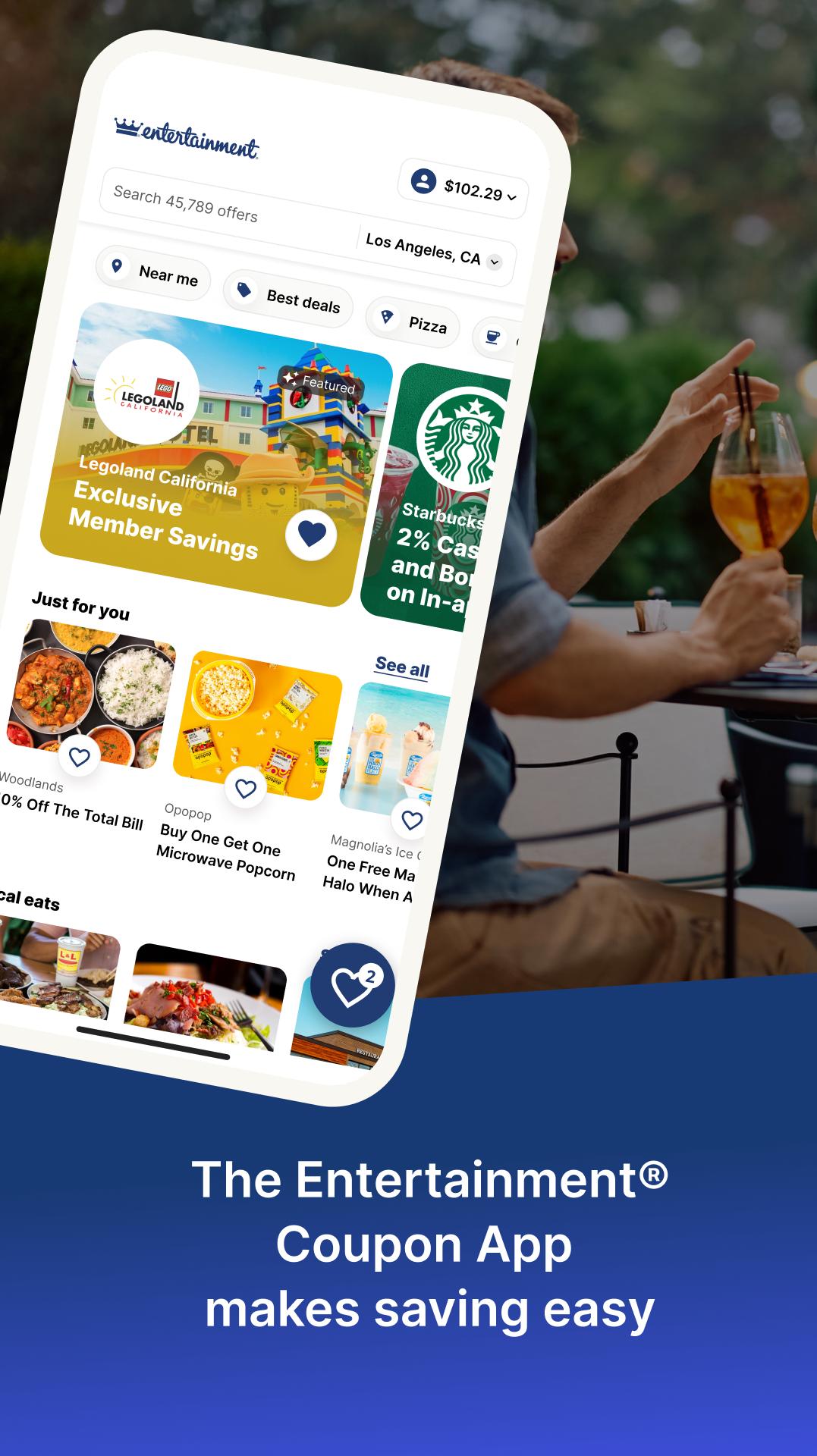
Entertainment was already promoting mobile and online offers in 2016, alongside its printed book. In April 2021 it announced the membership’s move to an exclusively digital format. Then-parent Afin Technologies described the reasoning as convenience and a better member experience. A phone could carry the offers wherever the member went. The announcement also said the membership would update continually, replacing the annual rhythm of the book.
A $34.99 question
The current listed price is $34.99 a year or $4.99 a month. Twelve monthly payments total $59.88, making annual billing $24.89 cheaper for someone who keeps the service for a full year. That comparison concerns the subscription alone. Whether it saves money depends on which eligible offers the member actually uses, and on purchases they would have made anyway.
Members can search by location, category and cuisine. Offers cover dining, attractions, shopping, travel and everyday services, with participating discounts including two-for-one deals and savings up to 50 percent. The app’s Google Play listing shows more than one million downloads. That is a distribution milestone, not a count of current paying subscribers. A membership also works across participating locations rather than being confined to one home city.
There is a practical wrinkle worth remembering at the cash register. Entertainment’s support instructions say a mobile Show and Save voucher is valid for ten minutes after redemption. A printed voucher lasts fourteen days from printing. Open the offer early enough to understand it; launch the mobile voucher when you are ready to use it. A countdown is a poor dinner companion.
What the next owner bought
Cardlytics acquired Entertainment in January 2022, recording purchase consideration of $14.6 million. In December 2023 it sold substantially all Entertainment assets for $6 million in cash, subject to escrow and closing adjustments, and recorded a loss of about $6.6 million. These are transaction figures, not a venture-funding total or a current valuation. They show that a familiar brand can remain useful while an owner’s investment disappoints.
The buyer was Kigo, an Augeo subsidiary, with acquisition financing participation from Valor Siren Ventures. Kigo’s announcement emphasized Entertainment’s merchant relationships and offer inventory as ingredients for more personalized and shareable rewards. Read as a business decision, the attraction was straightforward: technology needs something worthwhile to deliver. Entertainment brought the relationships that supplied those offers.
The surrounding business keeps changing. In July 2026, Kigo and Rakuten’s Cartera announced an integration aimed at retail savings within loyalty programs reaching more than 100 million members. That audience belongs to the broader partnership, rather than Entertainment’s consumer subscription. Kigo’s website now announces its move to the Augeo Loyalty name. Entertainment’s network sits inside that wider effort to distribute rewards through existing customer relationships.
Copy the arrangement, then check the bill
The transferable idea is to give each participant a concrete reason to join. Entertainment’s Raisy fundraising portal lets groups share a personalized campaign and track sales online. A supporter receives savings; the group raises funds; participating businesses get another path to potential customers. Corporate benefits use a similar arrangement, with an employer or consumer brand providing the audience.
Execution decides whether the arrangement holds. A household needs usable nearby offers. A merchant needs profitable incremental trade. A fundraiser needs supporters who will buy and use the membership. Alternatives include Groupon, free coupon sites and merchants’ own loyalty programs; each competes for the same decision about where to spend. Entertainment’s proposition is paid access to a collection spanning local and national businesses. Before joining, look for offers you would use. Before discounting, calculate what the visit earns. The empty table only becomes valuable when the right customer sits down.