The school register is a small daily ritual with a large software business behind it. Record an absence, update a parent’s details, check a pupil’s progress: each action feeds the administrative memory of a school. Education Software Solutions, better known as ESS, sells that memory through SIMS. Its challenge is to make a system people already know feel worth choosing again.
ESS sits inside ParentPay Group and reaches beyond the school office. UNIT-e handles student records for further and higher education. Reading Cloud runs school libraries and encourages children to discover books. Library Management Cloud serves public and academic libraries. The common business is organising information that institutions need to keep accurate, accessible and useful.
That sounds dry until the information is yours. A missing attendance mark needs an answer. A college needs dependable student records. A reader wants to know whether the book is actually available. ESS works in the gap between those ordinary questions and the considerable machinery required to answer them.
A familiar name, a £400 million transaction
ESS’s history needs two clocks. The current legal company was incorporated as Capita ESS Limited in May 2020 and renamed Education Software Solutions Ltd a year later. The products are older. Giving evidence to Parliament in 2009, Phil Neal described himself as one of SIMS’s original founders. Reading Cloud traces its own ancestry to Micro Librarian Systems, established in 1981.
In December 2020, Capita announced a sale to a company established by funds advised by Montagu Private Equity. The agreement valued ESS at up to £400 million: £298 million payable at completion, £57 million in assumed liabilities and a further £45 million dependent on regulatory approval of Montagu’s ParentPay investment. That was a transaction valuation, not money raised to spend on product development.
The deal suited Capita’s plan to simplify its business and strengthen its balance sheet. For ESS, it led to an education-focused parent with payments and parental-engagement products alongside its information systems. The CMA cleared the ParentPay combination in July 2021. A business that had been one piece of an outsourcing group became part of a more concentrated education-software portfolio.
The everyday work is the product
SIMS is a management information system, or MIS. Its territory includes student and staff information, attendance, assessment and reporting, with tools supporting pastoral care and communication. The purchaser is an institution; the daily users include administrators, teachers and school leaders. Parents and pupils meet parts of the system through associated apps.
The appeal is continuity across jobs that would otherwise require separate records. A teacher needs a workable classroom view; a leader needs patterns across the school. SIMS’s integration directory extends that reach. EntrySign connects visitor management, Medical Tracker covers incidents and medication, and other partners address admissions, budgeting and parents’ evenings. The directory distinguishes commercial relationships from technically accredited integrations.
Those connections help explain ESS’s position in the market. Established software accumulates users, training and neighbouring applications. Replacing it means examining the surrounding arrangements too. That gives ESS a practical advantage, although it also makes the quality of its integrations and support part of the buying decision. Familiarity has value only while the daily work remains manageable.
Two routes away from the server room
The cloud transition has two distinct propositions. SIMS Connected hosts familiar SIMS functionality in the cloud. SIMS Next Gen introduces new cloud-based workflows in stages. At Bett in January 2024, the company described classroom tools and school analytics, with additional modules arriving each term. It said the wider reimagining would be completed by the end of 2026. That date was a roadmap commitment.
The distinction matters to a school choosing its next step. Hosting an existing system can preserve established ways of working. Introducing new interfaces changes what staff do at their desks. Both may reduce reliance on local infrastructure, but the training and transition questions differ. A purchaser needs to establish which functions are available in the proposed deployment and which remain on a future schedule.
A January 2025 onboarding guide made the preparatory work tangible: schools were told to check access, server requirements and their installed SIMS version before proceeding. By July 2026, support provider School ICT was still describing a continuing FMS Next Gen migration programme and phased exams functionality. The evidence points to a staged transition with practical dependencies, rather than a single launch day.
The argument moved from features to freedom
The first public difficulty in this transition story was commercial. The CMA investigated the move from annual to three-year contracts after concerns that certain schools lacked sufficient time to arrange an alternative. In January 2023, it accepted commitments letting eligible schools apply for an early exit on 31 March 2024. The commitments did not establish a competition-law infringement; ESS maintained its conduct was not anti-competitive.
A separate investigation in 2024 concerned objections to using database backups when schools switched supplier. The CMA closed that case in August after finding substantial switching, alternative migration methods under development and a changing market. It reported ESS’s English MIS share had fallen from approximately 50% to 46% within months, while The Key Group had reached around 41%.
Those are historical estimates, not today’s league table. They nevertheless explain the strategic pressure: schools could move. The regulator’s published reason for stepping back was market developments and the expected value of further intervention. No inference about a private change of heart at ESS is necessary. The documented result was a supplier facing more effective competition.
The library has a different kind of screen time
Reading Cloud offers a gentler entry into the portfolio. Its job starts with cataloguing and lending, then extends into recommendations, reviews and reading habits. On its product pages, the company highlights book discovery and a school community’s reading culture. The screen becomes a route to something a child can carry away.
There is a useful detail in its sales pitch: Reading Cloud calls itself MIS agnostic. Schools can connect student records through Intake by Wonde without choosing SIMS as their information system. For a company whose sibling product competes for the central school database, that is a sensible accommodation of how schools actually buy.
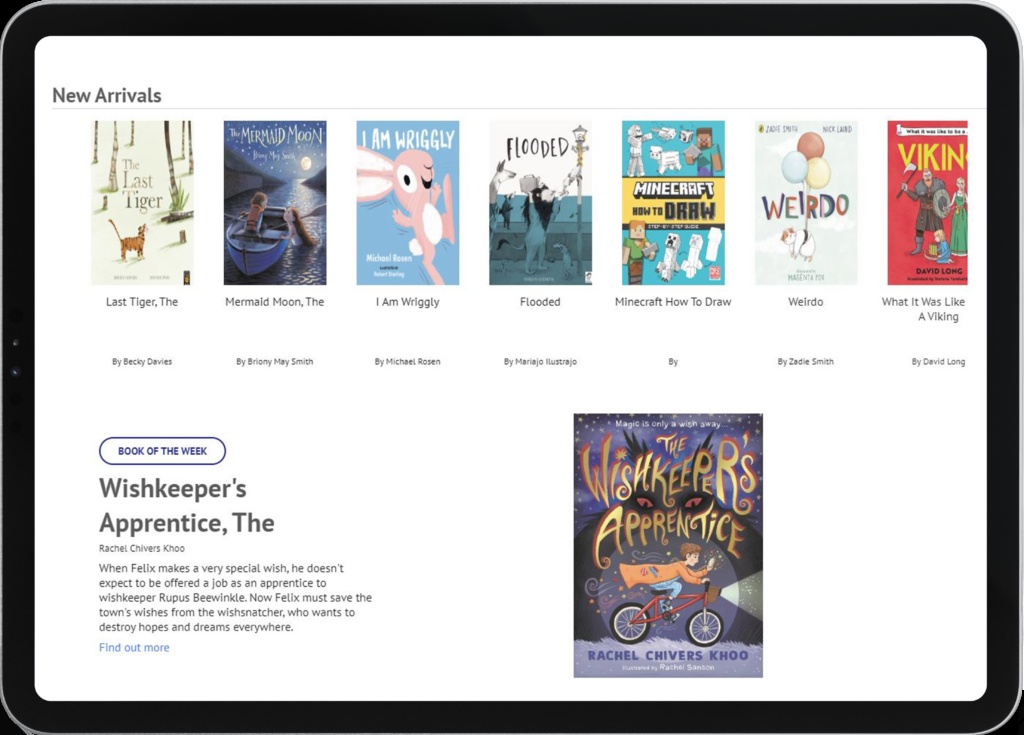
The mobile app lets families see borrowing information and check a book’s ISBN against the school library’s holdings. It requires a participating Reading Cloud school. Its April 2025 Android update included Android 15 support and ISBN search. These are modest features with a clear purpose: help a reader find a book and discover whether borrowing it is an option.
“Students take books out of the library themselves so it’s promoting independence”Jenny Birse, Banchory Primary School, in a Reading Cloud testimonial
The other library business serves a different setting. York St John University identifies its catalogue as an instance of ESS’s Library Management Cloud Prism product. The supplier’s framework documentation combines software, hosted infrastructure, managed services and support. A library is buying the operation of a service as well as the search box its readers see.
The bill has more than one line
ESS earns its money through institutional software contracts and associated services. There is no useful single price for a portfolio spanning a primary school’s library and a university’s student records. UNIT-e’s G-Cloud 14 listing supplies one concrete reference: £3,751 per instance per month, with education pricing available. That rate belongs to a particular listed service.
UNIT-e covers student lifecycle management, reporting, recruitment and onboarding, with multi-institution support and integration with CEDAR for engagement. Its implementation description includes a project manager, requirements gathering and training. The operational scope helps explain why comparing this rate with a classroom app subscription would tell a buyer very little.
Library Management Cloud’s service definition separates an annual subscription, paid in advance, from an implementation package. The subscription includes hosting and support. These distinctions are a useful buying habit: identify what the recurring payment covers, then price the work needed to get there. Data preparation, integrations and staff time belong in the assessment even when their cost sits outside the licence.
Make the supplier show its homework
A school considering ESS can copy a practical method from this history. Bring actual tasks to the demonstration: an attendance correction, a report needed by leadership, an awkward parent-contact update. Ask staff who perform those jobs to try them. Then examine the transition calendar, the support arrangement and the process for taking records elsewhere.
For existing SIMS users, preserving familiar workflows may justify a gradual move. For a school already determined to change its processes, alternatives such as Arbor and Bromcom belong in the comparison. The right answer depends on the institution’s requirements, connected systems and capacity to manage change. A cloud label alone settles none of those questions.
ESS’s public operating priorities include customer feedback and support. Its May 2021 announcement promised recruitment in account management, customer service and customer success. Reading Cloud similarly describes customer suggestions as an input to development. Buyers can put those promises to work by asking who handles a difficult issue and how feedback reaches the product team.
The immediate test is ordinary enough to escape a technology keynote: can a member of staff finish a necessary job accurately, with less friction? ESS has years of institutional knowledge to draw on, several specialist products and a parent invested in education administration. Its next chapter will be written in the small decisions schools make when another contract comes up for renewal.