There are businesses whose names contain a useful misdirection. Wall Street Communications, the agency that became the seed of Dundee Hills Group, is one. The Wall Street in question was not a canyon of banks in lower Manhattan. It was a street in the Capitol Hill district of Salt Lake City. In 1996, Chris Lesieutre and Caryn Cohen opened shop there with two local clients: Starnet Development, which made digital ad-insertion systems for cable television, and Utah Scientific, a pioneer in broadcast routing and master control.
This was not glamorous work. It was more durable than that. The founders had noticed a practical failure in the agency market: electronic-media manufacturers could hire a large generalist firm, then spend precious time teaching the firm what the product did, who bought it, and why a particular trade editor should care. The briefing became a tax. Worse, the client often wound up rewriting the copy.
Dundee Hills Group grew from a refusal to pay that tax. Its agencies sell public relations, technical writing, brand positioning, content, social campaigns, event support, lead generation, and marketing automation. But the more interesting product is context. A broadcast engineer should not have to explain what master control is before the press release can begin.
“In a crowded marketplace where the world is filled with noise, Wall Street makes sure my message is heard.”Bill Robertson, Digital Alert Systems
A federation, not a factory
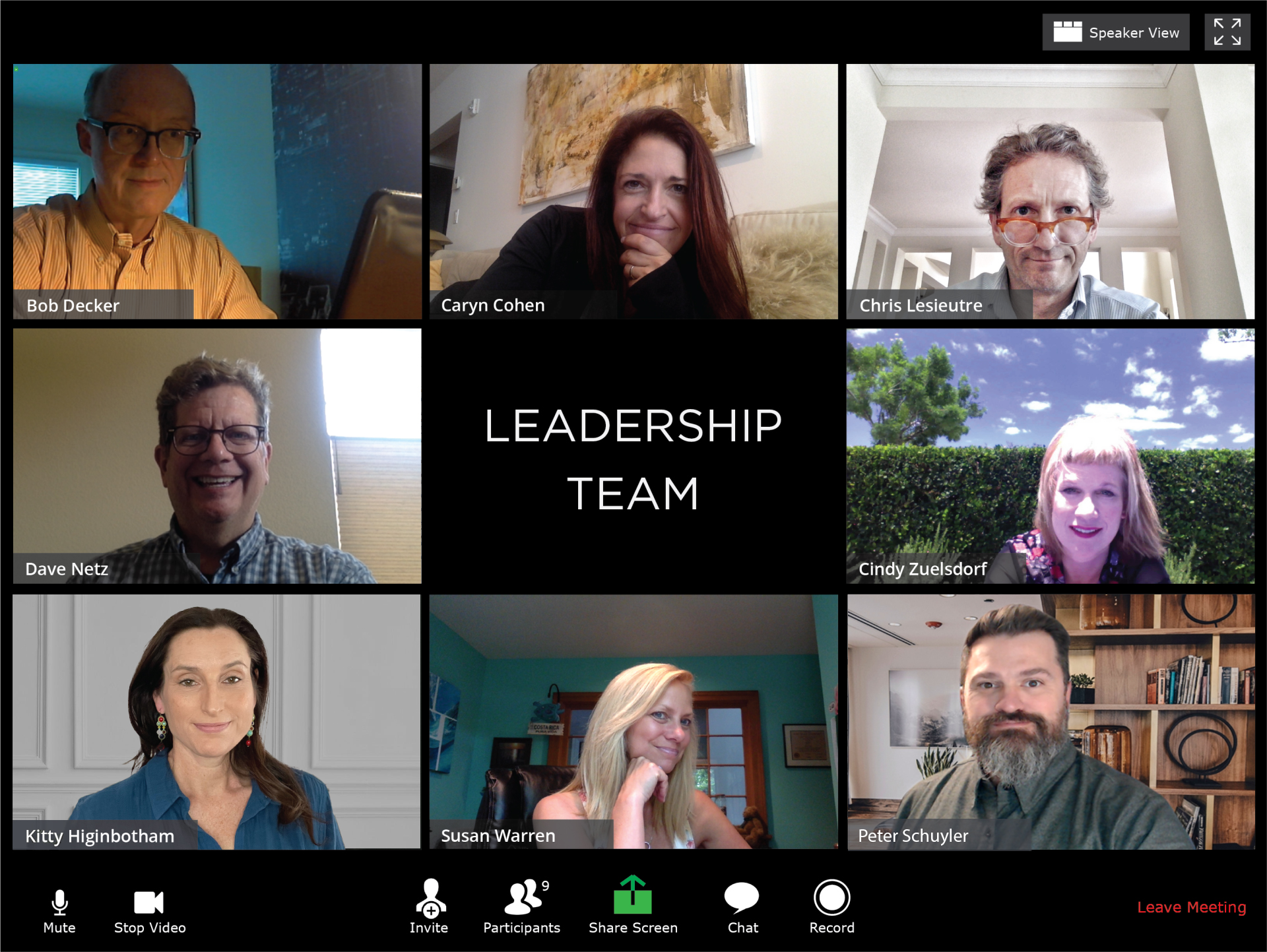
The group did not stretch one agency across every technical category. It split the work. Wall Street Communications stayed close to video, broadcast, pro AV, and media technology. Redpines grew from the microelectronics practice after Bob Decker joined in 1998, bringing Siliconix and Vishay Intertechnology into the orbit. 202 Communications concentrated on cable, satellite, and broadband. InGear took on pro AV, consumer technology, broadband, and streaming media. Kokoro, formed with Cindy Zuelsdorf in 2014, added CRM, email, lead scoring, automation, social marketing, SEO, and the uncelebrated discipline of following up.
Behind these names sits the part most clients never photograph: shared technology, marketing operations, administrative support, and capital. Dundee Hills describes itself as supplying the infrastructure that allows each agency to concentrate on its particular client base. It is a small holding-company idea applied to professional services - centralize the plumbing, decentralize the judgment.
The customer is the person with two jobs
The typical Dundee Hills customer is not selling trainers or lunch. It is selling a waveform monitor, an encoding system, a network switch, a sensor, or a standards program. The marketing lead may also be running sales. The founder may be writing the website because nobody else can explain the product. A trade show produces a stack of leads, then ordinary work resumes and the follow-up goes cold.
The agencies attack that backlog from both ends. The communications side turns technical knowledge into releases, case studies, contributed articles, briefing programs, social posts, and event campaigns. The automation side captures, scores, and nurtures the resulting interest. Kokoro has described customers arriving at trade-show booths because an email sequence prompted an appointment. The process is mundane, measurable, and valuable: remember the conversation after the badge scan.
One published Kokoro entry offer pairs a reputation-and-conversation system with a $199 setup fee. Larger agency work is scoped as projects, time blocks, or ongoing engagements.
That small public price is not a proxy for a Dundee Hills retainer. It does reveal the breadth of the model. A business can buy a compact system for reviews and web chat, a block of expert time, a discovery project, or a full communications program. The group earns service revenue rather than venture-style upside, and there is no public funding story attached to it. Longevity is the headline.
The work happens where the market gathers
Technical B2B markets still have town squares. They are called NAB Show, InfoComm, and IBC, and everyone wears a badge. At IBC2025 in Amsterdam, Wall Street Communications represented Beamr and supported a roster that included Imagine Communications, NETGEAR AV, Lawo, Riedel, Viaccess-Orca, Interra Systems, SDVI, SMPTE, Cerberus Technology, Utah Scientific, Black Box, and Sonnet Technologies. The work included messaging, press and analyst briefings, news distribution, editorial placement, content, and social coverage.
Several represented companies left with awards. The agency did not invent their technology, of course. Its role was to make the technology legible and present at the exact moment the industry was paying attention. That is what “media relations” means when stripped of ceremony: know the room, know the calendar, and give a busy editor a reason to stop.
A specialist broadcast-technology agency opens with two Salt Lake City clients.
Microelectronics work arrives with Bob Decker and develops into Redpines.
Kokoro adds automation, CRM, email, and lead nurturing to the group.
The public conversation shifts toward generative search, referral traffic, and durable market presence.
What changed was the buyer
Kokoro's 2014 launch captured the group's important change of mind. Publicity alone was no longer enough. Buyers researched long before calling sales, and smaller vendors needed systems that could keep working between launches and trade shows. Dundee Hills added automation because attention without follow-up leaks. More recently, its writing has moved into generative search and AI referral traffic - the new question being not merely whether a journalist can find a company, but whether an answer engine has encountered enough credible evidence to describe it correctly.
The lesson worth copying is structural. A small professional-services firm can share expensive capabilities - software, data, operations, distribution - while keeping client-facing expertise narrow. Build the common layer once. Let specialists own the language and relationships of their market. Measure activity, but do not pretend every press mention can be tied neatly to one sale.
The trade-off is equally plain. This model works best where markets have specialized publications, recurring events, complicated products, and buyers who value precision. It is less compelling for a mass consumer launch where cultural reach, giant paid-media budgets, or celebrity distribution matter more than knowing the editor of a semiconductor journal. Expertise compounds only when the category stays coherent long enough for relationships to compound with it.
The product is not a press release. It is the hour the client does not spend teaching the agency what the product means.
Dundee Hills Group remains a modestly sized private company with administrative offices in Oregon and Salt Lake City and a team distributed across North America and Europe. It does not advertise an enormous headcount or a dramatic financing round. Its evidence is more peculiar and more persuasive: some clients and staff have been around long enough to remember when Fibre Channel sounded new. In an industry addicted to reinvention, the group has made a business from remembering.