Douwe Kiela was at a pub quiz in Hanoi when a conversation helped redirect his education. A man in an “I love Amsterdam” T-shirt was recruiting students for a master’s in logic. Kiela was considering his next degree. The encounter gave him a possibility worth pursuing. A question answered over a quiz table would eventually lead into a career spent asking how machines should answer questions.
The name requires a little assistance, too. His website offers DOW-uh KEE-lah, with Dow Jones as a convenient shortcut. He has joked that French speakers call him Duvet. Even introductions, it seems, benefit from a reference document.
Today, Kiela is a researcher at Google DeepMind and an adjunct professor in Stanford’s Symbolic Systems Program. He co-founded Contextual AI and previously ran research at Hugging Face. Yet the connection between those jobs is easier to follow through his research than through his titles. Again and again, he asks what an apparently intelligent answer is actually connected to.
A useful detour through the senses
His education gave that question several places to live. At Utrecht, he combined Cognitive Artificial Intelligence and Philosophy. At Amsterdam, he studied logic. Cambridge followed, with an MPhil and a PhD in computer science. A language model would eventually become a professional preoccupation; the relationship between language and understanding was already there.
His doctoral dissertation, submitted in July 2016, examined grounding semantics in perceptual modalities. Words represented through other words can be useful computationally, but they leave an awkward question hanging: where does meaning touch the world? His research explored adding visual, auditory and olfactory information to language representations.
The olfactory part is especially pleasing. In 2015, Kiela, Luana Bulat and Stephen Clark published work representing smells through a bag of chemical compounds. Their paper asked why researchers grounding language in perception should stop at images. Lavender has a visual appearance, certainly, but its smell is rather difficult to leave out of the discussion.
The researchers evaluated those representations on conceptual similarity and cross-modal learning. This was an experiment with semantic models, rather than a machine fitted with a fashionable nose. Still, it makes the underlying concern concrete. A description can circle an experience without containing everything a person knows about it. For Kiela, that gap was something to investigate with data.
The open-book exam
On May 22, 2020, a paper appeared with a title that sounded like it belonged exactly where it was: “Retrieval-Augmented Generation for Knowledge-Intensive NLP Tasks.” There were twelve authors. Patrick Lewis was first; Kiela was last. The work was accepted at NeurIPS that year. Its acronym, RAG, would travel considerably farther than the conference programme.
The architecture joined a pretrained language generator to a retrieval mechanism accessing an index of Wikipedia. Instead of expecting everything useful to reside in a model’s learned parameters, the system could consult passages. The experiments included different ways of using those passages during generation, and the paper reported improved results on knowledge-intensive tasks.
A simple analogy is an open-book examination. The student brings some learned knowledge and has access to material on the desk. Knowing where to look becomes part of answering well. The analogy has limits, but it explains the practical appeal without requiring anyone to spend the afternoon discussing vectors.
The original implementation combined dense passage retrieval with BART, a sequence-to-sequence model. Its knowledge had two homes: the model’s parameters and the documents it retrieved. That separation meant researchers could change the accessible information without retraining the entire generator.
One experiment swapped the Wikipedia collection for an older version and asked about the prime minister of Iceland. The answer changed with the collection. It was an elegant demonstration of a mundane necessity: facts move. A system meant to answer questions needs a way to keep up with them.
The team also explored generating Jeopardy-style questions. Retrieved information helped make the outputs more specific and factual. There is an enjoyable echo here of Kiela’s earlier quiz encounter. In both cases, useful information enters from outside the participant’s existing store of knowledge. The machinery is different; the value of consulting something remains familiar.
An exam that talks back
During the same year, Kiela was working on ways to expose what models failed to understand. He was first author of the Hateful Memes Challenge paper, with collaborators including Amanpreet Singh. It addressed a problem that cannot be resolved reliably by considering a picture and its caption in isolation.
A harmless image can acquire a different meaning beside particular words. Equally, changing the image can change how those words should be read. The dataset included carefully constructed alternatives to make shortcuts harder. The model had to deal with the combination.
That work brings Kiela’s interests in perception and evaluation into the same frame. Giving a system two kinds of input is only the beginning. A test must also reveal whether the system uses their relationship. Otherwise, it may collect the right answer for the wrong reason, much as a quiz contestant might recognise the host’s favourite topic.
Dynabench, introduced in September 2020, approached evaluation through a continuing exchange. People tried to fool a model. Their successful examples could then help challenge and train subsequent models. As the systems improved, the questions could grow more demanding.
A fixed benchmark offers a common yardstick, but it can also become a familiar exam paper. Dynabench let the examiner respond. For Kiela, whose name appeared on the launch article with Adina Williams, the point was to get closer to the circumstances in which people actually encounter AI: untidy, changing, and full of opportunities for misunderstanding.
“French people call me Duvet, which is not ideal.”
Douwe Kiela, on the hazards of introductions
A birthday, a co-founder, a different job
By 2022, Kiela was Head of Research at Hugging Face. His public conversations there covered multimodal research, multilingual models and BLOOM, the open-access language model developed through BigScience. The move put him in a community where research tools and models were shared with developers who would try things their creators had never planned.
The breadth suited the history of his work. A career concerned with what language leaves out had room for different modalities and different languages. His conversation with John Bohannon that August also returned to how philosophy informed his thinking. The undergraduate interests had survived the changes of employer.
In 2023, Kiela and Singh co-founded Contextual AI. They had begun working together at Facebook in 2016 and continued collaborating at Hugging Face. Their startup therefore arrived with a relationship older than the company, and with experience turning multimodal research into practical systems.
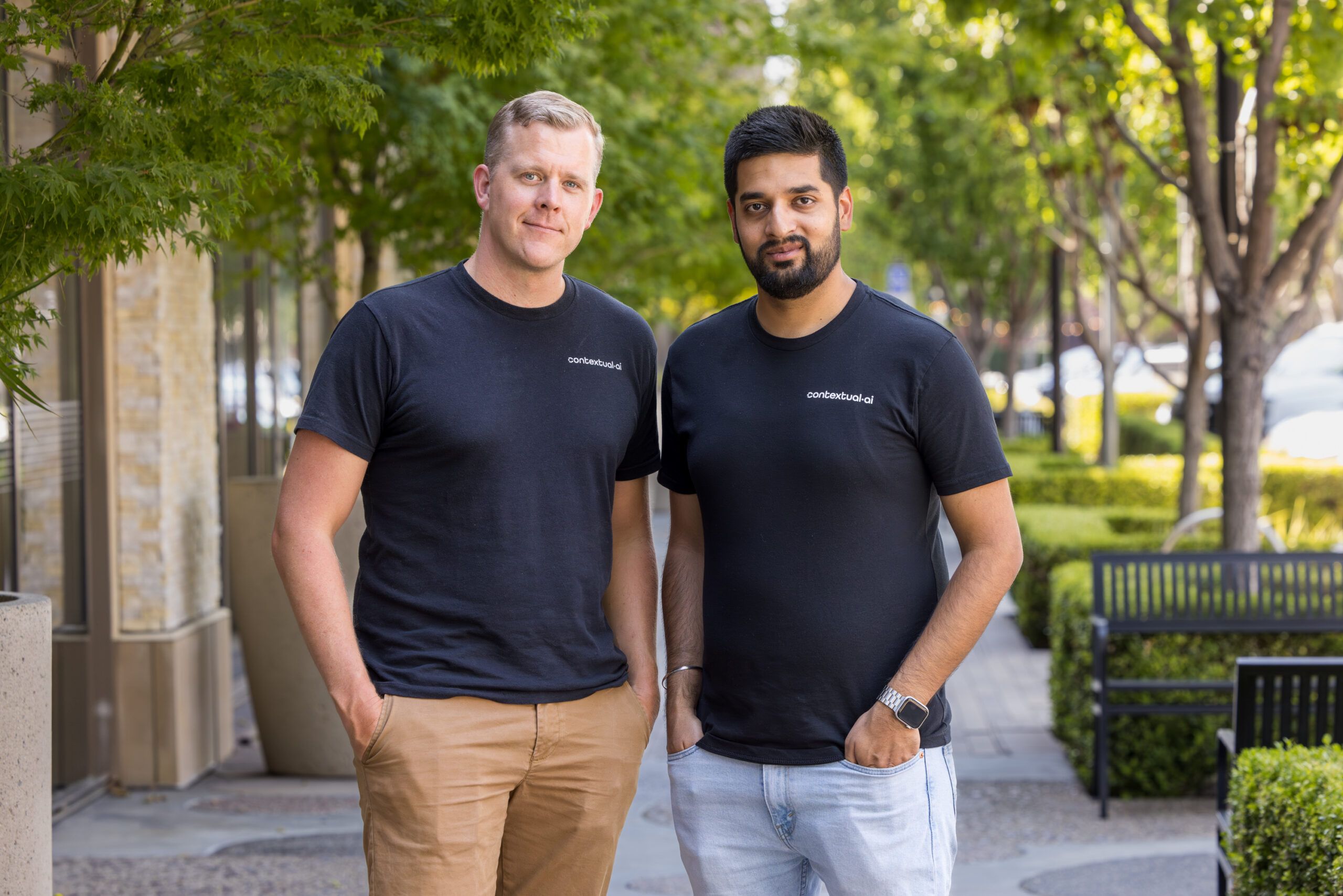
The company emerged from stealth on June 7, 2023, announcing a $20 million seed round led by Bain Capital Ventures. Kiela noted on LinkedIn that the announcement fell on his birthday. A new company is a substantial addition to the usual candles.
Its launch argument was unusually easy to translate into office life. Businesses needed systems that could work with private datasets, stay current, avoid unsupported claims and offer control over their information. A confident answer can create extra work if somebody must spend longer checking it than the answer saved.
An $80 million Series A followed in August 2024, led by Greycroft. Other participants included Nvidia’s NVentures, HSBC Ventures and Snowflake Ventures. The company described plans to scale its operations and enterprise platform. Research was now accompanied by the duties of running a business: building, deploying, selling and meeting a customer’s standards.
June 2023
August 2024
The paperwork behind the answer
Contextual AI had selected Google Cloud as its preferred cloud provider in 2023, bringing computing infrastructure into the practical story. Training models and serving customers require more than a promising architecture. The founders were assembling the conditions under which their research could become something people used at work.
Kiela’s discussions of RAG also resisted an increasingly popular sporting fixture: retrieval versus fine-tuning versus long context. In his account, those approaches can work together. Retrieval supplies relevant information, a larger context gives the system room to use it, and training can adapt components to the task.
Declaring a winner between them risks overlooking what each does. A library, a larger desk and a better-trained reader can coexist quite happily. Buying the larger desk does not settle the matter of which books should be on it.
In a March 2025 conversation with Matt Turck, Kiela described the enterprise system as much larger than its language model. He discussed training for stronger grounding, working with structured and unstructured data, and providing detailed audit trails. He also emphasised the ability to say that an answer was unknown.
Those details give his ambitions a workaday shape. A system must help a person complete a task, and it must make its uncertainty manageable. The final sentence is only the visible surface. Beneath it sit decisions about evidence, extraction, search, verification and when to stop.
Count the thinking before counting the agents
In April 2026, Kiela and Dat Tran published a study of single-agent and multi-agent systems for multi-hop reasoning. They controlled a variable that can easily disappear from an enthusiastic comparison: how many reasoning tokens the systems were allowed to spend.
Under matched budgets, the single-agent systems consistently matched or outperformed the multi-agent alternatives across the model families tested. The paper also identified problems in budget control and benchmarks that could inflate apparent gains. Its claim had a specific scope, rather than pretending to settle every possible use of agents.
The researchers left room for multi-agent approaches to become competitive when a single system uses its context less effectively or when additional computation is spent. The question becomes a fair accounting exercise. What helped: the architecture, the context, or the extra thinking?
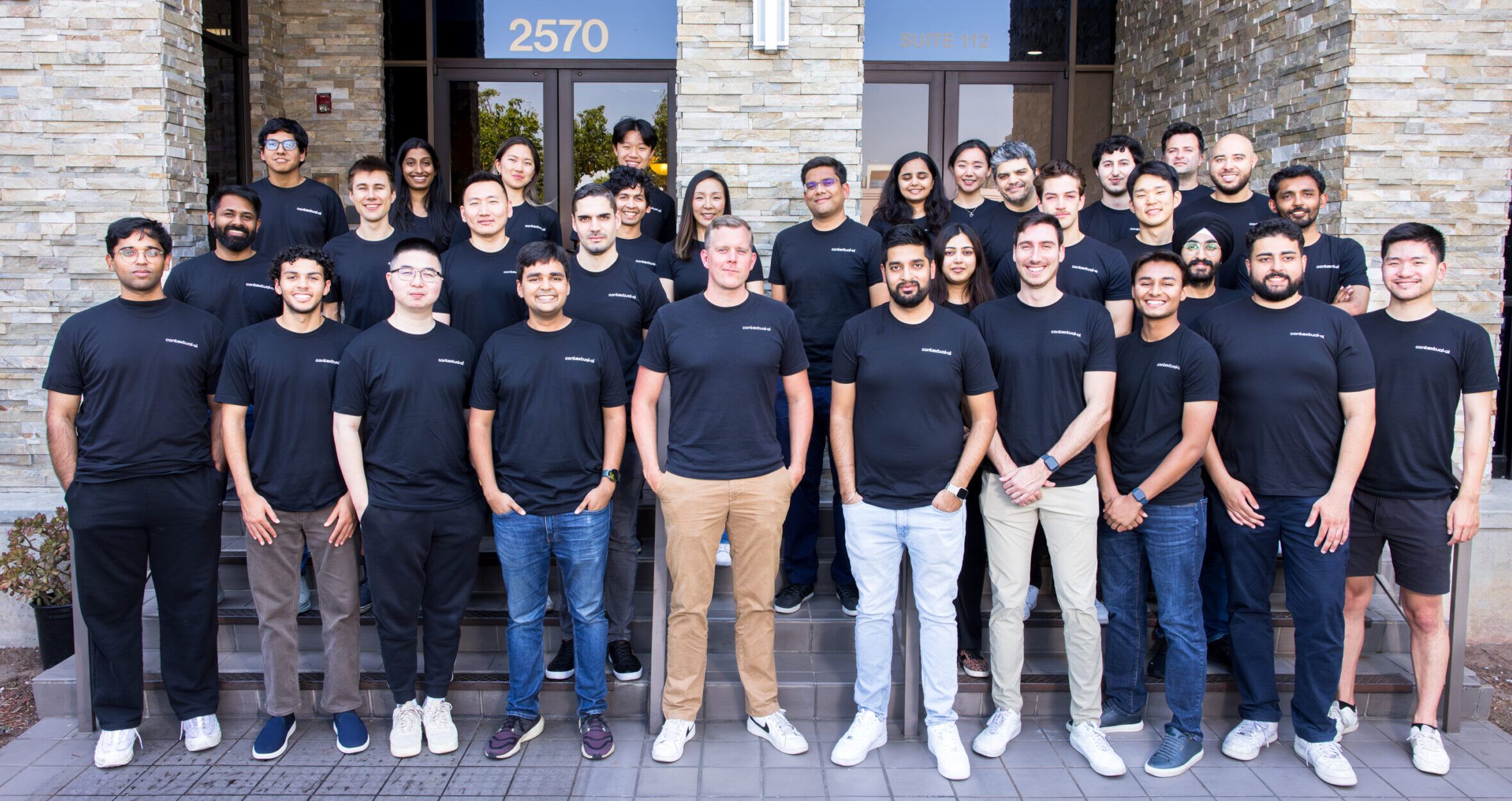
In May 2026, Kiela joined Google DeepMind. His personal website now describes him as a researcher there and as Contextual AI’s former CEO and co-founder. The move followed a licensing arrangement through which more than twenty Contextual AI researchers joined DeepMind.
His current interests still include grounded, multi-agent and retrieval-augmented language understanding, along with evaluation and benchmarking. The settings have changed; the questions remain recognisable. How does an answer connect to the world? What makes it useful? And what happens when somebody bothers to check?