The company Douglas Chen founded with Varun Mohan has worn three names. Exafunction belonged to the world of GPUs and the awkward economics of running machine learning at scale. Codeium lived inside a programmer's familiar editor and tried to make the next line of code appear before it was typed. Windsurf put the editor itself up for renovation. The names are a neat little chronology of a much less tidy business: each one marks a moment when the old answer stopped being enough.
By July 2025, there was a fourth place to put on Chen's map. He and Mohan, along with some of their team, joined Google DeepMind to work on agentic coding. The company they had built carried on with its remaining staff and was soon acquired by Cognition. If the first three names chart what Chen and Mohan built, the last move shows how valuable the people who built it had become.
A friendship with a long fuse
Chen and Mohan met in middle school. They later studied at MIT, a detail that makes their eventual partnership sound almost prearranged. It was not a case of two classmates starting a coding assistant straight from a dorm room. Chen graduated with a degree in computer science and engineering and a mathematics minor, then worked at Meta on software tools for virtual-reality headsets, including the Oculus Quest. Mohan took a different technical route through autonomous vehicles at Nuro. When they started a company together in 2021, their first target was the machinery under AI, rather than the software engineer sitting in front of it.
Exafunction set out to make GPU use more efficient. A graphics processor is an expensive machine to leave idle, and deep-learning workloads are fussy tenants. Models need compute at uneven times; businesses need the result without becoming experts in the scheduling. Mohan later described the company as managing ten thousand GPUs across the public cloud. The original idea had customers and technical substance. The pivot that followed was therefore more interesting than a rescue from failure. The founders were willing to walk away from a working answer when the question changed.
The shift came in 2022, as large language models started to change what a general-purpose AI system could do. Exafunction's infrastructure experience did not become irrelevant. It became an advantage in a different business. An AI coding assistant has to understand enough context to be useful and answer quickly enough to keep up with a person thinking at the keyboard. The team could bring its model-serving instincts to that very human interval between a thought and a keystroke.
The speed of a suggestion
Codeium's early proposition was easy to grasp: put AI-powered code completion and related help in the editors developers already used. It lowered the cost of trying the product and met programmers in their habits, not in a new workspace they had to learn. For enterprises, the offer also had to survive tougher questions. Could it work with a large, private codebase? Could a regulated customer keep sensitive code inside its own environment? The company's work with Anduril, for example, involved an air-gapped deployment rather than a conventional cloud tool. Those requirements are less photogenic than a demo that writes an app in seconds, but they are where developer software earns a place at work.
Chen's own public posts give a modest set of milestones. At the Series B announcement, he said Codeium was actively used by more than 300,000 developers. At the August 2024 Series C, he reported more than 700,000 on the platform, revenue growth of more than six times since the preceding round, and a $150 million investment at a $1.25 billion valuation. These were company-reported figures, and they show the scale of the bet rather than the daily experience of any one coder. Still, a product launched from a GPU startup had become a regular companion to a large number of people making software.
There is a useful humility in that sequence. The first assistant did not have to overturn the editor. Its value was in fitting into the room where work already happened. Yet as AI models improved, the room began to look cramped. An autocomplete suggestion can live in a narrow gap. An agent that searches a repository, chooses files, runs commands and makes several changes needs a wider field of view. It also needs a way to show its work to the person who remains responsible for it.
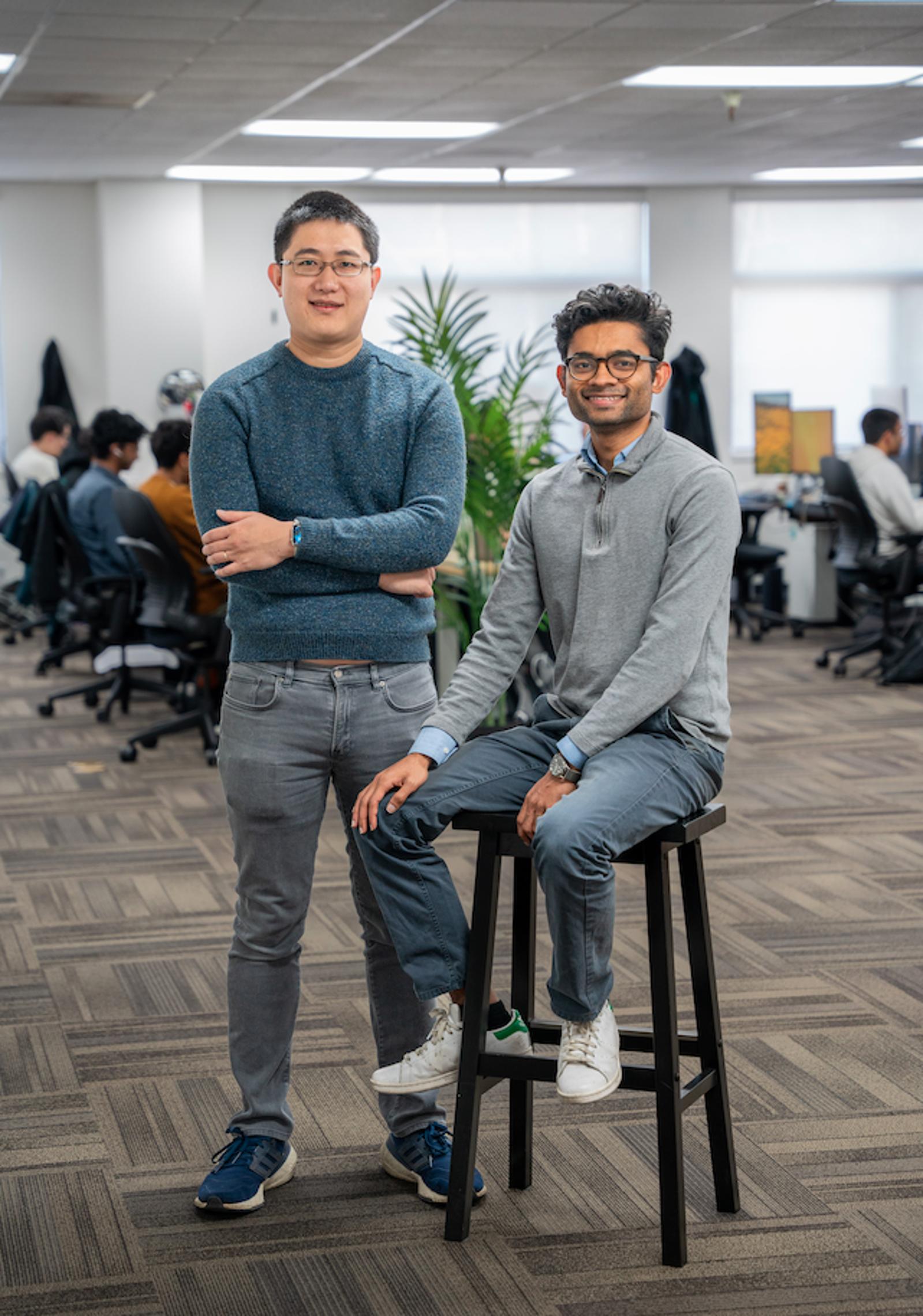
When the editor became the product
In November 2024 the company introduced Windsurf Editor. Its central feature, Cascade, combined a coding assistant's back-and-forth with an agent's ability to act across files. The developer could inspect suggested changes and accept or reject them. The editor was designed to see the trajectory of work too: the files opened, commands run and edits made before anyone wrote a perfect prompt. That is a subtle change in manners. Most software waits politely to be told what a person wants. Windsurf tried to notice what the person was already doing.
The team described the product's aim as enabling work that would otherwise be out of reach, not merely shaving minutes from familiar tasks. One example was an employee outside engineering building an internal tool instead of waiting for a software team. The claim is ambitious, and the result depends on the task, the code and the person reviewing it. But it explains why the founders moved beyond a plug-in. If AI could participate in a workflow, the workflow itself became the material to shape.
“We're just getting started and are committed to continuing to innovate and push the limits of what's possible in software development.”Douglas Chen, on Codeium's 2024 Series C
Chen's individual engineering decisions are rarely itemized in public accounts of the product. He is a co-founder in a team effort, and the story resists the convenient fiction that one person designed every important feature. What can be said with confidence is more specific and more useful. He helped create the company at each of its turns, brought a background in software engineering and machine learning, and publicly marked its growth. A former teammate later credited Chen and Mohan with showing what a fast-moving startup could look like. That is a view from inside the room, rather than an invented personality portrait from outside it.
A July that would not stay still
Then came the peculiar week in July 2025. A reported sale of Windsurf to OpenAI did not happen. Google instead hired Mohan, Chen and some of Windsurf's researchers, and took a nonexclusive license to certain technology. In a joint statement, the founders said they were proud of what Windsurf had built over four years and excited to see it move forward with its team. Google said the incoming group would work on agentic coding at DeepMind. Within days, Cognition announced it would acquire Windsurf's remaining business, team and intellectual property.
The people who stayed had their own difficult week. New chief executive Jeff Wang wrote plainly to employees that the company had lost its founders and research team. Cognition's acquisition gave the product and staff a new home. The public record makes room for both facts: Chen's move was a significant professional next step, and the separation was unsettling for colleagues. Startup stories often compress this kind of event into a triumphant transaction. The actual sequence had more people in it.
For Chen, the destination brings the founding work back to a familiar problem at a much larger scale: how an AI system should help someone make software. At Exafunction the bottleneck was compute. At Codeium it was the latency and relevance of a suggestion. At Windsurf it was the shape of the coding environment. Google DeepMind's announced focus on agentic coding suggests the next question concerns how capable models should use tools and act alongside a developer. That is an inference from the team's stated remit, not a prediction about any private project.
The habit of changing scale
There is a temptation to make this biography a straight line: childhood friends meet, study, found a company and arrive at a major AI lab. Straight lines are tidy, but they miss what makes the story worth reading. Chen and Mohan changed the level at which they worked. They began under the model, with GPUs. They moved beside the programmer, with suggestions inside existing editors. They moved around the programmer, with an editor designed for an agent and a human to share. The technical details changed; the habit of asking where the constraint really lay stayed recognizable.
That habit also helps explain the three company names. Exafunction describes scale. Codeium describes code. Windsurf suggests movement, even a little ease. None of those names would tell you much about the others if you encountered them in isolation. Together they show a founding team revising its understanding of the work. Product history is often told as a string of launches. Here it reads more like a series of corrections to the map.
The current public chapter finds Chen at Google DeepMind and the product he co-founded inside Cognition's orbit. The middle-school connection to Mohan is still the most disarming detail. It puts a long human relationship behind a market whose vocabulary changes almost monthly. The founders could not have known in school what an AI coding agent would be. Their shared project, years later, was to keep noticing when a tool no longer fit its task - and to build the next one.