In July 2007, Don Kleinmuntz was recruiting operations researchers to LinkedIn. The site was young enough that a search for their profession could still feel like a roll call. Fellow researcher Michael Trick joined after Kleinmuntz encouraged colleagues to try it. Here was a software co-founder and former professional-society treasurer doing a little informal community organizing, one invitation at a time.
The delightful part is that Kleinmuntz had not yet decided how important LinkedIn would be. He was trying it, bringing other people along, and withholding a verdict. In a business culture fond of announcing the future before lunch, there is something refreshing about an experiment allowed to remain an experiment. The invitation could go out before the conclusion came in.
That small episode offers an entrance to a career usually described through executive titles and academic appointments. Kleinmuntz has repeatedly worked where a useful idea meets the awkward business of getting people to adopt it. He has done that through financial software, a scholarly journal, a professional association and a graduate degree. Each required more than an elegant answer on paper.
Chicago taught him to take the question apart
His formal education stayed in one city while moving through several ways of thinking. At the University of Chicago, he completed a bachelor’s degree in statistics in 1978, an MBA in 1980 and a doctorate in statistics and decision research in 1982. Probability and judgment sat beside management. The combination gave him a subject broad enough to follow into different institutions.
His academic appointments included the University of Texas at Austin, MIT, the University of Illinois Urbana-Champaign and the University of Southern California. At Illinois, his work reached into accounting and decision research. These are disciplines with a shared inconvenience: people must choose before uncertainty politely removes itself. A forecast can be careful and still leave a manager with a difficult afternoon.
His 1994-95 Center for Advanced Study project examined decomposition in subjective probability assessment. Put plainly, decision analysis can break a complicated choice into alternatives, beliefs and preferences. But the judgments feeding those pieces can change with the procedure used to elicit them. A tidy diagram does not automatically make its ingredients dependable.
That is a demanding starting point for someone who would later build analytical tools. It asks the designer to pay attention to the person supplying an estimate, the question being asked and the way uncertainty is represented. A spreadsheet has excellent manners: it accepts whatever number you give it. Research into judgment asks whether that number deserves such a warm reception.
A conceptual illustration of decision decomposition, the subject of Kleinmuntz’s Illinois research.
The basement had two founders
In 1996, Catherine and Don Kleinmuntz founded Strata Decision Technology in the basement of their home in Champaign, Illinois. Catherine brought experience in financial consulting and software operations. Don brought decision research and analytical design. The company’s name put the intended destination in plain view: technology would have to help with decisions.
Catherine served as president and CEO until the company’s sale to a private equity firm in 2011. Don held several executive responsibilities over the company’s early life, including CFO, CIO and interim CEO, and helped design its predictive and prescriptive analytics. A founding story told through his résumé alone would miss the partnership that made the business possible.
The distinction between those analytical approaches is useful. Prediction estimates what may happen. Prescription examines what to do given objectives and constraints. A financial plan needs both kinds of thinking: expectations about the future, and choices about limited resources. Neither eliminates the need to decide what an organization is trying to accomplish.
Strata also made Kleinmuntz an operator. Serving as a financial officer and an information officer puts the systems of the company itself on the desk alongside the systems being sold. Budgets, software development and organizational priorities all demand attention. The theorist’s interest in allocation had acquired a rather practical companion: an enterprise with employees.
He helped start Strata while retaining his Illinois faculty responsibilities, then left full-time teaching in 2006 to spend more time on the business. By his departure from Strata in 2014, it employed more than 100 people. The basement beginning is memorable, but the years between founding and departure matter more. They describe the sustained work of turning an analytical approach into a functioning company.
From the Strata founding to Kleinmuntz’s departure.
More than 100 employees by the end of his tenure.
A profession needs somewhere to meet
Another venture was taking shape alongside the company. With Robert Clemen, Kleinmuntz served as a founding co-editor-in-chief of Decision Analysis. Their work defining the journal began in 2001; the first issue appeared in 2004. They worked together through 2006. Creating a publication gives a field a place to argue carefully, develop methods and decide what deserves closer attention.
Professional service can sound like the quiet part of a biography, something performed between the interesting appointments. In Kleinmuntz’s case it occupies substantial space. He was INFORMS treasurer from 2003 through 2006 and its president in 2009. His presidential work included outreach to practitioners, international relationships and new initiatives for the organization.
The practical question was who belonged in the conversation. A society rooted in research also had to reach people applying analytical methods inside organizations. Continuing professional education and relationships beyond national boundaries were part of that effort. His LinkedIn invitations look less like a stray enthusiasm when placed beside those institutional concerns.
In 2011, he received the Frank P. Ramsey Medal for contributions to decision analysis. The award recognized work spanning scholarship, business application and professional service. In 2012 came the George E. Kimball Medal for service to operations research and management science. Recognition followed a career that had spread across activities often placed in separate columns.
The columns were plainly connected. Research supplied methods. Business supplied consequential problems. Editing and society leadership supplied ways for people working on those problems to encounter each other. There is no need to pretend that committees are glamorous to see their value. Somebody has to make the meeting possible before the bright idea can change hands.
Back to class, with operating experience
In September 2014, Notre Dame named Kleinmuntz director of its new Chicago Master of Science in Business Analytics. The degree was scheduled to begin in January 2015. It was designed for working professionals, with alternating Friday and Saturday sessions in Chicago and extended sessions on the university’s South Bend campus.
The format put analytics alongside existing careers. Students would bring business problems into the classroom and return to their organizations with new ways to examine them. A program built around working adults has a particular test of relevance: an idea discussed on Saturday may face a colleague’s questions on Monday.
At the appointment, Kleinmuntz described business analytics as “the art and science of transforming data into insights for better decision making.” The wording places the decision at the end of a sequence. Gathering data is a beginning. Analysis has to produce understanding, and that understanding has to survive contact with a choice.
He served as founding academic director from 2014 to 2017 and continued teaching as an adjunct through 2022. Notre Dame recognized him with its MSBA Outstanding Professor Award in 2019. On July 1, 2022, he announced that the following day would bring his final Time Series Analysis session in the program. Even a course about change over time eventually acquires a final observation.
The return to teaching adds an interesting bend to the chronology. His business experience came back into education rather than closing the door on it. Someone who had studied judgment, built software and carried executive responsibilities was helping experienced professionals connect analytical tools with the work they already knew.
“The emerging field of Business Analytics is about the art and science of transforming data into insights for better decision making.”Don N. Kleinmuntz · 2014
The institutions after the company
Today, Kleinmuntz is a principal at Chicago-based Kleinmuntz Associates and co-executive director of the Kleinmuntz Family Foundation. The investment and advisory firm was founded in 2013. Its publicly listed investments include community platform CampfireSocial and video marketplace Cameo, alongside investment firms and other technology businesses. These are firm investments, rather than a statement about the size of his personal holdings.
Catherine and Don established their foundation in 2018. It supports charitable organizations through donations and volunteer work, with interests including education, the arts, scientific research, social welfare and technology. The emphasis on organizational effectiveness gives this chapter a familiar concern: helping an institution do its work more effectively.
In 2019, the University of Illinois announced the Catherine and Don Kleinmuntz Center for Genomics in Business and Society. Its remit included economic development, public engagement and social impact. The university connection extended beyond the faculty office and beyond the company, which had been an early tenant of Illinois Research Park.
The journal connection continues too. An endowment established by the family foundation supports the Clemen-Kleinmuntz Decision Analysis Best Paper Award. In June 2026, the journal announced the award for a 2025 paper by Ali Abbas and Gordon Hazen examining the value of information across decision problems. The winning authors share a $2,000 prize. A publication he helped establish now has a funded way to encourage other researchers.
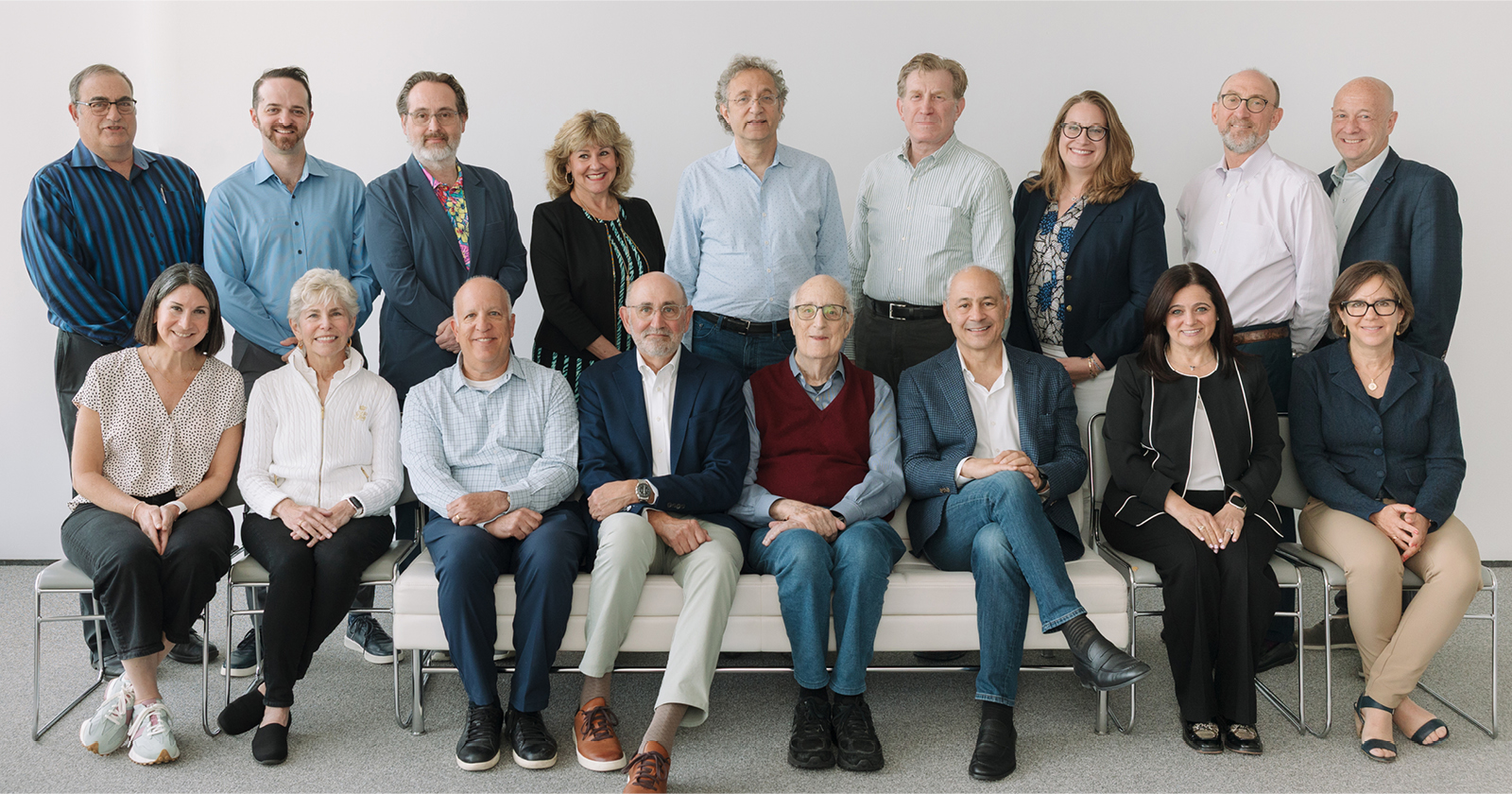
Spertus Institute lists him as treasurer on its board of trustees. In the institute’s 2026 board photograph he stands among fellow trustees, part of another group responsible for the unphotogenic business of keeping an organization working. The picture belongs to a career in which stewardship has repeatedly accompanied invention.
Still asking who gets to use the work
In April 2026, Kleinmuntz joined former INFORMS presidents Radhika Kulkarni and Anne Robinson in a public argument for stronger practitioner representation in the society’s leadership. They pointed to the experience of people whose analytical systems must function inside businesses. Decades after entering decision research, he was still pressing the profession to take application seriously.
That argument brings the career back to its recurring question. Who will use this work, under what conditions, and with what support? A journal can improve the exchange of ideas. A degree can equip someone to apply them. Software can make an analytical method available when a decision actually has to be made.
The 2007 invitation remains a fitting small scene. Try the tool. Invite a colleague. Leave enough room to find out whether it helps. Across classrooms, companies and committees, Kleinmuntz has given that question a long working life.
Continue the conversation
- Kleinmuntz Associates · investment and advisory work
- Kleinmuntz Family Foundation · mission and activities
- LinkedIn · Twitter / X
- INFORMS and the Practice of Operations Research · April 2026
- Michael Trick’s 2007 LinkedIn recollection
- The 2025 Clemen-Kleinmuntz paper award · announced June 2026
- Spertus Institute board of trustees