A family business gets into trouble. Someone has to decide what the machinery is worth, which assets to keep, and what can be sold. In the mid-1980s, Jeffrey B. Hecktman found himself doing that work for his family’s industrial distribution company. The experience supplied the premise for a career: a business can be struggling while the things inside it still have buyers, uses and a future.
He founded the Hilco Trading Company in 1987. Nearly four decades later, he remains Hilco Global’s founding chairman and chief executive. The company has grown into valuation, advisory work, asset sales and financing, serving businesses far beyond the industrial world where he began. The original task, however, remains recognizable. Before deciding what happens next, find out what is actually there.
That sounds modest for a financial-services business. It also involves rather more work than announcing that something is undervalued. A machine needs a market. A brand needs customers. A lender needs confidence that the collateral will be worth something when confidence itself becomes scarce. Hecktman built his company around the practical distance between a number on paper and money someone will pay.
A useful education in things going wrong
Hecktman is a Chicago native whose formal education took him elsewhere. He earned a B.A. in business administration from the University of Arizona and studied international business through George Washington University and Nyenrode Business Universiteit in the Netherlands. His eventual business would acquire an international reach of its own, but its starting point was close to home.
The family restructuring gave him a problem with consequences. Selling an underperforming asset means accepting that its usefulness to one owner has ended; finding another buyer means recognizing that usefulness can travel. That distinction helps explain why asset disposition can become the foundation for a much broader financial business. The sale is one outcome. Understanding the asset creates other possibilities.
Through the 1990s, Hilco handled industrial, retail and wholesale liquidation and disposition assignments while expanding its appraisal work. Hecktman also built through partnerships with advisers, consultants and other liquidation firms. Complementary skills could help complete an assignment. A company that knows the machinery may still need someone who understands the property, the inventory or the financing.
There is a certain lack of glamour to this starting point. No one has yet made the inventory spreadsheet a convincing red-carpet accessory. Its advantage is that the questions are concrete. What can move? Who would buy it? How much time is available? The answers become particularly valuable when a business has run out of easy choices.
Connected capabilities, rather than a prescribed sequence.
When the appraiser brings capital
Hilco’s expansion eventually put it on both sides of a familiar question: what should an owner do with an asset, and who will finance the decision? Its work now includes principal investing, private credit and private equity alongside professional services. Hecktman’s role has involved structuring and directing thousands of transactions deploying billions of dollars across acquisitions, restructurings and monetization engagements.
The attraction of combining these activities is easy to understand. Someone who knows what assets can realize has information relevant to lending against them. Someone who can provide capital may be able to pursue an opportunity that an adviser alone could only describe. The practical difficulty is building an organization capable of doing the work across different assets and markets.
Outside capital was part of the story well before ORIX arrived. In March 2019, the Canadian institutional investor CDPQ announced that it had acquired 27% of Hilco Global. The partnership also contemplated approximately $150 million in annual investments alongside Hilco in distressed assets and special situations. That was an institutional vote of confidence in a business born from one family’s restructuring.
The arrangement illustrates a recurring issue in Hecktman’s career. Expertise can create a list of possible transactions longer than the available funding can support. A founder then has to value something harder to itemize than machinery: the right financial partner. The choice affects which opportunities become possible, how quickly decisions can be made, and how much control remains at home.
The founder sells a majority, then keeps working
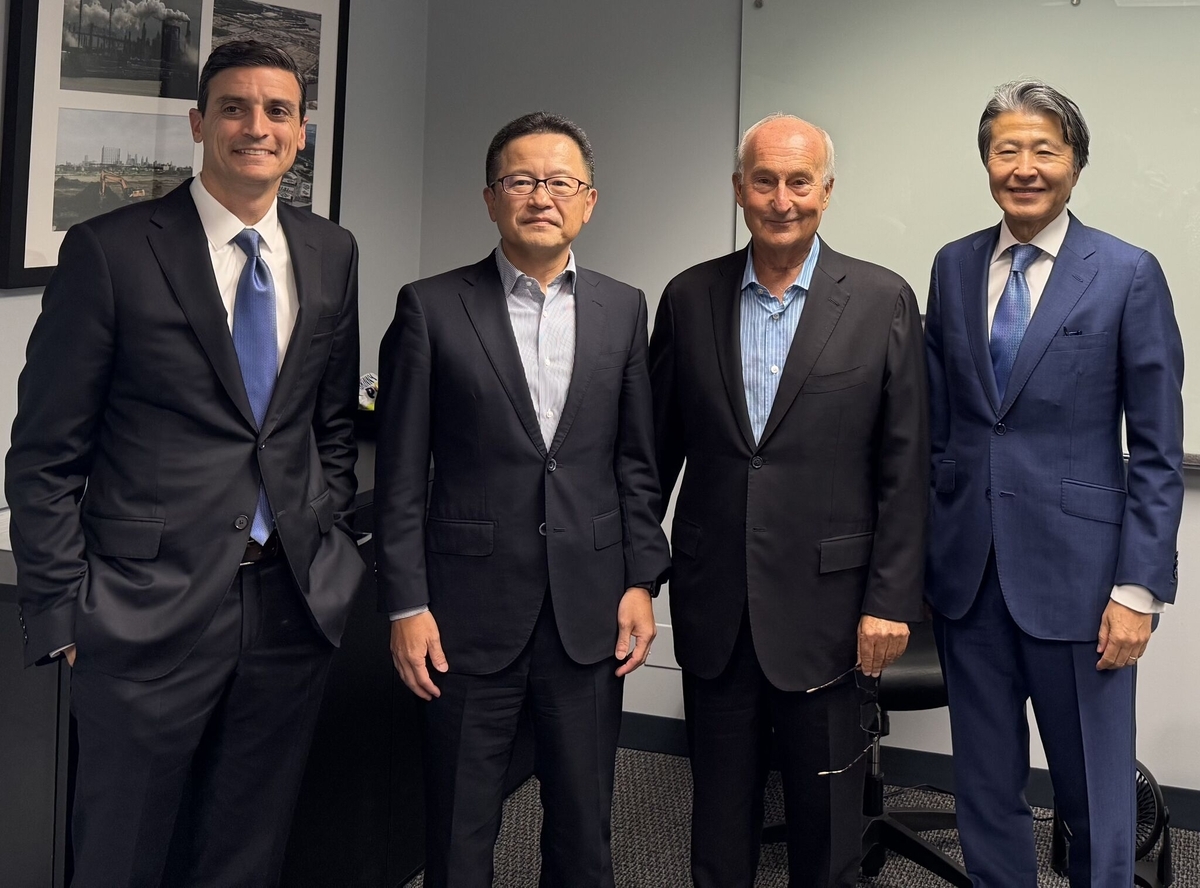
In September 2025, ORIX Corporation USA completed its acquisition of a majority interest in Hilco. The acquired holding was 71.4%. Hecktman stayed as founding chairman and CEO. A business that had spent decades examining other people’s assets now had a new majority owner examining its possibilities.
The strategic exchange was explicit. Hilco brought asset appraisal and asset-based lending expertise. ORIX USA brought capital resources, lending capabilities and access to outside investment. Together, the businesses planned to broaden financing for existing and new clients. Hecktman’s ambition was to develop Hilco into an asset-rich merchant bank, extending the usefulness of the knowledge his teams had accumulated.
Hilco interest acquired by ORIX USA
His description of the cultural fit was refreshingly plain: “Working hard while having fun; making money but also giving back to the community.” Finance has produced less approachable mission statements. Here, enjoyment and philanthropy were placed in the same sentence as making money, without requiring anyone to pretend the money was incidental.
By November 2025, Hilco was describing a reorganization of its more than 20 operating companies into Professional Services and Capital Solutions. The managerial question followed the financial one. More capital could expand the opportunity set; a more integrated organization would have to turn those opportunities into coordinated work.
The people who stay, and the people who return
Neil Aaronson’s account of joining Hilco brings the scale back to a personal introduction. Returning to Chicago for family reasons, he met Hecktman and found an opportunity at the company. Years later, he still credited the founder’s mentorship and trust. His closing thought was disarmingly direct.
“Hopefully, I’m continuing to make him proud.”
Neil Aaronson, on Jeffrey Hecktman
For an executive discussing a global financial business, it is an unusually human measure of progress. It also reveals a relationship that survived expanding responsibilities. Aaronson and Henry Foster became co-presidents in late 2023, part of Hecktman’s effort to give another generation of leaders broader management duties.
The leadership circle also expanded to include restructuring veterans David Kurtz and James H. M. Sprayregen. Together with John Chen, they formed an Office of the Chairman reporting to Hecktman. Building a broader advisory and investment business required people whose experience and relationships extended beyond the founder’s own.
Another connection resurfaced in January 2026, when Henry Jackson joined Hilco as an executive director focused on originations and transactions. Jackson and Hecktman had launched Hilco-Merchant Equity Partners in the United Kingdom in 2006. Twenty years later, their professional paths converged again. A company history can look like a sequence of organizational charts; lived from inside, it also consists of people one can call again.
There were sneakers, too
Industrial assets do not account for the whole of Hecktman’s investment interests. In 2017, he partnered with footwear executive Wayne Kulkin to finance and expand StreetTrend, the business associated with P448 sneakers. Mark Wahlberg joined as a strategic investor in 2022. Former Neiman Marcus chief Karen Katz had become the board’s non-executive chairman in 2020.
The cast is a reminder that understanding assets also means understanding operators. A brand requires different judgment from a piece of industrial equipment: customer preference, distribution and creative choices matter. In discussing Wahlberg’s arrival, Hecktman emphasized the contribution of entrepreneurs and business leaders to the venture.
A sneaker does at least spare its investor the problem of moving a steel mill. It introduces other complications, including whether anyone wants to wear it. Hecktman’s participation with Kulkin shows a willingness to work with specialist operators outside Hilco’s original industrial setting. The connection is less obvious than another appraisal business, which is precisely what makes it revealing.
A Chicago name with a longer horizon
In 2018, Hecktman attended Chicago Public Library’s National Summer Learning Day celebration. Hilco and Cradles to Crayons donated toys for children participating in the library’s learning challenge, with staff volunteering at the event. It was a practical form of corporate giving: goods, distribution and people showing up.
Then, in 2026, the Hecktman Family Foundation announced a $20 million naming gift to JCC Chicago. The organization announced that it would become the Penny and Jeffrey Hecktman Family JCCs of Chicago. The gift connected the family name to Jewish community programming across the region, giving the public a different way to encounter a surname associated with financial transactions.
The relationship had begun with a chance introduction to JCC chief Addie Goodman at Morton’s in 2019. They shared an interest in saving Chicago’s Standard Club. The club closed in 2020, but the acquaintance continued. Years later, when Goodman raised the naming proposal, Hecktman listened before agreeing. His daughter Hillary described him as an “intentional listener.”
The $20 million was directed toward an endowment, giving the institution a continuing financial resource. An endowment has a particular appeal in this story: capital committed today is meant to support activity long after the announcement has ceased to be news. Its value lies in what it can keep making possible.
Hecktman’s career began with deciding what could be recovered from a family enterprise. It has reached a point where he can help decide what other institutions will have available for their futures. The settings have changed, from industrial assets to an international financial company to Chicago community life. The question remains usefully stubborn: what can this become, given the right owner, the right people and enough time?
Follow the next chapter
Company pages, conversations and further reading.