The printer would not fit. In DocMagic’s small office, a newly purchased laser printer had to go in the front room, some distance from the people sending it work. A form arrived. The machine printed it. Dominic Iannitti and his colleagues looked at one another and saw a possibility: the printer could just as easily be in somebody else’s office. A shortage of floor space had become an idea for delivering documents.
Iannitti kept that incident in his account of the company’s beginnings. His working life revolved around such questions. Why carry a package if the information could travel? Why type a number twice? Why should a borrower wait for people to reconcile versions of the same document? Mortgage paperwork offered a dependable supply of things that took longer than they ought to.
He founded DocMagic in 1987 while still in college, and led it as president and CEO until 2024. Over those decades, the business moved from preparing documents to electronic signatures, compliance software and digital mortgage closings. The continuity lay in his appetite for removing an unnecessary step. Even a fraction of a second could get his attention.
A business hiding inside a college book
Born and raised in Southern California, Iannitti attended California State University, Long Beach. He was studying finance and computer methods in business while working part time in document processing. A book’s discussion of repackaging data caught his interest. At first the idea seemed abstract. Then he recognized a version of it in the work he was already doing.
There was a false start involving customized appraisals. He subsequently spent three or four months working through a new business plan, checking its numbers night after night. Mortgage banker Patrick Theodora and Patrick’s father, Pasquale, supplied funding. The eventual partnership between Iannitti and Pat Theodora would last 37 years.
The first operation was small enough to measure without a spreadsheet: three people and roughly 1,000 square feet. Its first salesperson arrived by an unusual route, having successfully sold the company a fax machine before joining part time. Evidently the customer had been paying attention to the pitch.
Early service was geographically constrained. Orders came in, documents were prepared, and couriers delivered the packages. In the South Bay area of Los Angeles, DocMagic offered delivery the same day. A morning request could return in the afternoon, ready for signing. Before paper could disappear, waiting for it could at least become less tedious.
“To me, it’s always been speed”
Dominic Iannitti, 2013
The small tyranny of the repeated number
The appeal of document automation was straightforward: information entered once could populate multiple forms. Each avoided repetition removed another opportunity for a mistake. Iannitti’s interest in data helped turn a production service into software that selected forms, applied rules and checked information. The document became a place where the system could catch a problem.
By 2015, he described a company whose original document production business had become one department within a broader technology operation. Its acquisition of eSignSystems brought enterprise software that could run on a customer’s premises alongside DocMagic’s hosted services. Buying Document Express had a different appeal. He liked its smaller, hands-on approach to customers and wanted to bring some of that sensibility into a larger organization.
SmartCLOSE addressed another irritation: people collaborating on a loan without seeing the same information at the same time. Lenders and settlement agents needed updates as changes happened, along with a record of the discussion and decisions behind a fee. A shared portal could gather those exchanges and preserve their history. Iannitti had come to see communication as part of the document problem.
Consistent data travels with the document.
An office with room for a detour
There was an interesting companion to all this concern about speed. Inside DocMagic’s Torrance headquarters, employees were encouraged to leave their desks. The open layout included lounges, places to work with a notebook computer and outdoor space. There were Ping-Pong tournaments. A company selling efficiency had made room for people to knock a small ball about.
Iannitti spoke proudly of long-serving employees, including support staff. Preparing for changes in mortgage disclosures meant training the people answering questions, as well as changing the software. Customer service needed colleagues who could explain what was happening when a lender called. The building and the training both expressed the same practical concern: give people conditions in which they could do the job.
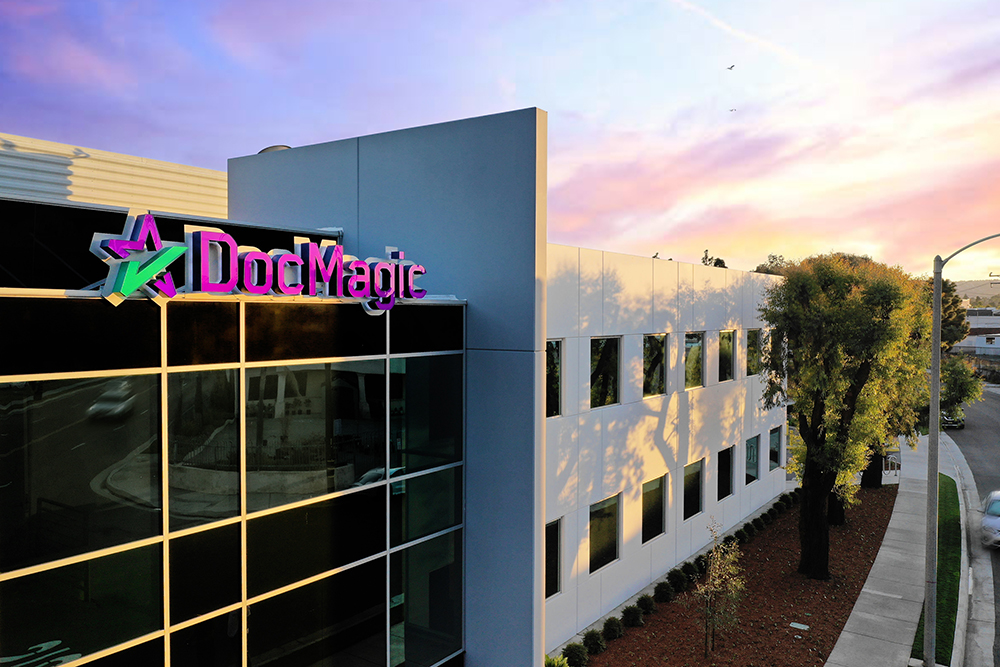
The headquarters occupied 25,000 square feet. Its interior received an Honor Award for Interior Architecture from the American Institute of Architects. Curved passageways, open work areas and carefully handled light gave the mortgage software business a physical character. Iannitti had taken an interest in how the company looked and felt, as well as how quickly its systems performed.
He was unusually direct about staffing. Asked in 2015 about DocMagic’s greatest challenge, he identified keeping employees. Customers should not have to navigate a revolving cast of people on the telephone. He valued humor in applicants and wanted people who could sustain a conversation. For someone devoted to electronic transactions, he placed considerable weight on the human exchange.

The signature was only one stop
Total eClose launched in 2014, bringing the components of a paperless mortgage closing into a single vendor’s platform. It extended Iannitti’s early question about moving information into a much longer transaction. Generating the document, getting it signed and making it available afterward all had to fit together.
In September 2018, Freddie Mac announced its implementation of DocMagic’s eVault technology and SmartREGISTRY platform. The work involved storing electronic notes, certifying them automatically and transferring them to other electronic vaults. The system could compare data in an electronic note with the lender’s system of record. A digital file still needed a dependable chain of custody.
That mattered beyond the closing table. Freddie Mac connected automated certification with faster funding and lower warehouse line costs for lenders. Iannitti’s old interest in avoiding repeated handling had reached the infrastructure through which mortgages were funded and moved. The destination was considerably farther away than the front room.
He also kept returning to the borrower’s end of the transaction. DocMagic introduced its LoanMagic mobile application in October 2019, free to its customers. The app offered loan status updates, document uploads, electronic signing, messaging and task management. A borrower could see what was needed and respond through a device already close at hand.
Its design included game-like elements intended to encourage people to complete tasks. Behind the screen, interoperability connected the app with other mortgage systems. That combination was characteristic of Iannitti’s approach: make participation easier while doing the less visible work of keeping information connected. The person uploading a document had little reason to admire the plumbing. The plumbing still had to work.
Founds DocMagic while in college
Total eClose launches; first MBA Tech All-Star recognition
Freddie Mac implements eVault technology and SmartREGISTRY
Receives MBA Tech All-Star recognition for a second time
A serious business, with a rabbit
DocMagic’s public personality allowed some silliness. Its rabbit mascot, Doc, acquired different costumes and personas, and customers collected the stuffed figures. A 2012 Facebook campaign put a presidential version of the rabbit at the center of a contest. Hundreds of visitors received mascots. One participant won a trip for two to Washington, D.C. Mortgage software had found itself an election-season souvenir.
The company reported a 350 percent increase in its Facebook connections during that campaign. Iannitti treated the experiment as evidence that games and a familiar character could help the company communicate with its users. The rabbit gave people something to respond to in a business whose daily vocabulary ran toward disclosures and compliance.
Employees also joined Red Nose Day to support efforts against child poverty. In 2019, DocMagic announced its second year of participation, with additional red props planned for the occasion. Iannitti welcomed the chance for colleagues to enjoy themselves while contributing. There was room in the company calendar for an activity with no document package at the end of it.
Recognition for staying with the problem
In 2018, October Research honored Iannitti with its Innovation Award for work on SmartCLOSE, Total eClose and electronic signing. He credited DocMagic’s employees. The company had reported passing 300 million mortgage-related electronic signatures that January, a measure of how far the tools had traveled from their early adoption.
He received Mortgage Bankers Association Tech All-Star recognition in both 2014 and 2024. The later award, announced at the MISMO summit in San Francisco, recognized electronic mortgage work and his efforts to encourage adoption. By then, the difficulty included persuading an industry to use capabilities the software already provided.
Iannitti died on July 18, 2024. Pat Theodora became president and CEO, taking over the company they had spent decades building together. His succession joined the earliest chapter of the business to its next one.
The career leaves a useful image: a founder noticing that a printer could be somewhere else. From that small rearrangement came a larger habit of questioning where work happened, who had to repeat it and how long everyone waited. For Iannitti, mortgage documents remained full of things to improve. The printer, at least, no longer needed its own courier.