- Snapdocs coordinates mortgage closings across lenders, settlement teams, notaries, borrowers, warehouse banks, and investors.
- Its products cover eClosing, eVault, notary scheduling, AI-assisted quality control, and trailing documents.
- The company says it supports one in four U.S. mortgage transactions and has managed more than 3 million closings.
- Its repeatable lesson: enter through one painful handoff, then expand where the same network and data reduce the next delay.
There is a peculiar moment in buying a house when the money is ready, the borrower is ready, the house is ready - and everyone waits for a piece of paper. Perhaps a signature is missing. Perhaps a notary is driving across town. Perhaps the title company uploaded a package but the lender's software has not noticed. The transaction is financially enormous and operationally tiny. A stamp can hold up six figures.
Snapdocs lives in that peculiar moment. The San Francisco company makes enterprise software for the last mile of a mortgage: the dense sequence of documents, people, approvals, and transfers between a lender saying yes and an investor receiving a clean loan. Its customers are not mainly borrowers, though borrowers see the interface. They are lenders, banks, credit unions, title and escrow firms, signing services, notaries, and secondary-market operators. Each arrives with its own software, rules, and definition of “done.”
The obvious product would have been an electronic signature. It was also the incomplete one. A mortgage can be wet-signed, partly digital, built around an eNote, notarized in person, or notarized by video. Counties, investors, document providers, and loan types introduce exceptions. Snapdocs made a less glamorous choice: support the messy mixture, then give all of it one workflow.
The notary was the clue
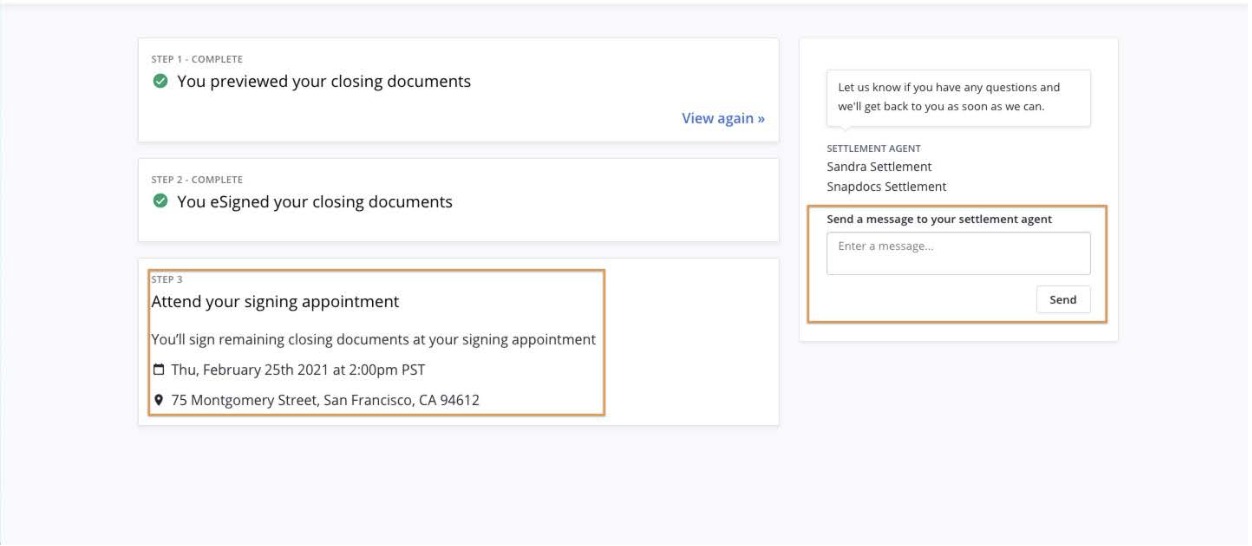
Founder Aaron King had been inside mortgage operations since high school. At 21, he started NotaryLink, a nationwide signing service. When he founded Snapdocs in 2013, the first job was narrow and concrete: automate the selection and scheduling of a reliable mobile notary. It ranked candidates, checked credentials, handled communication, and tracked the appointment.
That was the wedge, but it also exposed the map. A notary appointment touches the title company, the lender, the borrower, a document package, compliance requirements, and the return trip after signing. Improve only the search and the surrounding delays remain. By 2018, Snapdocs had launched a digital-closing product for lenders. The company had changed its frame from “find the person” to “coordinate the transaction.”
“Fragmentation is the biggest blocker to digitization and advancement as a whole in the mortgage industry.”Aaron King, founder and executive chairman
This is what failed first across the broader digital-mortgage push: the belief that signatures were the bottleneck. The technology to sign electronically had existed for years. Adoption broke on the edges - a settlement partner outside the lender's control, an investor unwilling to accept an eNote, a closing that still required paper, a team forced to operate a digital process and a wet process in parallel. The industry's early promise was a digital document. Its actual need was a network.
One process, even when the paper stays
Snapdocs' eClosing product handles wet, hybrid, eNote, in-person electronic, and remote-online-notarization closings. That list is strategic. A lender does not need every county, investor, and title agent to become digital on Tuesday morning. It can route different closing types through the same operating process and increase the digital share over time.
The eVault stores and transfers electronic promissory notes. Notary Connect schedules mobile notaries. Quality Control uses proprietary models to find absent pages, signatures, dates, and stamps, then sends people to the exceptions instead of asking them to inspect every sheet. Trailing Document Management pursues the final recorded documents after the closing. CD Balancing compares versions of the Closing Disclosure and surfaces fee differences before they become closing-day surprises.
The customer results make the abstraction visible. Firstrust Bank reported moving eligible borrowers from more than an hour of ink-signing to closing appointments of about eight minutes, after review and e-signing happened earlier. AnnieMac reported 91% hybrid adoption, closing more than five days faster, and increasing loan capacity 14% to 20% with the same team. Compass Mortgage reported 90% eClose adoption within three months. These are customer case studies, not controlled trials, but they reveal where value appears: fewer corrections, shorter appointments, faster loan sale, and more capacity without matching headcount growth.
The business is adoption
Snapdocs sells quote-based enterprise SaaS and transaction workflows. The sticker price is not public, which makes the more useful cost question operational: What does a lender spend when a closer reviews every page, calls a title office, replaces a package, waits for a note, or holds a loan longer before sale? Snapdocs said in 2025 that its quality-control tools could save nearly 1.5 hours of manual review and about $140 per loan. The arithmetic will vary by lender, volume, defect rate, and labor cost.
The company has paid heavily for reach. Its May 2021 Series D brought in $150 million, company-reported total funding to $260 million, and valuation above $1.5 billion. The round landed during a mortgage boom. Rates rose, originations contracted, and the market delivered a useful reminder: transaction software inherits transaction cycles. Snapdocs' response has been to move both earlier and later in the loan - into pre-funding checks, post-close review, eVault transfers, and collateral custody.
The handoff keeps moving
In 2023, Michael Sachdev became chief executive and King moved to executive chairman. A 2024 rebrand made the strategic evolution explicit: “docs” remained in the name, but document digitization no longer described the ambition. In 2025 came broader quality-control and trailing-document tools. AmeriHome Correspondent chose the eVault to accept eNotes from its network. A 2026 MeridianLink integration put digital home-equity closings inside a consumer loan-origination system.
Then the handoff moved again. In May 2026, Snapdocs and BNY announced an initiative for automated collateral delivery and eCustody. The plan connects eVault and document intelligence to custody infrastructure so collateral can travel from closing to custodian with validation and an auditable chain of custody. It is the same founding observation at a different altitude: the costly bit is where one party stops and another starts.
The durable product is not the screen where somebody signs. It is the confidence that the next person can act without calling the previous person.
A useful recipe, with hard limits
Other operators can copy the sequence. Start with a frequent, measurable handoff. Build trust where errors are expensive. Support the old workflow while making the new one easier. Integrate with the system of record instead of demanding its removal. Use automation on repetitive inspection, then route uncertainty to a person. Finally, publish adoption metrics, because a network product is valuable only when the network actually participates.
The conditions matter. This approach works best in a high-volume, regulated process with repeated documents, many external partners, and costly exceptions. It is weaker when transaction volume is low, integrations are shallow, counterparties refuse digital formats, or the legal path differs so much that standardization creates more exceptions than it removes. AI review also depends on document quality and lender-specific rules; “99% accuracy” does not make the one flagged defect unimportant. A mortgage funds correctly or it does not.
That is why Snapdocs' most revealing product decision may still be its earliest one. King did not begin by trying to reinvent the mortgage. He began by making sure the right notary reached the right kitchen table. The table turned out to be attached to an industry.