Before Dilsher Singh Malhi had a gaming company, he had pen-fighting tournaments. At school in Rajasthan, he organized competitions and charged people to enter. The stationery had acquired a second occupation. So had its young organizer. A pen was useful for writing answers; apparently, it could also raise a business question: what makes someone willing to pay to play?
It is a pleasing beginning for the founder of Zupee, although beginnings can be too obliging. They make a career look as though it arrived with instructions. Malhi’s story becomes more interesting when those instructions stop working. In October 2026, the company he co-founded announced that it was moving into AI businesses and would close its remaining free-to-play games. The board on which he built his reputation was being packed away.
Between those two moments sits an engineering degree, a research stint in Switzerland, a partnership with Jio, a $600 million company valuation and a difficult retreat from real-money gaming. The thread running through them is his interest in how people spend their attention. A founder who began with games now has to discover how far that understanding travels.
A philosopher with an engineering timetable
Malhi grew up across small cities in Rajasthan. His father worked in the police and later retired. Malhi has described reading philosophy and psychology early, drawn to questions about life and meaning. Those interests accompanied him to IIT Kanpur, where he studied chemical engineering. He took psychology-related courses and worked on projects beyond the boundaries of his degree.
There is something appealing about that combination. Engineering asks whether a system works. Philosophy has a habit of asking why anyone bothered to build it. Psychology supplies a third question: what will people actually do once it exists? Malhi’s later descriptions of his business keep returning to that last problem, even when the conversation begins with a board game.
He graduated in 2017. At IIT Kanpur, he headed the SimuTech Club, a home for theoretical, practical and simulation projects. He also worked as a research associate at EPFL in Switzerland, on microfluidic platforms. The detail complicates the easy portrait of a student entrepreneur impatient to escape the classroom. There was a technical education here, including work with systems considerably smaller than a phone screen.
At college, he also became interested in making coursework more enjoyable through gamification. The thought would recur in his ambitions for learning and training. An assignment and a game can both require effort. The difference, in his account, is whether people feel drawn into the activity. That became a business concern as well as an educational one.
“Games inherently celebrate the journey and nurture self-expression.”
Dilsher Singh Malhi, August 2021
The advantage of a familiar board
Malhi founded Zupee with fellow IIT Kanpur alumnus Siddhant Saurabh in 2018. The early company offered live trivia competitions before becoming associated with adaptations of familiar board games. Its proposition did not require players to learn an elaborate fictional universe. Games people already recognized could supply the starting point for a mobile business.
That history also changes the scale of the question. Finding a willing participant in a school tournament is one thing; reaching an unfamiliar audience through a phone requires a product that explains itself.
At an industry summit in 2025, Malhi recalled a ten-rupee Ludo board as part of family life in Rajasthan. His account emphasized the laughter and togetherness around it. Years later, he connected those memories to his work at Zupee. The origin matters because it places the product inside an existing social habit. The familiarity preceded the app.
His ambitions reached beyond recreation. By 2021, he was discussing games that could make education, skilling and complicated workplace training easier to engage with. He wanted to revisit Indian games and make them work for digital audiences. These were ambitions, rather than evidence that every proposed application had been delivered. They show how broadly he understood the possibilities of play.
In the same year, Malhi and Saurabh appeared in Forbes Asia’s 30 Under 30 in the Consumer Technology category. The recognition attached two young founders to a much older collection of pastimes. Their raw material had survived without venture capital for generations. The commercial question was what would happen when it met smartphones, competition and a payment system.
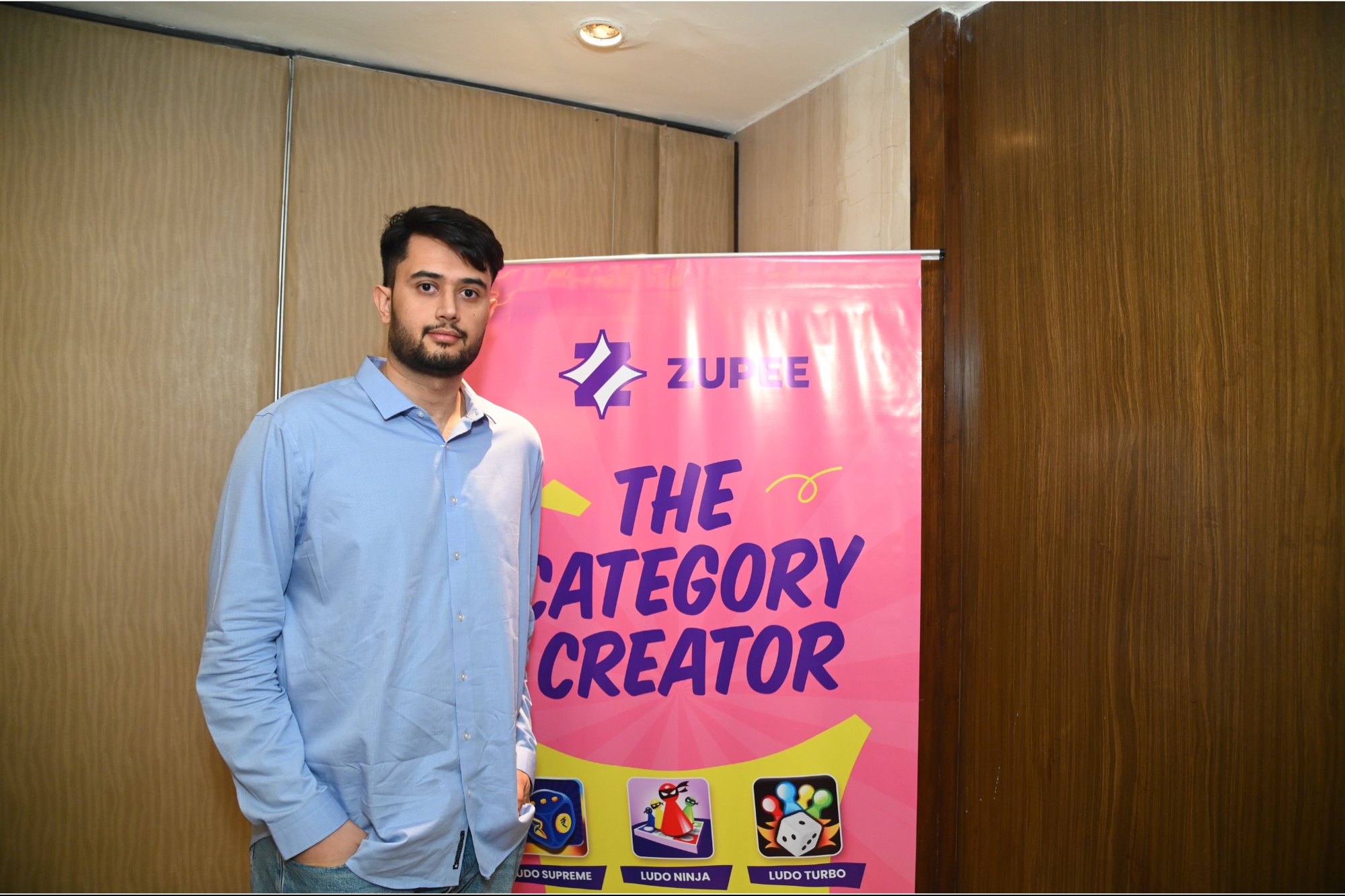
When the numbers became rather serious
The financing moved quickly. In August 2021, Zupee announced $30 million in funding led by WestCap Group and Tomales Bay Capital. By January 2022, it had completed a $102 million Series B, including a final $72 million infusion, at a $600 million valuation. The sums belong to the company’s financing history, a dated measure of investor expectations.
On the day it announced the completed round, Zupee also announced a strategic partnership with Jio Platforms. The arrangement concerned product integration and distribution, including access for Jio Phone customers. For Malhi, whose ambitions included reaching remote parts of India, the distribution agreement addressed a practical question: how does a game reach people who have never encountered the company?
In the announcement, he described Zupee through behavioral science, motivation and culture. That vocabulary is revealing. He could have led with the machinery behind an app. Instead, he put the emphasis on the person holding the device. The partnership supplied a distribution route; his explanation of the business began with the audience.
January 2022
financial year 2024
In April 2025, Zupee announced that it had reached its first annual profitability in the financial year ending March 2024. Reported net revenue was ₹1,123 crore and net profit was ₹146 crore. Its registered user base had grown 60% during that financial year, and the company had expanded beyond its initial strength in North India.
Those results gave substance to the business Malhi had been describing. Familiar games had supported a company with revenue, employees and an annual profit. Yet a profitable year is still a year. It tells us what worked within a particular set of conditions. It offers no guarantee that those conditions will remain obligingly in place.
Watching what people do
In a session with Masters’ Union, Malhi emphasized looking at behavior when judging whether a product has found its audience. Return visits, time spent and willingness to pay offered more useful evidence than polite approval. A person saying they like something is encouraging. A person returning to it without being asked presents a more demanding kind of compliment.
His public appearances also carried the argument into broader settings. At the G20 Digital Innovation Alliance summit in Bengaluru in 2023, he discussed human behavior, technology and gamification alongside founders from businesses including EaseMyTrip and Droom. The discussion connected his interest in engagement with questions about learning skills and building companies.
The recurring idea was that an activity should be compelling to participate in. Rewards could be part of the design, but the experience itself mattered. It is an ambitious standard for any product. People have a remarkable ability to detect when an activity is homework wearing a party hat.
Then the rules changed
In August 2025, India’s new online gaming law disrupted the real-money gaming business. Zupee discontinued paid formats and suspended deposits. It asked users to withdraw their balances and said it would not challenge the law. Malhi publicly committed the company to operating within the new framework. The business that had produced those earlier results now needed another model.
The consequences reached employees. Zupee cut jobs in September 2025, followed by approximately 200 more in January 2026. Malhi announced the later cuts at a company town hall. A corporate pivot can sound brisk in a presentation. For the people whose roles end, it is a much more immediate event. Any account of his leadership has to leave room for that cost.
The search for alternatives included Zupee Studio’s short-form entertainment. In November 2025, the company acquired Australian AI startup Nucanon for an undisclosed amount. Its narrative engine was intended to support interactive stories in which choices affect the plot and characters remember earlier interactions. There was a recognizable connection to Malhi’s longstanding interest in participation.
Interactive storytelling changes what a participant can influence. Instead of choosing a move on a board, a user might help determine a narrative. That makes the acquisition an interesting bridge between Zupee’s earlier identity and its experiments after paid gaming. It remains a business experiment, with its own demands on product design and audience attention.
What travels beyond Ludo?
By October 16, 2026, Zupee had announced a wider move toward AI businesses focused on India. It planned to shut its remaining free games. The company framed its experience around serving first-time internet users and people in smaller cities and towns. The next direction was being described through the audience it hoped to serve.
For Malhi, that puts an old conviction under a new test. His career has repeatedly joined technical work to an interest in human motivation. Games offered one way to bring those interests together. Learning products, interactive stories and other consumer experiences ask different things of a company, even when they compete for attention on the same phone.
The school tournament makes a good opening because it is small enough to understand. Someone organizes play; someone else decides it is worth joining. Years later, with a company changing direction around him, Malhi faces a version of the same question. What will people choose to come back for? This time, a familiar board will not supply the answer.
Keep reading, keep watching
- Zupee website
- Malhi on LinkedIn
- Watch: The Neon Show interview
- Read: The Neon Show conversation
- IIT Kanpur alumni profile
- Masters’ Union conversation
- 2022 funding and Jio partnership
- FY24 financial results
- End of paid gaming, August 2025
- January 2026 job cuts
- Nucanon acquisition
- October 2026 AI announcement
- Games and learning, 2021
- G20-DIA discussion, 2023
- Family Ludo memories, 2025
- August 2021 funding