A customer clicks “buy.” A card is accepted. Somewhere, a software developer sees another order arrive. It looks like a finished transaction. But there is one more journey to make: the money must travel from the company that collected it to the company that earned it. Digital River built a business around making that journey, and everything surrounding it, easier. In its final chapter, merchants discovered how much depended on the last step.
- Digital River handled the legal and financial plumbing of global ecommerce.
- A $50 million investment backed its move toward modular services in 2020.
- Merchant payout complaints preceded the company’s 2025 wind-down.
A business built between the borders
Joel Ronning founded Digital River in February 1994. The opportunity was wonderfully unglamorous. Software could cross a border without a shipping container, but selling it still involved payments, customer service, fraud and local rules. Someone had to make those pieces work together. Digital River offered to do the job for other businesses.
The early results were substantial. Revenue grew from about $14.5 million in 1999 to $101.2 million in 2003, its first fully profitable year. The company’s annual report pictured Ronning between server racks. Here was the internet’s supposedly weightless economy, surrounded by cables and cabinets.
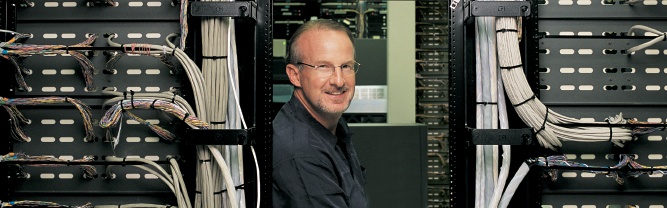
“We intend to be the global e-commerce guide for our clients”
JOEL RONNING / 2003 ANNUAL REPORT
That ambition explains the company better than the phrase “payment processor.” It was selling a way around the organizational burden of international trade. A brand could concentrate on its product while another company dealt with the awkward parts of getting paid for it.
The name on the transaction
Digital River’s defining role was merchant of record. In its historical model, it generally became the seller in the transaction, retained an agreed share and owed the client the remainder. Its responsibilities could include collecting and remitting taxes, screening fraud, managing chargebacks and accepting local payment methods.
For software publishers and subscription businesses, that removed a formidable list of chores. Physical-product brands could also connect logistics and returns services. The buyer might recognize the product maker while encountering Digital River in the transaction’s legal disclosures.
There were boundaries. Digital River’s compliance documentation covered prohibited products and countries, subscription disclosures, export controls and fulfillment requirements. Outsourcing the merchant role still required a compliant store. Its BigCommerce fee documentation sent prospective merchants to sales: the price depended on the agreement.
A Salesforce integration shows the division of labor. Salesforce retained pricing and product data; Digital River kept the information needed for tax and merchant responsibilities, plus copies of the cart, customer and order. The fulfiller updated the order’s status, and the app passed that change to Digital River for settlement. A simple purchase depended on several systems agreeing about what had happened, and when.
Taking the machine apart
By 2013, annual revenue was $389.7 million. In February 2015, a Siris-led investor group completed an acquisition valued at approximately $840 million, taking Digital River private. Five years later came a more revealing announcement: $50 million in incremental funding to accelerate its API-based offering.
Purchase price and growth capital measure different things.
Digital River had unbundled its commerce stack. Brands could build their own shopping experience and use its services behind the scenes. The strategic bet was clear: customers might want the company’s international expertise without handing over their entire storefront. The funding supported that shift and potential complementary acquisitions.
The partner network made the approach concrete. A 2022 BigCommerce integration joined the storefront platform to Digital River’s payments, tax, fraud and compliance capabilities. Microphone brand 512 Audio launched its US store using the combination. Documentation also described connectors for Adobe Commerce, Salesforce and WooCommerce.
In March 2024, Digital River added eCompass, dashboards for comparing markets and monitoring sales, payment authorizations and fraud. It said the product drew on transaction data from 150 million global consumers. Alongside transaction handling, the company was now offering merchants a view of where to sell next.
The money stopped arriving
The warning visible to some merchants was simpler than any dashboard. In October 2024, The Register reported that MyCommerce sellers were waiting for proceeds dating back to July. Some said the platform continued taking orders while their payouts failed to arrive.
Softland chief executive Lorant Barla described a specific decision: his company stopped using MyCommerce on August 15, after the missing July payment. It had used the service only for occasional German transactions. That limited reliance mattered. A secondary channel could be removed more easily than the machinery supporting an entire business.
The shutdown followed. A January 27, 2025 notice announced permanent closure of the Minnesota office and 122 layoffs beginning March 28. Adobe stopped renewing subscriptions through Digital River from February. NVIDIA’s GeForce NOW payment-provider transition included waived billing before charges resumed in March.
The legal aftermath involved separate entities. Digital River Marketing Solutions filed Chapter 7 in Delaware on May 1. Digital River UK Limited entered creditors’ voluntary liquidation on May 7; registry filings continued into 2026. Those records document the aftermath without establishing one simple cause for the group’s collapse.
Follow the payout
Digital River occupied the space between a storefront platform and a brand’s finance department. Merchant-of-record alternatives include FastSpring, Paddle and Cleverbridge; another approach is assembling payment processing, tax tools and internal expertise. The comparison is about who performs each obligation, alongside what each transaction costs.
That makes the buying decision unusually personal to the business. A small publisher with customers scattered across tax jurisdictions may value the outsourced work differently from a large brand with an established finance team. Both should ask the same mundane questions: which entity owes us, when is payment due, and what happens if we leave? These are operating decisions with consequences beyond the checkout design.
The practical lesson is to measure settlements independently of sales. Understand payout timing, reserves, access to records and the route for migrating subscriptions. An outsourced model loses its appeal when fees exceed the work saved, product restrictions conflict with the business, or delayed receipts outrun available cash. Digital River understood how much complexity a checkout could hide. Its customers ultimately had to understand that, too.