The most consequential moment in buying a countertop happens before anyone cuts stone. A homeowner stands in a showroom, looking at a slab whose rivers of gray and rust have been forming for longer than houses have existed, and tries to imagine it flattened across a kitchen that is currently dust, exposed plumbing and wishful thinking. The stone is heavy. The choice is permanent. The standard contractor ritual asks the buyer to add one more weight to the decision: a deposit.
Diamond Granite, a fabricator in Shelby Township, Michigan, has arranged the ritual differently. Bring in a cabinet sketch. Receive an estimate. Visit the showroom and select the material, edge and sink. Wait until the cabinets are installed, when a field measure can establish the final dimensions. Then the shop fabricates and installs the surface. According to its published terms, no deposit is required. Full payment by cash or check comes at installation, and the price includes installation and Michigan sales tax.
“We only ask to be paid when the final installation is complete.”Diamond Granite's published customer promise
This sounds like a payment policy. It is really a piece of industrial psychology. A countertop cannot be patched like software or exchanged like a shirt. Once a sink opening is cut in the wrong place, the error is brutally physical. By waiting, Diamond Granite moves some of that anxiety away from the homeowner and onto its own measuring tape.
A showroom at one end, a quarry at the other
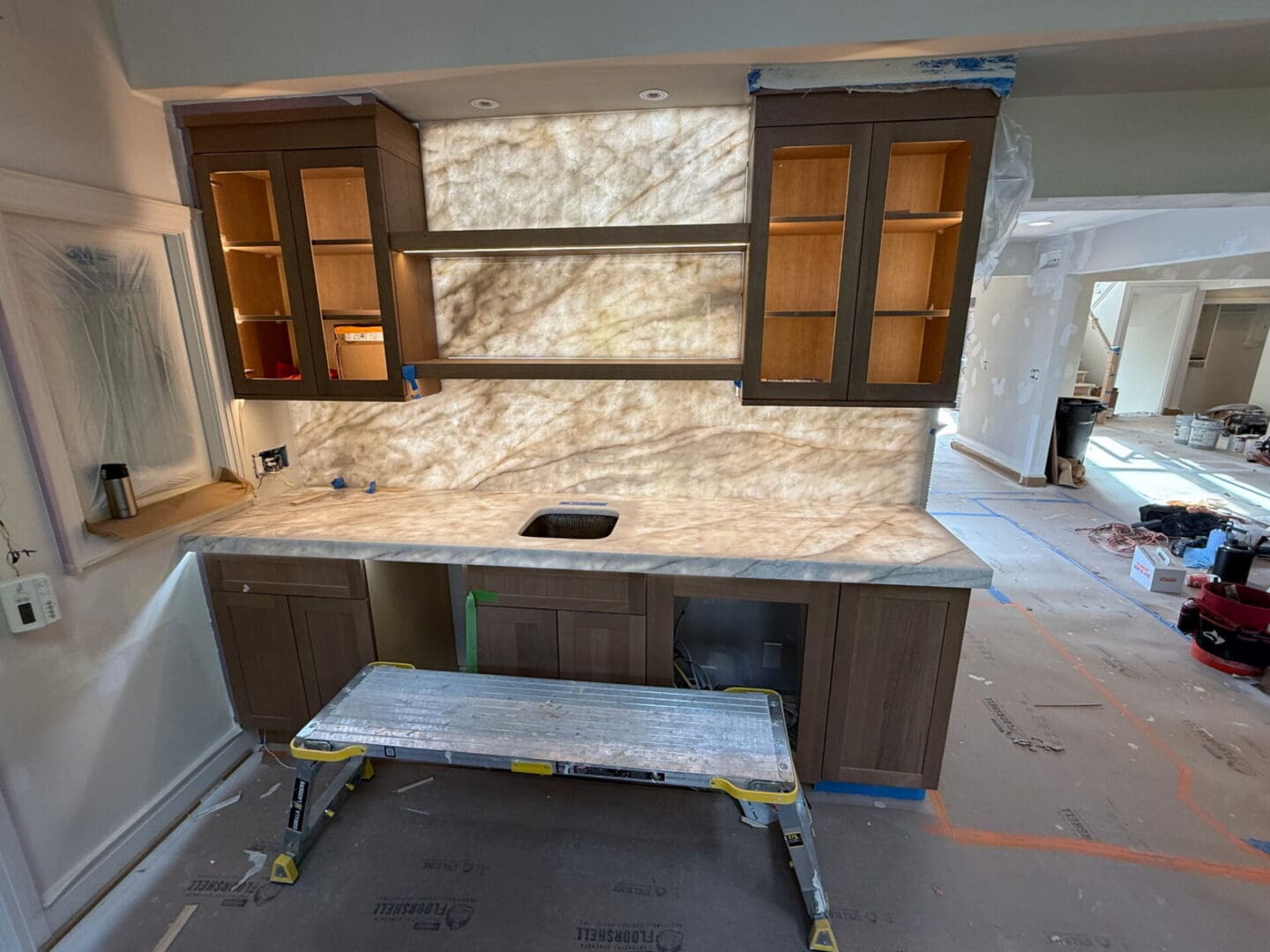
From the street, this is a local home-improvement company. The showroom serves homeowners across southeastern Michigan, plus custom homebuilders and cabinet shops. The published service list ranges from the expected - kitchen counters and bathroom vanities - to fireplace surrounds, shower seats, shower curbs and large-format porcelain shower walls. Material choices run from granite, quartzite, marble and onyx to engineered quartz, solid surface and laminate. In other words, the name says granite, but the menu is built for nearly every budget and tolerance for maintenance.
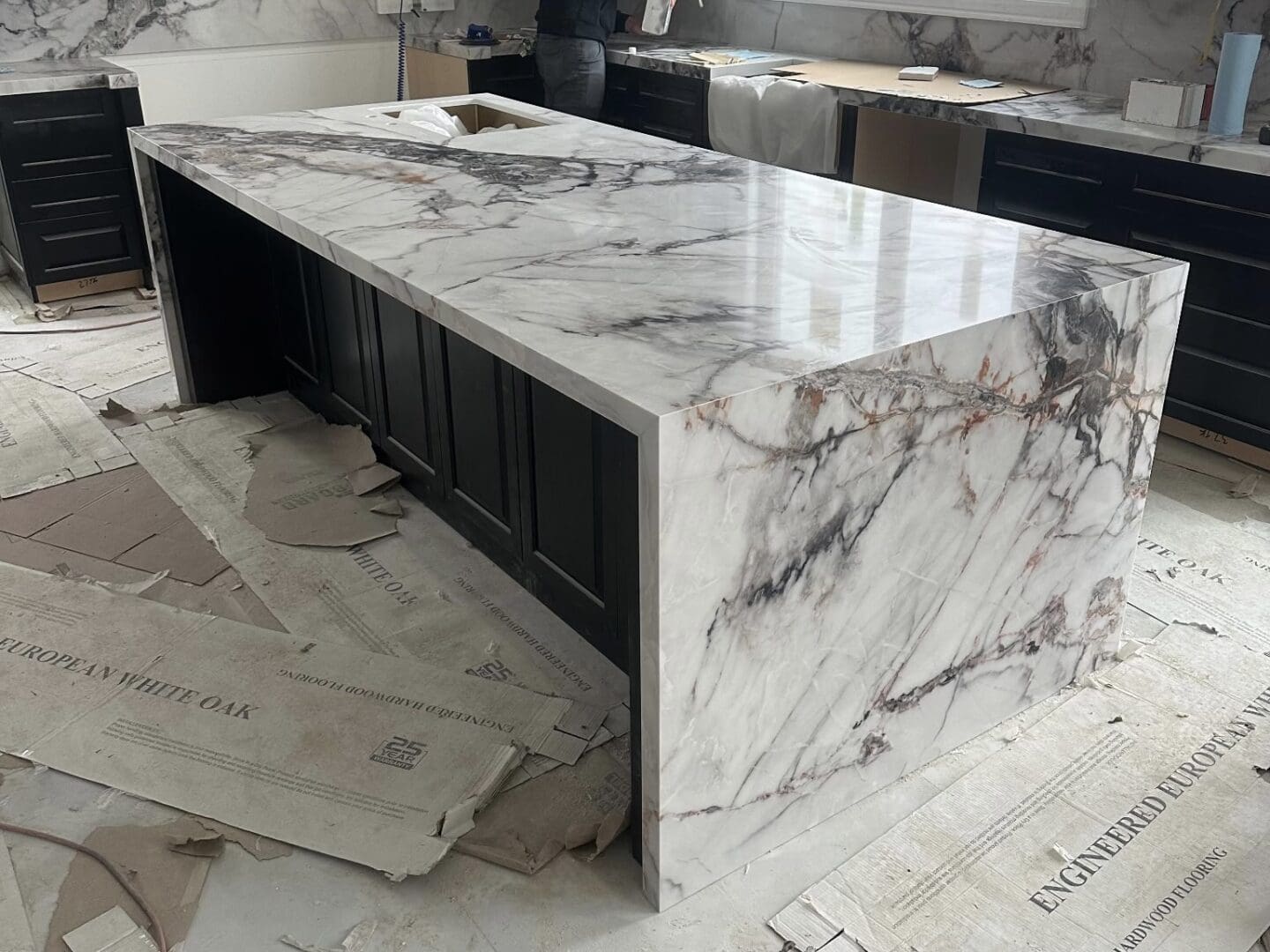
Behind that local sale is a surprisingly international supply line. A public import database lists 244 bills of lading for Diamond Granite Inc. from December 2012 through August 2026. Its recent and historical records connect the Shelby Township address to stone shippers in Brazil, India, Italy and Vietnam, among other places. A single listed shipment of artificial quartz slabs weighed 21,460 kilograms. Another carried leather-finish Fantasy Brown marble slabs from Jaipur.
The interesting contrast is one of scale. At sea, the unit is a 20,000-kilogram load. In the showroom, the unit is a family arguing gently about whether a vein looks elegant or busy. Diamond Granite sits between those scales. It buys or receives raw material through a global chain, then makes money one local project at a time by measuring, cutting, polishing and installing it.
A global slab, a local cut
Selected cumulative records by foreign port in the public import profile. Counts describe shipping records, not revenue or market share.
Four steps and one irreversible cut
The company’s process is refreshingly unromantic. First, an estimate from a cabinet layout or rough sketch. Second, a showroom visit to pick the surface, edge treatment and sink options. Third, a field measure after the cabinets are in place. Fourth, fabrication and an advised installation date. The most important word in that sequence is after. Measuring after cabinet installation replaces an architectural assumption with an observable fact.
The Diamond Granite sequence
A competing installer once told a homeowner that existing counters could not survive a changed floor plan. The homeowner had evidence otherwise: Diamond Granite had previously removed and reinstalled those counters. After seeing the photographs, the competitor reportedly changed his advice and suggested calling John at Diamond Granite. It is a small story from one Houzz review, but it captures where craft businesses earn their margin. The machine can cut. Judgment decides whether the old piece can be saved. Pricing is project-specific; one 2016 directory reviewer said Diamond Granite's bid was $3,000 below another local quote, though the total was not disclosed.
The product is accountability
The regional countertop market is crowded. Metro Detroit buyers can choose specialist fabricators, cabinet-and-stone shops, independent installers or a big-box retailer that coordinates subcontractors. Diamond Granite’s point of difference is not exclusivity. Caesarstone, Silestone, Corian, Formica and natural stone are available through many channels. Its advantage is the continuity between advice, fabrication and installation - and a payment term that makes this continuity testable.
Customer feedback shows both edges of that promise. Positive reviewers praise clean installations, patient material guidance and staff members by name. One recent negative account said the installation itself was good but a sealing concern went unanswered for months. That is the first place this model can fray: the promise is clear through installation day, while the difficult work of service continues afterward. A satisfaction policy is persuasive only if the phone still gets answered after the check clears.
There are material limits, too. Natural stone comes with pits, fissures and slab-to-slab variation. Someone who wants near-perfect repetition may prefer engineered quartz. Yet quartz has its own constraint: Diamond Granite warns that direct sunlight can fade it and does not recommend it outdoors. Granite tolerates heat, but its care instructions call for mild soap and water rather than acidic or abrasive household cleaners. The company is most useful when a buyer wants guidance through those compromises and is close enough for field measurement and installation. It is not a mail-order countertop.
What another contractor can copy
Make the sequence visible. Delay the irreversible step until the physical conditions are final. Quote the complete price when possible. Then tie payment to a result the customer can inspect. The policy works only when the operator has enough cash, scheduling discipline and confidence in its crews to carry the project until installation.
Diamond Granite has no publicly announced venture round, national rollout or software platform. Its evidence of scale is more tangible: an active motor-carrier registration, four reported power units in a 2026 registry snapshot, ongoing slab shipments and a showroom open on Saturday mornings. It is a small industrial system disguised as a home-design appointment.
And that is why the no-deposit line matters. Anyone can describe stone as timeless. Diamond Granite makes a narrower claim: let us measure it, cut it, carry it into your house and set it on your cabinets. Then look. The customer does not need to imagine trust in the showroom. The company has arranged for trust to arrive, extremely heavy, on installation day.
Continue exploring