Before a light fixture arrives at a building site, it has usually arrived somewhere else: inside a plan. Somebody has chosen it, placed it, checked its output and decided that it belongs. For a manufacturer, that quiet decision is commercially important. DIAL America sits close to it. The Jersey City business is DIAL’s U.S. sales office, representing the company behind DIALux, software that lets professionals rehearse a building’s lighting before the electrician turns up.
- Designers get free core lighting calculation and visualization.
- Manufacturers pay to put real products into that workflow.
- Subscriptions cover non-member fixtures and advanced model exchange.
The appeal is wonderfully practical. A luminaire catalogue tells you what a fixture is. A lighting calculation helps you decide whether to use it. DIALux joins those tasks. DIAL’s current website reports 750,000 users and more than 450 member manufacturers worldwide. Those figures belong to the global ecosystem, rather than the American office. They describe the audience that makes a small software decision interesting to a very large number of lighting suppliers.
A catalogue with a calculator attached
DIAL, based in Lüdenscheid, Germany, has worked in lighting design and building automation since 1989. Its DIALux company page dates its software development history to 1994. Today, DIALux evo lets lighting designers, engineers and architects plan indoor spaces, outdoor areas, roads and emergency lighting. A user can work on a room or a multi-storey building, place real products and calculate their contribution to a proposed scheme.
This matters because a handsome rendering answers only part of the question. A planner also needs to examine performance. Indoor work involves lighting levels, glare and the interaction of daylight and artificial light. Emergency planning adds escape routes and safety equipment. Street planning brings its own arrangements and calculation requirements. The software gives those decisions a common workspace, with results that can be documented for the people who approve and build the project.
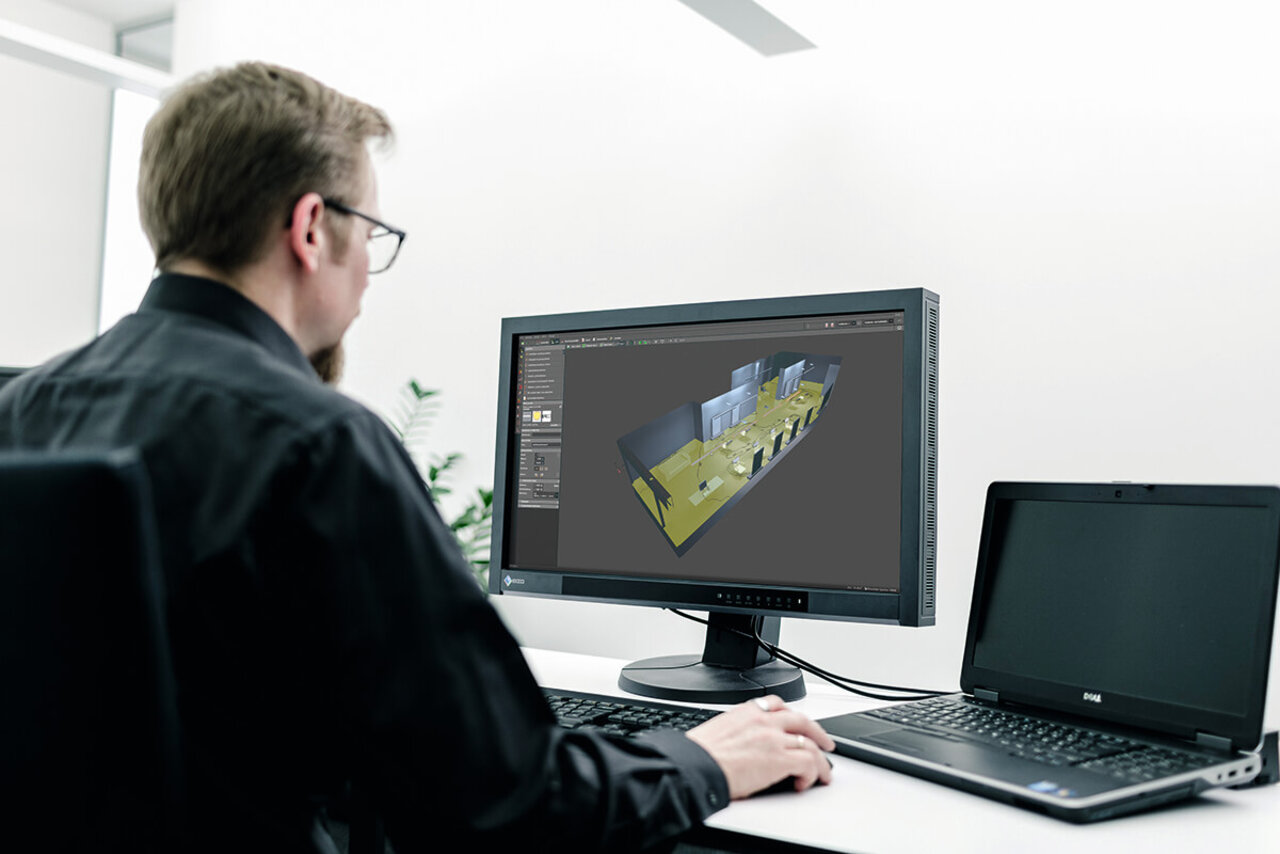
DIALux occupies the specialist calculation layer of the building software market. AGi32 offers another stand-alone route to lighting analysis and visualization; ElumTools brings analysis into Revit. DIALux’s particular attraction combines a free starting point with a large manufacturer catalogue. Its homepage now advertises 2.5 million luminaires. For a supplier, being available where designers already calculate can be more useful than another product brochure waiting to be opened.
The bill for free
Here is the number that explains the arrangement. DIAL says manufacturer fees fund 98% of DIALux evo’s development. The planner receives a useful tool; the manufacturer receives a place in the selection process. DIALux Business sells memberships that range from product availability to campaigns, leads and business insights. Visibility inside a working design tool becomes something a lighting company can budget for.
“The development of DIALux evo is funded 98 % by fees from lighting manufacturers”DIALux · Unlock Non-Members
On March 1, 2024, that bargain became more explicit. The free version restricted planning and calculation to luminaires from DIALux members. Users who wanted other manufacturers’ products needed DIALux Pro or the separate Unlock Non-Members subscription. DIAL’s announcement described the aim plainly: give members more value and grow the membership base. The change put a commercial boundary around the catalogue that supported the free tool.
The manufacturer side has a different price scale. Published annual memberships include Silver at €35,150 and Gold at €65,400. Pro, meanwhile, adds IFC model exchange, editable document exports and custom report layouts alongside non-member access. The distinction gives a buyer something concrete to assess: which fixtures the job needs, which files the team exchanges and how much reporting work the subscription removes. Prices here reflect public listings checked in October 2026.
The work between the tools
A lighting designer rarely owns the entire building model. Architects and engineers have their own applications, and moving information between them creates work. DIAL favors Open BIM and the IFC exchange format, while acknowledging that project teams also use proprietary environments. Its published position is refreshingly workmanlike: open formats are preferable, but designers still need to exchange data with the tools their collaborators actually use.
the building→02Calculate
the light→03Return
the model
The integrations attack specific chores. Metaroom supplies scanned room geometry through an IFC-based import, reducing the need to construct it manually. DIAL’s September 2026 Revit announcement describes a two-way lighting-model exchange, with luminaires created as native Revit families. The bridge is included in Pro; the announcement specifies Revit 2025 as a requirement. These are workflow tools for people who would otherwise spend time rebuilding or transferring information.
There is also the wait inside the calculation itself. In April 2026, DIAL announced evo 14 with room-by-room calculation. Instead of recalculating the whole project at once, designers can calculate individual rooms or areas, save the results and combine them. That addresses a familiar limit in large projects: an adjustment in one part of the scheme can make the next useful decision wait on a much bigger calculation.
Teach the person holding the mouse
DIAL’s expertise extends beyond software. Its photometric laboratory measures actual light sources and luminaires, producing data about light distribution and other characteristics. Its Academy teaches lighting design, technology and software use. Eligible university students and educators can obtain full Pro access for a year and renew it with fresh proof of eligibility. Online certification offers Planner and Expert levels, priced at €95 and €189 plus VAT respectively.
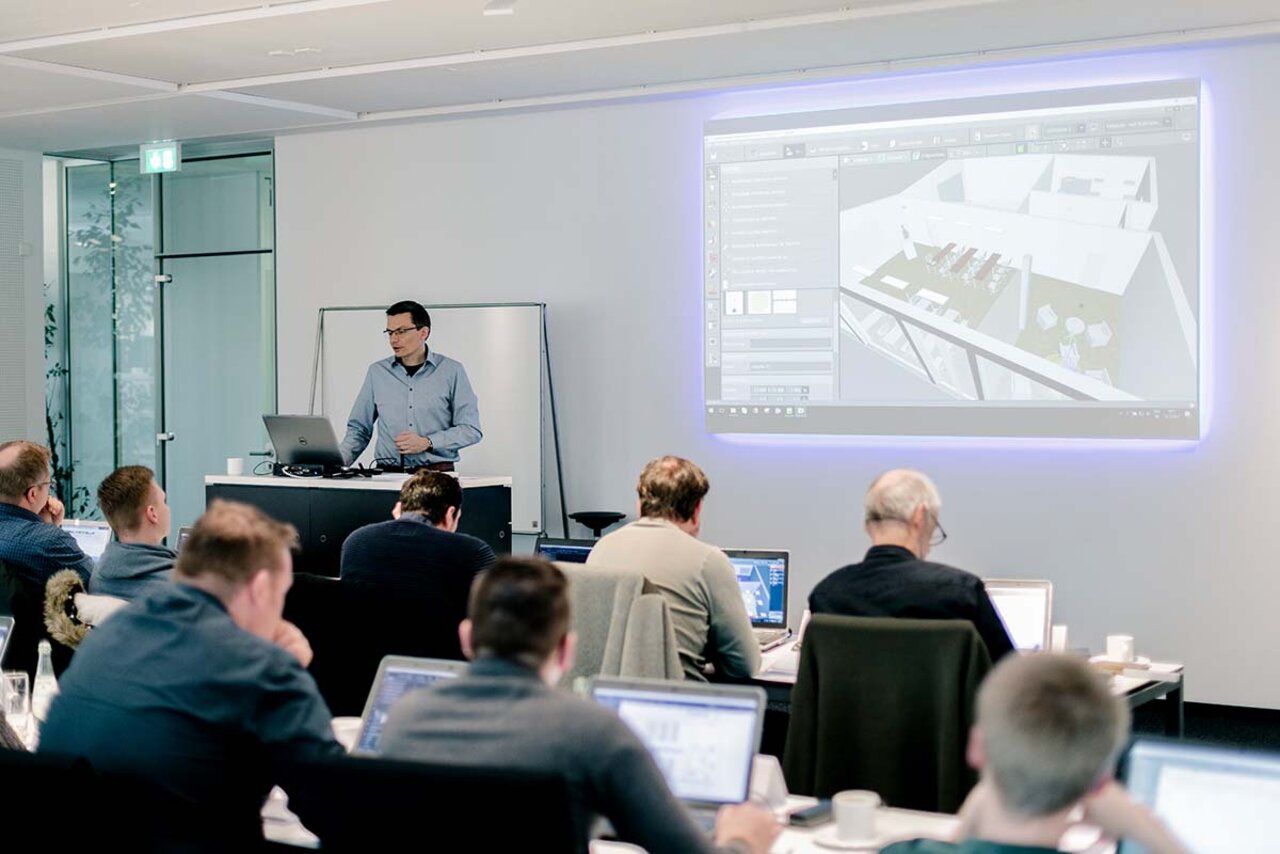
The lesson another business can copy is to make its product useful at the moment a customer is doing consequential work. But the conditions matter. The required fixture data must be available, subscriptions must fit the project budget, and model exchange must suit the team’s software. A simulation still needs sound inputs and professional judgment. DIAL America’s proposition rests on that ordinary, demanding bargain: help the planner make a defensible choice, and give the manufacturer a chance to be chosen.