The revealing thing about Desiree Gruber is not that she once had to share five office computers with her colleagues. Plenty of people began work before a laptop became an extra limb. It is that she remembers the sequence: press releases went out by mail, then by fax, then computers landed on desks, and eventually everyone carried what she called a huge computer in a purse. Each new machine changed the route between an idea and an audience. Gruber kept changing the company that traveled that route.
She founded Full Picture in New York in 1999, after eight years at the entertainment publicity firm Rogers & Cowan. The name sounds modest until you hear its intention. Gruber wanted to help clients do more than public relations. The new company began with PR, production and management in the same frame. Digital arrived, so Full Picture caught that wave too. The firm was profitable from its first day, Gruber has said, but solvency is only the first test of a creative business. The difficult trick is remaining useful when the channels, talent and audience all move at once.
Her answer has been to treat adjacency as an occupation. A publicist can wait for something newsworthy. Gruber preferred to help make the thing itself.
First, learn where attention comes from
Gruber started in the A&R department at EMI Records in 1989, followed by a job with the New Music Seminar. At Rogers & Cowan, she rose from assistant publicist to vice president of entertainment. The client list gave her an unusually broad education in how culture gets packaged: Victoria's Secret, The Limited, Elite Model Management, Miramax and U2's PopMart tour. In 1995, she worked on the inaugural Victoria's Secret Fashion Show and remained involved with the annual production for more than two decades.
That history explains the peculiar fluency of her later work. Publicity taught her what editors notice. Live events taught her timing. Talent management taught her that a person is not a press release. Production taught her that ideas acquire budgets, call sheets and weather. Each discipline corrects the fantasy of the others.
“I was brought up to think there are no limits - whatever you're interested in, give it a try.”Desiree Gruber
The line sounds breezy. Its biographical footnote is less so. Her father, an entrepreneur and former Green Beret, insisted that she join Army ROTC in college. She disliked it at the time. Later, she credited it with leadership skills she uses in business. The pattern is familiar in her career: an experience resented, misunderstood or sitting in the wrong category becomes useful after the frame widens.
A love letter with deadlines
Project Runway premiered in 2004. Gruber developed it with Heidi Klum and Full Picture's television team, and helped persuade her then-neighbor Michael Kors to take a full-time seat at the judges' table. It is tempting to describe the program as a lucky collision of fashion and reality television. Its sturdier achievement was translation. The show made the labor of fashion legible to people who would never stand beside Kors while he studied their work.
Gruber called the series “a love letter to the fashion industry.” The affection was specific. Viewers saw sketches become cloth, cloth become trouble, and trouble become a dress by deadline. They saw taste argued rather than merely announced. They also saw that a glamorous industry had loading docks, sewing machines, compromises and the occasional zipper that behaved like a minor villain.
Gruber executive produced the first 16 seasons. The series received a Peabody Award, a GLAAD Media Award and 14 consecutive Emmy nominations for Outstanding Reality Competition Program from 2005 through 2018. Awards make tidy milestones. The untidy legacy lives in careers launched, businesses formed and viewers who discovered that fashion had more doors than the glossy exterior suggested.
Begins in music at EMI Records.
Works on the first Victoria's Secret Fashion Show.
Founds Full Picture across publicity, production and management.
Project Runway premieres and opens fashion's workroom to television.
Co-founds the early-stage fund DGNL Ventures.
Full Picture partners with CNBC to launch Changemakers.
The power grid has people in it
At Full Picture, the weekly meeting across departments acquired a wonderful name: the power grid. Gruber's metaphor was electrical rather than theatrical. If one part of the plant failed, the whole operation felt it. Publicity needed to know what production knew. Digital could not be the last person invited into the room. Ideas improved when people with complementary skills inspected them together.
“No project can succeed in isolation,” she said when explaining the team mentality. The claim lands differently after looking at her body of work. Project Runway was not a solitary flash; it was the product of a producer, a model, an agency team, judges, designers, crews and networks aligning around a format. Full Picture itself is an argument against the lonely-genius theory of culture.
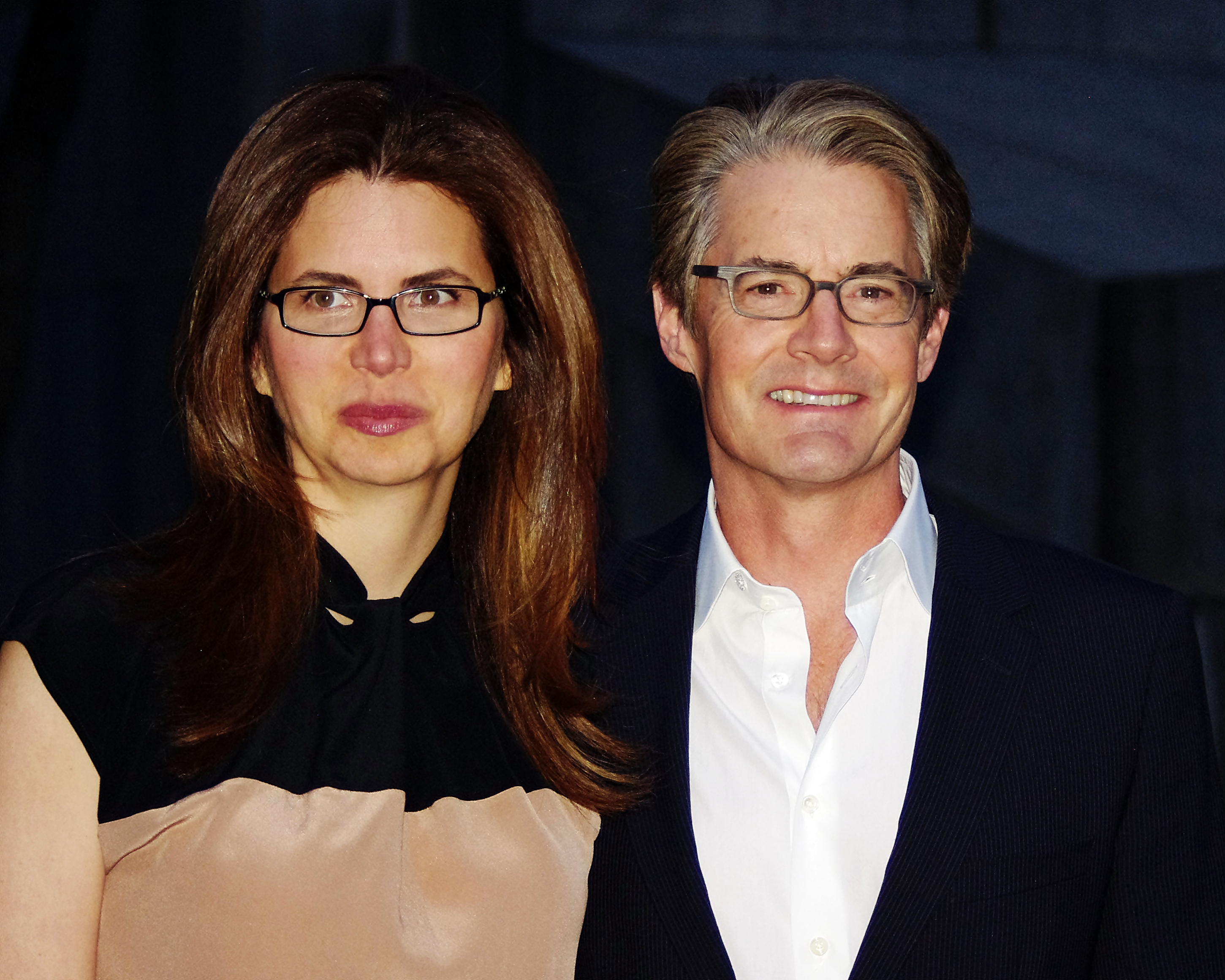
Her own meet-cute offers an almost suspiciously neat example. Gruber met actor Kyle MacLachlan at a chiropractor's office in Los Angeles. The conversation was awkward and brief. The following day, she walked into the launch party for Talk magazine and saw him again. He asked her out that night. A chiropractor and Tina Brown, Gruber later joked, deserved credit for the marriage. Even romance, in her telling, depends on a good second touchpoint.
Taste becomes capital
In 2016, Gruber and Nir Liberboim co-founded DGNL Ventures, an early-stage fund investing where technology, lifestyle and celebrity meet. The move from agency founder to investor looks natural once brand building is understood as pattern recognition. Gruber had spent years judging whether an idea could cross from product to story, from personality to audience, from novelty to habit.
The fund's record includes companies and brands such as Banza, Magic Spoon, Maven Clinic, Wander Beauty and Icelandic Provisions. Earlier investments associated with Gruber include Songza, later acquired by Google; Living Proof, acquired by Unilever; and Fashion GPS, now Launchmetrics. In 2024, she joined the investor group behind Unrivaled, the women's professional basketball league founded by Napheesa Collier and Breanna Stewart.
The graphic is chronological, not a ranking. Gruber did not shed one identity for the next. She stacked them. Publicist, producer, manager, founder and investor became overlapping ways to answer the same question: why will someone care?
A story has to do a job
Gruber's use of the word “story” is more demanding than the average marketing deck allows. She argues that an executive needs a credible account of why she belongs in the role, a founder needs one for why a team should follow, and a company seeking capital needs one for why the future it proposes is worth funding. Numbers belong in the room, but they rarely leave the room in someone else's memory. A story can travel.
That does not mean inventing a heroic costume for ordinary experience. Gruber's prescription is preparation: find the real moments that reveal a belief, practice telling them, and make sure each one carries the particular truth of the person telling it. Her social media advice follows the same logic. She recommends an edited through-line rather than a daily buffet of unrelated appetites. Her rule of thumb is three categories. The point is not to sand away personality. It is to give another person a fair chance of remembering what you care about.
She describes her CEO role in equally practical terms: cheerleader, strategist, partner and problem-solver. The last title matters most. Storytelling, in this version, is not decoration added when the useful work is complete. It is one of the ways the useful work finds allies.
Look around, not only up
Her public work has increasingly made room for other women to answer that question. Gruber has served on the boards of UNICEF USA, Tech:NYC and God's Love We Deliver. UNICEF honored her with its Spirit of Compassion Award in 2018. Full Picture also partnered with CNBC on Changemakers, an annual initiative recognizing women whose leadership has produced measurable business results. Gruber serves on the advisory board.
One recent piece of her career advice compresses the philosophy nicely: “Don't just look up. Look around.” The people beside you early in a career may be the ones changing an industry later. It is advice against treating a network like a ladder. A ladder accommodates one climber at a time; a grid works because the connections run sideways too.
Gruber once described herself as an anthropologist at heart. She watches people, studies cultures and treats travel as fieldwork. That instinct helps explain why her résumé resists one label. She is interested in the little rituals by which industries decide what matters. Then she looks for the opening in the ritual.
“Sometimes you have to power off to really be on.”Desiree Gruber
There is a useful tension there. Gruber built a company by staying alert to each new medium, yet she knows attention cannot remain permanently switched on. The anthropologist must occasionally stop broadcasting and observe.
Full Picture has now lived through mailed releases, shared computers, reality television's expansion, social media's churn and the rise of founders as public characters. The channels keep arriving with claims of revolution. Gruber's career suggests a calmer response: learn the tool, keep the people connected, and remember that the story earns its keep only when it helps make something real.