A fan wants a collectible. The software wants a wallet, a signature, and a little patience. Somewhere between those two desires sits the problem that has occupied Derek Chiang through successive companies: how much machinery can an ordinary person be expected to understand before doing something ordinary? Buying a souvenir should not feel like qualifying to operate the gift shop.
Chiang encountered that mismatch at Eternal, where he was cofounder and chief technology officer. He and his cofounder were basketball fans, inspired by NBA Top Shot to bring digital collectibles to esports and streaming. The idea put a familiar human impulse, collecting moments from people you follow, inside an unfamiliar technical transaction. He later described the difficulty of onboarding regular fans as the experience that led him toward ZeroDev.
That origin gives his later work a particular shape. A wallet builder can begin with a clever account design and search for customers. Chiang had already met the customers and their difficulties. The uncomfortable question arrived before the infrastructure company: why did participation demand so much instruction? A fan had come for the moment. The product had handed them homework.
ZeroDev was founded in 2022 and entered Y Combinator’s Winter 2023 batch. Its early proposition was practical: let application developers create self-custody wallets with sponsored transaction fees, bundled actions, and programmable security policies. Those features addressed separate inconveniences, but they shared a purpose. They moved work away from the user and into software that could handle it consistently.
- 2020EternalCollectibles · YC W20
- 2022-23ZeroDevAccounts · YC W23
- 2025OffchainA wider product stack
- 2026EthlabsTechnology into products
A career underneath the interface
Chiang grew up in Shenzhen and studied computer science at Cornell. His professional background runs through the less visible parts of computing: OpenStack at Nebula, DC/OS at Mesosphere, Consul at HashiCorp, and a lead engineering role at Pachyderm. Their names rarely appear on a consumer’s screen, even while their problems occupy engineering teams.
He subsequently worked as a senior engineer at DFINITY and as ThunderCore’s director of decentralized application development, and built and sold Tenfold Protocol. The route into wallets was therefore paved with experience in systems that coordinate work across machines. It helps explain why his writing about apparently small interactions keeps descending into the structures beneath them.
His blog preserves that earlier engineering life. An October 2017 post examines reusable, type-safe options for Go APIs. The subject is humble enough to evade a motivational poster. How should a programmer configure something without making every future change unpleasant? Years later, his wallet essays ask related questions about extension, compatibility, and who should bear the cost of a design decision.
There is a useful continuity here. Users experience complexity as another dialog box. Developers experience it as another dependency, another integration, another assumption that will break when a product grows. A system can conceal difficulty from one group while quietly transferring it to the other. Chiang’s work repeatedly attends to both sides of that exchange.
Why a wallet needed a Kernel
In April 2023, Chiang introduced Kernel, ZeroDev’s extensible smart contract account. The name borrowed from operating systems: a common foundation lets different products build their distinctive features without recreating the basics. In a wallet, those basics include validating signatures and batching transactions. An application team should be able to spend its time on the experience it wants to offer.
Kernel also allowed plugins to change account validation logic. That matters because an account can outlive the product assumptions present when it was created. A wallet initially built for one activity may later need constrained permissions for another. Extensibility makes room for those changes without treating the first version as a lifetime contract with the user.
Chiang’s launch explanation included a revealing detail: ZeroDev had started with Safe during its beta. The team then built an account aimed at individual users rather than relying on a design shaped around organizational multisignature needs. He framed the choice in terms of suitability and transaction overhead. Even a respected existing tool can impose costs when its original purpose differs from yours.
This is a recurring tension in infrastructure. Reuse saves work, until the inherited assumptions start setting the product’s agenda. Kernel was ZeroDev’s answer to that calculation. Its usefulness depended on the applications other people could build with it.
Permission without the procession
A month after introducing Kernel, Chiang published an essay comparing session keys to the authorization tools familiar from the conventional web. He separated two questions that wallet interfaces can blur: proving who you are, and specifying what an application may do. Logging in and giving permission are different acts. A sensible product should make the distinction legible.
Session keys let a user grant limited authority rather than approving every individual action. The limits can constrain what the application is allowed to touch. For a game, for example, repeated interactions can proceed within an agreed scope instead of repeatedly interrupting play. The point is to let the experience continue while retaining meaningful boundaries around the permission.
Chiang’s 2023 explanation described ZeroDev keys that could be created offchain, with constraints based on contract addresses and function names. He also emphasized separating the public key that receives authorization from the private key that signs. The design attention falls on the exact permission being granted, how it is established, and what an application can subsequently do.
The broader product question is wonderfully mundane: how often should a person have to say yes? Too many prompts turn consent into a reflex. Broad permission can remove interruptions while giving an application more authority than a user intended. Carefully limited delegation tries to preserve convenience and specificity together. The quietest interface still needs rules underneath it.
A standard is a negotiation
By February 2024, Chiang was writing about another source of friction: modules that worked with one smart account but failed to work with another. ZeroDev helped develop ERC-7579 with Rhinestone, Biconomy, and OKX. He argued for a minimal interface that would establish compatibility while leaving account builders free to make their own design choices.
His position also marked a change. Kernel’s original announcement had welcomed ERC-6900, another modular-account standard. Later, he explained why ZeroDev favored ERC-7579 instead. His criticism was specific: he believed the competing approach prescribed implementation decisions beyond what interoperability required. The disagreement was about how much a shared rulebook ought to dictate.
The distinction matters beyond crypto. A standard can make products work together. It can also accidentally preserve one product’s architecture as everybody else’s obligation. Chiang wanted a smaller common boundary, with room for different systems on either side. That preference joins his earlier arguments for plugins and reusable foundations: compatibility should leave space for the next useful idea.
Developers benefit from predictable behavior, and predictable behavior requires agreement. Freedom to implement things differently can itself produce confusing differences. His essays make the tradeoff visible rather than pretending it disappears once someone writes a proposal number at the top of a document.
The people inside the protocol
In May 2024, Chiang turned from account architecture to Ethereum governance. A dispute around EIP-3074 and its proposed replacement, EIP-7702, prompted him to examine why a technical decision could produce so much procedural frustration. He described influence flowing through community values, a shared vision, research roadmaps, and the developers who implement clients.
He used a deliberately provocative analogy: Vitalik Buterin as Ethereum’s de facto CTO. It was an argument about influence and coherent direction, rather than an assertion of a formal job title. Chiang wanted the ecosystem to acknowledge how decisions actually acquired authority. An open meeting, in his view, did not by itself explain the whole process.
His suggested improvements included making proposals under active consideration more visible and giving downstream users and builders a clearer opportunity to discuss their consequences. The concern echoes his product work. A change that looks elegant at one layer may create unpleasant surprises somewhere else. People maintaining applications have a different vantage point from people maintaining the protocol.
The essay also shows a founder willing to discuss the social arrangements behind technical progress. Code has authors, reviewers, priorities, and constituencies. Agreement must travel through those relationships before a design can reach users. A proposal can survive its technical objections and still struggle to find a workable path to adoption.
Five million accounts, then a wider brief
On August 13, 2025, Offchain Labs announced its acquisition of ZeroDev. At the time, ZeroDev reported powering more than five million smart accounts across EVM chains, with customers including Infinex, DIMO, Crossmint, and Rodeo. The number counts accounts, rather than unique people. It describes the spread of infrastructure; it does not turn every deployed address into an individual success story.
Chiang’s stated ambition had widened. “Smart accounts were only our first steps,” he said. Joining the company behind Arbitrum would let the team address user experience across more of the stack. A better account could still sit behind a confusing interface or an awkward funding journey. The next task extended beyond the account’s own boundaries.
ZeroDev’s subsequent products illustrate that widening brief. In July 2026 it introduced ZeroDev Wallet, bringing the wallet and signer layer into a platform that already handled smart accounts and transaction infrastructure. Previously, teams brought a separate wallet provider. The launch connected familiar sign-in, account execution, permissions, recovery options, and transaction orchestration within one offering.
The integration addresses a second kind of onboarding: the developer’s. Before an end user encounters a clean interface, a product team must assemble the services behind it. Every seam is a place where implementation decisions have to meet. Reducing those seams can make it easier for developers to deliver the simplicity promised to users.
“Smart accounts were only our first steps.”
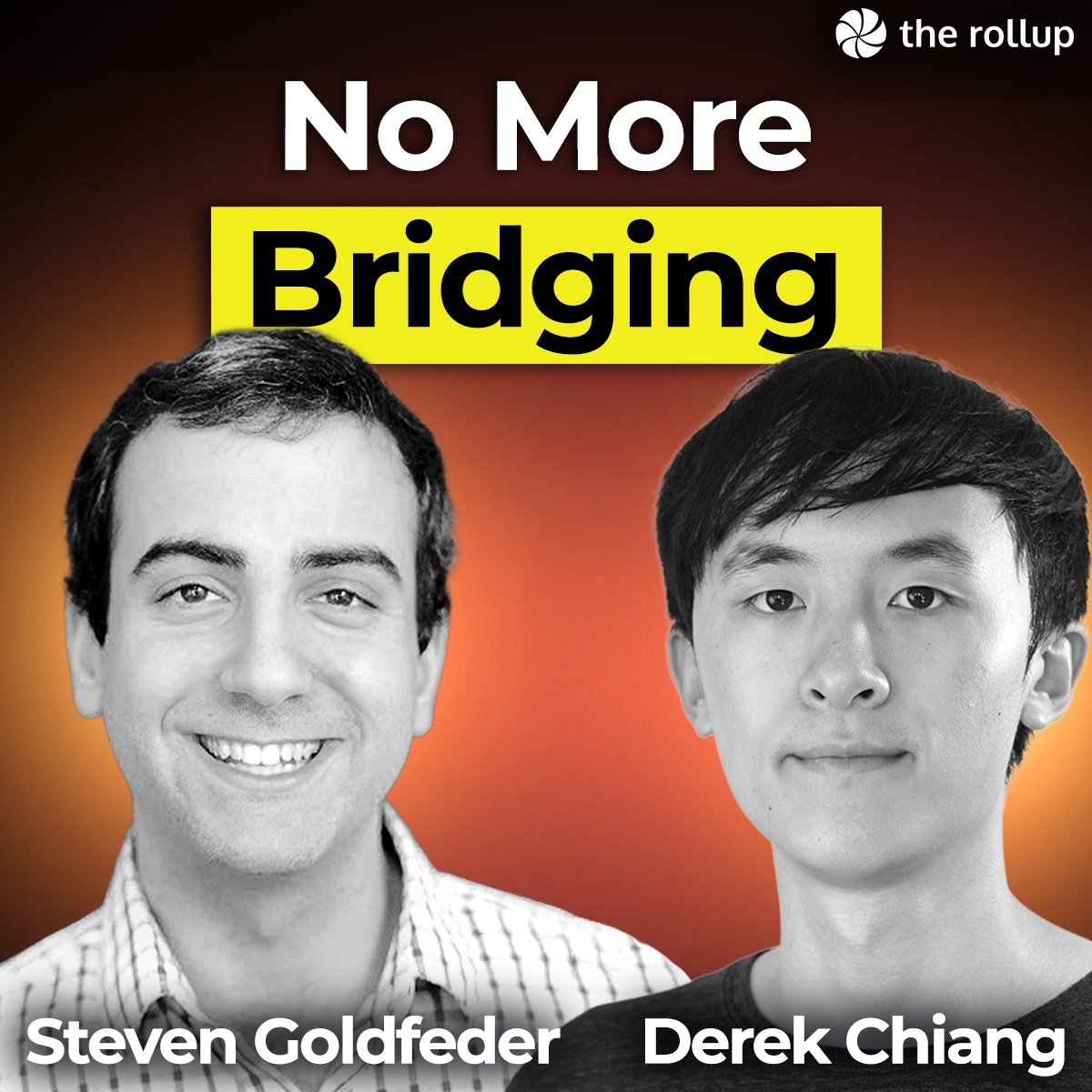
Derek Chiang · August 2025
The work follows him to Ethlabs
In March 2026, Chiang argued for Frame Transactions, a proposed foundation for native account abstraction in Ethereum. His case paired flexibility with useful defaults. A general mechanism can support unfamiliar future needs, while sensible default behavior keeps ordinary workflows manageable. The same architectural preference appears again, now at the protocol level.
In August 2026, he announced that he was joining Ethlabs, a nonprofit Ethereum research and development lab. Its team includes Ansgar Dietrichs, Barnabé Monnot, and Julian Ma. Chiang described his intended work as helping turn Ethereum technologies into useful products, collaborating with builders and improving the technology when it failed to meet their needs.
The move carries forward a question that has followed him from infrastructure engineering through Eternal and ZeroDev. What must change before a technical capability becomes something people comfortably use? Sometimes the answer is a permission system. Sometimes it is a shared interface. Sometimes it involves the people deciding what the underlying network will support.
The collectible fan at the beginning of this story remains a useful judge. They need not admire an account standard, study a roadmap, or congratulate a transaction on its flexibility. They have something they came to do. Chiang has made a career of working through the machinery between that intention and its completion. The engineering can be elaborate. The invitation should be easy to accept.