A software company can begin with a spreadsheet, a pitch deck, or somebody announcing that an industry is ripe for disruption. Toddle began with teachers trying to get through their work. At a preschool in Ahmedabad, curriculum plans, portfolios, assignments and reports lived across disconnected tools. The children had a school. Their teachers had an obstacle course.
Deepanshu Arora was close enough to see the inconvenience accumulate. He had helped build the school, Toddler’s Den, and the team wanted technology to support its teaching. Instead, everyday tasks required a procession through separate systems. After hours with children, teachers faced another round of work making the digital pieces behave. A tool could be useful on its own and still make the whole day harder.
In his recollection of those beginnings, Arora places himself and fellow founders Gautam Arora, Nikhil Poonawala, Misbah Jafary and Parita Parekh on the classroom floor with teachers, sketching a better arrangement. It is an appealingly unceremonious place to design software. The people who would use it were within talking distance. Nobody needed to invent a hypothetical customer.
That proximity gives his story its shape. Toddle grew from an attempt to improve an existing school into a platform serving thousands of others. Arora now leads it from Singapore, but the question at the centre of his work remains wonderfully ordinary: what would make a teacher’s day easier? The answer has become more elaborate. The question still fits on a classroom whiteboard.

An excellent ladder, with no next rung
Arora studied at the Indian Institute of Technology Kanpur from 2006 to 2011, completing a dual degree in electrical engineering. McKinsey followed. For a student chasing prestigious destinations, that sequence was comprehensible. Admission, qualification, coveted job: each achievement supplied instructions for the next. Then he arrived at the job and found that the instructions had run out.
He has described his earlier decisions as following the obvious choice. Consulting gave him a respected position, but it did not settle what he wanted to spend his life doing. He left after roughly a year and a half. The interesting part of that decision is its lack of tidy inevitability. Education entrepreneurship was something he worked towards through experiments, rather than a destiny visible from his first engineering lecture.
WonderBoxx was one of those experiments: a subscription business supplying hands-on learning materials for young children. It placed him in early education before he moved into operating preschools. The distance between a learning box and a school is considerable. A box can be delivered. A school has to work again tomorrow, with the children, teachers and families who are already there.
At Toddler’s Den, that continuing responsibility put software in a different light. Arora’s engineering education offered one way to understand systems; running a school supplied the consequences when a system was awkward. His subsequent career joins those two experiences. There is a useful humility in the combination. A technically clever product still has to survive contact with a busy teaching team.
A local fix acquires a passport
Toddle was founded as a company in 2019. Its founding group brought together education, engineering and design, with the preschool experience supplying a shared reference point. Teachers needed to plan together, document learning, assess progress and communicate with families. Bringing those activities into one place gave the team a concrete starting point for a product that other schools could adopt.
The International Baccalaureate provided an early focus. Schools using a common curriculum framework could recognise similar work, even across borders. That helps explain why an enterprise emerging from an Indian preschool could find an international audience. Geography differed; enough of the teaching process was familiar. The passport belonged to the problem as much as to the product.
By January 2023, Toddle reported use by about 40,000 educators at 1,500 schools in more than 100 countries. That month it announced a $17 million Series A led by Sequoia Capital India, with new and existing investors participating. These figures describe the company at that moment. They also show how far the original school tool had travelled in four years.
Arora’s public emphasis remained on working within schools. That choice matters to the story: the institution is where the product must earn its place, among established routines and real curricular requirements. By 2026, Toddle’s reported reach had grown to more than 2,500 schools across over 100 countries. Toddler’s Den had also grown to a reported ten-preschool network. His work in schools continued alongside the software business.
Ten hours is a surprisingly personal ambition
A company can count customers, countries and funding rounds. Arora also asks it to count something a teacher might actually want back: time. At Toddle’s May 2024 Demo Day, he set out a goal of giving every teacher ten additional hours each week while helping improve their practice. The number is an ambition, not a demonstrated saving for every user. Its appeal is easy to understand.
Ten hours might change the shape of a week. It could create room for preparation that currently gets squeezed, a conversation that currently gets postponed, or simply finishing work earlier. These are possibilities, rather than promises about any individual teacher. They explain why the target has more human weight than a catalogue of features. A new button is easy to announce. A less crowded Thursday would be a useful result.
Toddle’s AI launch in July 2023 extended that ambition into a personal teaching assistant. By the first Demo Day in January 2024, Arora was describing new functions built following hundreds of educator feedback calls. The proposed uses stayed close to teaching work, including assessment rubrics. The sequence matters: classroom needs first, a technical capability second, and a product whose usefulness has to be tested in practice.
His October 2023 writing on AI also made room for inquiry, experimentation and students forming their own understanding. He asked educators to direct the technology with curiosity and critical judgment. It is a short instruction with considerable work hidden inside it. Someone still has to decide which questions matter, whether an answer is sound, and what a child should do next. In Arora’s account, the teacher retains that responsibility.
“Let us guide this technology, rather than letting it guide us.”Deepanshu Arora · October 2023
The classroom follows him into hiring
A teachers-first slogan would be inexpensive to print. Arora has attached it to a more consequential decision: who represents the company. He has said that, with other things equal, he would choose a former teacher when hiring. Toddle’s early policy, as he describes it, put educators in roles outside engineering and design, including sales, content, training and school success.
His explanation is practical. Working with children develops patience, clear communication, reliability and the ability to handle conflict. Those abilities do not disappear when somebody leaves a classroom. For a company selling to schools, a colleague who understands the rhythms of teaching can hear details that a sales script might miss. Experience becomes part of the product’s relationship with its customers.
The approach also asks something of leadership. In the June 2024 EdLeaders conversation, Arora discussed the shift from doing hands-on tasks towards strategy and culture as CEO. Founders have to relinquish work they once performed themselves. In his case, the classroom remains a reference point, while the job increasingly involves creating conditions in which other people can make sensible decisions without waiting for him.
He describes Toddle as a remote, high-trust team and says he tries to meet each new colleague on their first day. His recurring advice is ownership. He divides it into doing assigned work well, improving that work independently, and finally identifying worthwhile problems and taking responsibility for them. The last level echoes Toddle’s beginnings. Someone noticed a problem before it came with a job description.
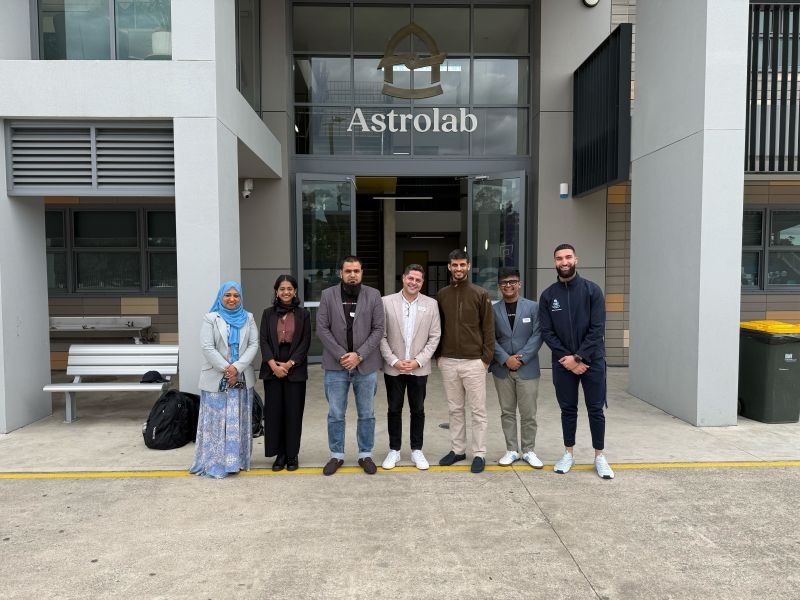
Listening is organised work too. Arora has described product-team tours in which founders and colleagues visit schools to understand what educators need. An Australian trip included conversations with schools across different settings. This offers a way to keep the product connected to the people using it as the company grows. A roadmap can become very tidy on a screen. Schools have a habit of supplying the untidy detail.
Still looking for the next school
Arora’s recent writing has widened the view beyond his own software. In Inside Schools, he examines design choices made by schools around the world. He says he has visited more than 100 schools over ten years and worked closely with thousands more. The series turns that accumulated exposure into stories about how institutions think, build and change.
His September 2026 instalment explored African Leadership Academy through a conversation with its dean, Uzoamaka Agyare-Kumi. Among the ideas he examined was the school’s work on identity: students considering who they are, where they come from and the continent they might serve. The interest here extends beyond efficient administration. It concerns what a school asks young people to understand about themselves.
After sharing that story, Arora expressed a wish to build something similar in India someday. It is an aspiration, rather than an announced school project. Still, it gives the profile a revealing direction. The founder of a school-software company remains interested in making schools themselves. Software occupies a large part of his working life; it has not exhausted his curiosity about education.
There is a pleasing continuity between that curiosity and the classroom floor where Toddle took shape. In both cases, an institution supplies something worth examining closely. The questions have expanded from how teachers manage their work to how students discover their responsibilities and possibilities. Arora keeps returning to schools to ask them. For somebody who once followed the obvious next step, that seems a more interesting way to spend a career.