There is an unusual instruction on DCM Ventures’ contact page. Along with your pitch deck, funding history and founders’ LinkedIn profiles, include the words “Alan Turing.” The firm says the phrase gets your message past its filters. Even a company devoted to finding unconventional founders needs a way through the inbox. Here, the door has a password, and the password is a computer scientist.
- The offer: early capital and help building a technology business.
- The angle: relationships spanning the United States and Asia.
- The test: can those relationships remove your next obstacle?
It is a small detail with a larger implication. Access matters. Getting someone to read the idea, understand the market and make the right introduction can be part of the work before a business grows. DCM has made a career of occupying those gaps, particularly between Silicon Valley and Asia. Its portfolio stretches from financial software to short videos. The connecting thread is often a relationship.
The distance between an idea and a customer
DCM began in Menlo Park in 1996, founded by Dixon Doll and David Chao. Doll came from Accel. Chao brought a career that crossed Japan and America, including work at Recruit, Apple and McKinsey, and the co-founding of Japan Communications. These were useful places to learn that a technology market has its own language, even when everyone in the meeting speaks English.
In a 2009 interview, Chao described himself this way: “I am a product of three cultures.” He also recalled returning to Japan after the 1995 Kobe earthquake to find his parents. The journey made him reconsider a career spent in large companies. His parents survived; his willingness to stay on a comfortable professional track did not. The account gives DCM’s international orientation a human origin.
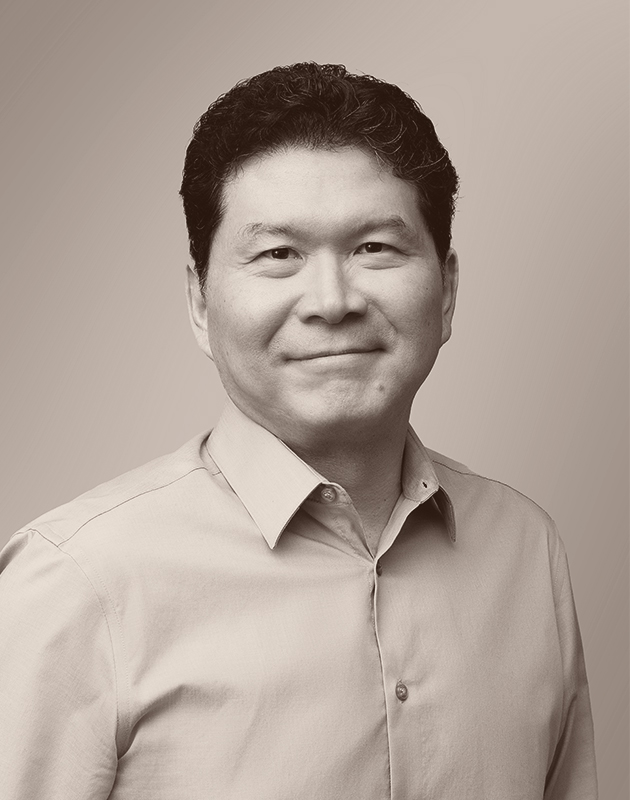
For founders, the practical proposition is investment plus operational help: recruiting, product decisions, financial planning and market access. Founders are the recipients of capital; limited partners supply the funds. The customers of BILL or SoFi sit another step away. That distinction helps explain the business: DCM must choose companies that can grow, then help them become valuable enough to produce investment returns.
Android gets a distribution plan
The 2011 A-Fund makes the strategy tangible. DCM launched a $100 million fund for the Android ecosystem with partners including Tencent, GREE and KDDI. KDDI’s annual report listed commitments of $25 million each from KDDI and GREE. Applications, platforms, hardware and internet services in the United States, China and Japan were within its planned scope.
Consider the arrangement from a startup’s side of the table. Money can pay developers. A relationship with a carrier, gaming company or internet platform could help a product reach people. The insight was to put industry participants inside the financing structure. Distribution became something the fund’s backers might help solve, rather than another problem left entirely to the founder.
A second $100 million A-Fund followed in 2015, with backers including Naver, Baidu, Qualcomm and SoftBank alongside Tencent and GREE. The approach offers a useful question for any founder evaluating a VC: which specific relationship would improve the company’s next six months? A long list of recognizable names is less helpful than one person who can answer the difficult question.
Count the money correctly
DCM’s 2020 fund announcement put the scale at $880 million: $780 million for DCM IX and $100 million for A-Fund III. These were commitments to investment vehicles. They were not sales, a valuation of DCM, or a single check waiting for one startup. Venture firms manage pools of capital and exchange financing for ownership in businesses. Founders should read the terms as carefully as the headline.
$780mDCM IX
$100mA-Fund III
The same announcement identified DCM as BILL’s sole first-round investor and Freee’s sole seed investor. Those examples suggest another way to understand its expertise: recognizing a recurring business problem across markets. Small companies everywhere have bills and books. The products, distribution and working habits still need local understanding. A similar problem does not automatically create an identical company.
Kuaishou supplies a different example. The Chinese short-video business raised $5.4 billion in its February 2021 Hong Kong IPO. DCM had participated in its Series B years earlier. The lesson for a founder looking at those dates is patience: early ownership can precede a public listing by a substantial stretch. An IPO is also an event, rather than a permanent verdict on a company’s value. The fundraising headline tells you what buyers paid at that moment. It does not tell you what every investor eventually received. Reading a venture portfolio requires keeping those two questions separate.
DCM’s stated interests have moved from communications and semiconductors toward consumer internet, SaaS, fintech and AI applications. In February 2025, it led Lingopal’s $14 million Series A for live speech translation. In October 2026, it participated in Navra’s $19 million round, backing a blockchain access business led by SoFi and Figure co-founder Mike Cagney. Both amounts describe entire rounds, not DCM’s individual contribution.
The strawberry problem
Portfolio pages tend to emphasize arrivals. Departures deserve attention too. Plenty, which DCM lists among its investments, entered Chapter 11 in March 2025. Its court disclosure described facilities that took substantial capital and time to build, followed by unfavorable capital markets and restricted access to further funding. Compton operations stopped, and the Richmond build-out paused. Financing capacity became a constraint on the physical rollout.
Plenty emerged in May 2025 with a focus on strawberries. This was a change in the portfolio company’s operating plan, not evidence of a disclosed change in DCM’s investment policy. The practical lesson is narrower and useful: a network can improve access to expertise or capital, but the business still needs a financing plan that survives construction delays. Software and farms ask different things of an investor’s patience.
Ask for the introduction that changes the next six months.An editorial takeaway for founders
A useful introduction beats a global slogan
DCM fits founders seeking early institutional capital with relevant technology and market expertise. Alternatives include other early-stage firms, a local specialist or strategic investors closer to the customer. The fit depends on what help is needed. An owner seeking steady income without outside ownership has a different problem. For a founder pursuing venture-scale growth, the worthwhile test is concrete: name the obstacle, then ask how this particular partner would help remove it.