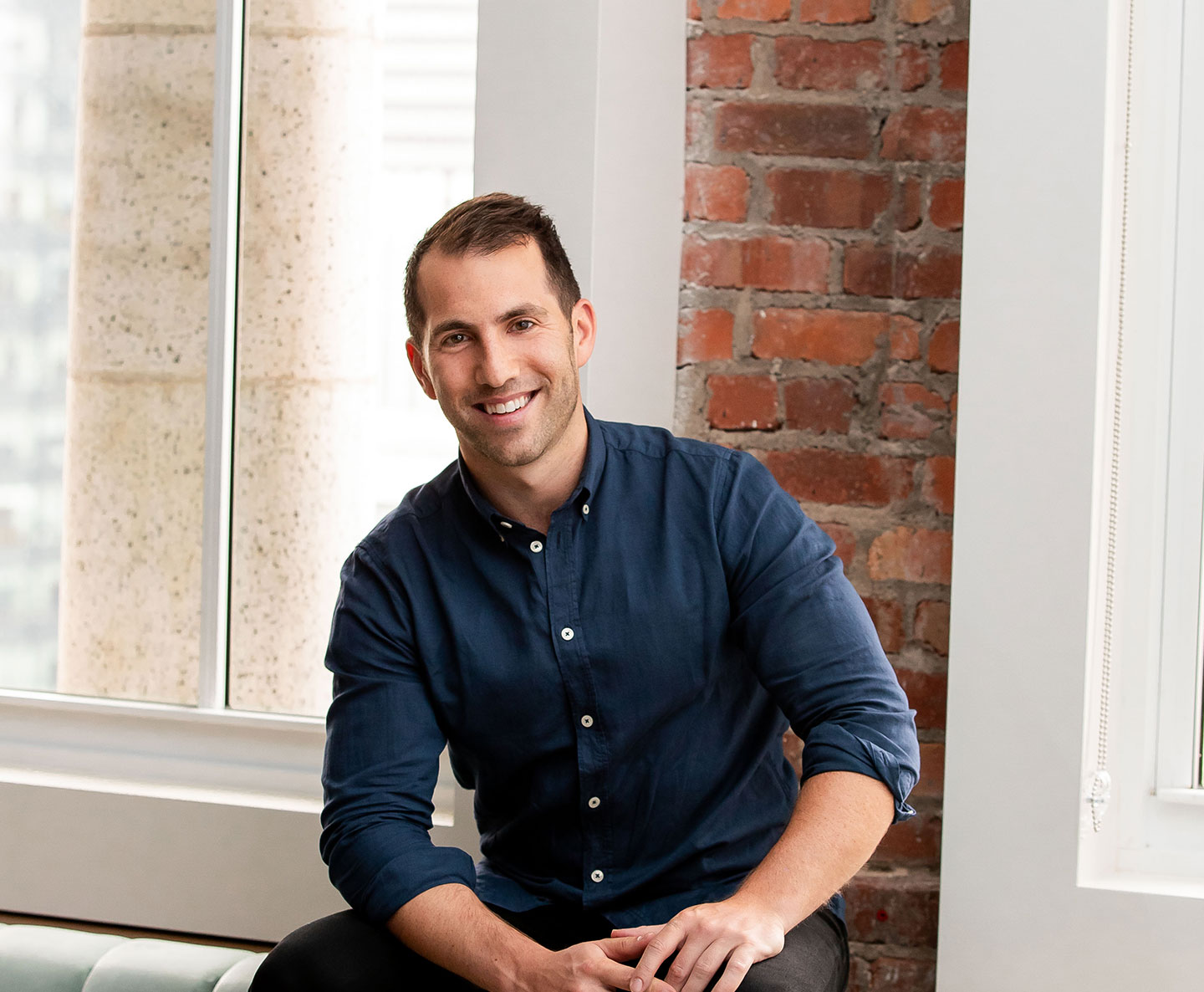
Profile
The Man in the Room Before the Room Exists
There is a specific breed of venture capitalist who, when they write their first check into a company, is not yet certain the company will work. Seth Rosenberg is that breed. He backed Ramp when expense management sounded like a boring category. He led Tome's seed round after personally introducing the two founders to each other. He sat on the Roblox board before "gaming platform" became a category that Wall Street paid attention to. The pattern is not luck. It is a practiced tolerance for the unproven.
Rosenberg grew up in Winnipeg, Manitoba - a city not typically cited on Silicon Valley origin stories. But Winnipeg shaped him in ways that become clearer when you understand the city's texture: a tight-knit Jewish community, settled by Eastern European immigrants who built businesses from nothing, trading commodities and building factories. He watched people around him do more with less. He spent summers as a kid starting small businesses. By college, he had already concluded that software was his generation's version of what those early entrepreneurs had done with grain and garments.
He studied commerce at Queen's University and took his first job at Goldman Sachs in New York, in the technology and media investment banking group. The Goldman years gave him a specific lens: he helped take RetailMeNot public, worked on financings for AT&T, and assisted with the sale of Tekelec to Oracle. These were not small deals. But Goldman is a place where you learn the mechanics of value - not how to create it from scratch.
In 2014, he moved to Facebook. Specifically, to Messenger. It is worth pausing on that: Facebook Messenger in 2014 was not yet the thing it became. It had been spun out as a standalone app only recently. It had 200 million monthly active users - a number that sounds impressive until you realize it would hit one billion in two years, which is the timeline Rosenberg worked under as a product manager on the developer platform.
"Does the business derive 80% of its value from the AI technology itself, or from other factors?"
Seth Rosenberg - His Core AI Investment Framework
He ran the Messenger Developer Platform - which meant owning the relationships with Uber, Lyft, KLM, and every other company that wanted to build inside the Messenger experience. He also launched the AI bot platform, which in 2016 was the first time most people had a "chatbot" conversation without realizing they were having one. It was early, rough, and genuinely novel. The experience lodged something in him: a belief that interfaces built on AI had a different ceiling than the software that came before.
In March 2017, he joined Greylock Partners as a General Partner. The firm - founded in 1965, one of the oldest and most storied names in venture - did not have a New York presence. Rosenberg set one up. He is, in the most literal sense, Greylock's presence in the city: a one-GP outpost for a firm that manages billions from Menlo Park.
Portfolio
The Bets He Wrote Early
Ramp
Corporate cards, expense management, and vendor intelligence. A category that once bored people into submission - now a multi-billion dollar company.
Fintech
Tome / Lightfield
AI-native CRM capturing customer interactions as structured data. Rosenberg introduced the founders and led the seed. 10M+ users in 9 months post-launch.
AI
Wisetack
Buy now, pay later for in-person services. Board Director since 2018.
Fintech
PayJoy
Technology and credit access for emerging markets. Board Director since 2018 - an early conviction on financial inclusion.
Fintech
Roblox
Former board member at the gaming and social platform before the category became obvious to everyone else.
Consumer
Greenlite
LLM-powered compliance coworkers for banking and fintech. The kind of AI-first regulatory tool that 2023 made possible.
AI + Fintech
The 80/20 AI Rule
When Rosenberg evaluates an AI investment, he asks one question before any other: does the business derive 80% of its value from the AI technology itself - or from something else? For a company like Pine (digital mortgage lending in Canada), the answer is roughly inverted: most of their value comes from the fintech business itself, not which model they use. That's useful, but it's a different bet.
What he's looking for is the company where the AI is not a feature but the whole point - where without the specific intelligence layer, there is no product worth funding. That distinction, simple as it sounds, separates his thesis from the bulk of "AI-powered" deal flow flooding every VC's inbox.
AI is the core value80%+
Hybrid - AI accelerates existing product50-80%
AI as feature layer on traditional biz<50%
His "Product-Led AI" framework - published on Greylock's Greymatter blog in 2023 - has become a reference point in the industry. The argument is not just about which AI companies to fund. It's about what makes a competitive advantage durable. Rosenberg identifies a category he finds chronically overlooked: startups that are one to two years old, have a working product, and can be significantly accelerated with AI integration. Not the pure-play foundation model bets (he respects OpenAI and Anthropic but doesn't typically compete there). Not the incumbents trying to retrofit AI into legacy systems. The companies in between - with the nimbleness of startups and a head start on incumbents.
He has also said something counterintuitive about AI's effect on labor: that it may replace senior-level knowledge work as fast as it replaces menial tasks. This is the opposite of how most people initially described the automation wave. Most predictions assumed AI would eat the bottom of the org chart first. Rosenberg's read suggests the compression is more vertical - and that investors who build portfolios around that assumption will see different outcomes than those who don't.
"Companies that are maybe one to two years old, that have an amazing product or some amazing value that can be significantly accelerated with AI - that's an overlooked category combining the nimbleness of startups with the head start of incumbents."
Seth Rosenberg - Fortune, 2023
Career Path
Three Careers in One Decade
2011-2014
Goldman Sachs - Investment Banking
Technology and media M&A and capital markets in New York. Worked on the RetailMeNot IPO, AT&T financings, and the Tekelec sale to Oracle. Learned how deals get made at scale.
2014-2017
Facebook - Product Manager, Messenger
Led the Messenger Developer Platform as the app scaled from 200M to 1B+ monthly active users. Launched integrations with Uber, Lyft, and KLM. Launched the AI bot platform in 2016 - the product that mainstreamed chatbots.
2017-Now
Greylock Partners - General Partner
Opened and runs Greylock's New York office. Leads fintech and AI investments at the seed through Series B stage. Developed the "Product-Led AI" framework. Board member at Ramp, Tome/Lightfield, Wisetack, PayJoy, and formerly Roblox.
In His Words
What He Actually Says
"I feel mostly American until Canada plays the US in hockey."
Seth Rosenberg - Twitter/X
"The biggest companies in fintech will come from payments, consumer, and software."
Seth Rosenberg - Greylock
"AI may replace senior-level work as quickly as it replaces menial knowledge work."
Seth Rosenberg - Twitter/X
"I look for founders dedicated to making bold moves in fintech and artificial intelligence."
Seth Rosenberg - Greylock Profile
Where the Instinct Comes From
The Winnipeg detail matters more than people give it credit for. The city's Jewish community - built largely by Eastern European immigrants who arrived with nothing and built commodity businesses - produced a specific kind of entrepreneurial culture. It was not the culture of Stanford and Y Combinator. It was older, more practical, more grounded in making something real out of whatever was available. Rosenberg has spoken about growing up watching this and recognizing early that his version of that same impulse would run through software.
He has been transparent about that origin in a way that many VCs avoid. There is a Medium post from 2013, written when he was a 20-something Goldman analyst trying to figure out what came next, titled "I wish Googling myself yielded better results" - an honest, slightly self-deprecating piece of career advice for people who don't yet know who they are. He wrote an open letter to himself at 30. These are not the behaviors of someone managing a personal brand. They are the behaviors of someone thinking out loud.
That transparency shows up in how he invests. He introduced the Tome founders to each other. He helped with first engineering hires at multiple portfolio companies. He is, in the parlance of the industry, "founder-friendly" - which often means little, but in his case seems to mean he remembers what it was like to not yet be who you're supposed to become.
Fast Facts
The Details That Don't Fit Anywhere Else
🏒
Identifies as mostly American - until Canada plays the US in hockey. Then all bets are off.
🤖
He launched the Facebook Messenger bot platform in 2016 - the product that made "chatbot" a household word.
✍️
Wrote a Medium post in 2013 titled "I wish Googling myself yielded better results." An honest dispatch from career uncertainty.
🏢
He is, technically, Greylock's entire New York operation. One GP running one city office for one of VC's oldest firms.
📈
His first professional deal: helping take RetailMeNot public at Goldman Sachs. His first GP investment: Ramp.
🤝
He introduced Tome's founders Keith Peiris and Henri Liriani to each other. Then led their seed round. Then joined the board.
Find Seth Online
Where to Read, Follow, and Listen