She wrote a college thesis on 1950s gay political organizers. Two decades later she's running the telehealth company those organizers never got to imagine.
// The face of a $8B "ghost market" finally getting a knock on the door.
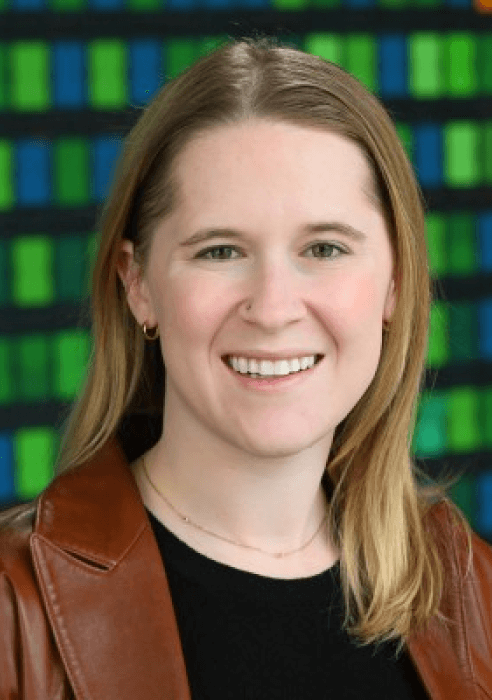
Dawn Androphy runs Allswell, a virtual mental health company built for a single, stubborn idea: that an LGBTQ+ adult should be able to find a therapist who gets it, afford the bill, and stop having to explain themselves before the real work begins. The company is live in Maryland, in-network with Medicaid and the big insurers, and it pairs people with licensed, affirming clinicians for both one-on-one and group sessions.
The pitch is not "another therapy app." It's a clinical model that leans on group care, evidence-based methods, and technology so the price can come down without the quality going with it. Affirmative CBT and Cognitive Processing Therapy do the heavy lifting. The community does the rest.
Androphy is not a tourist here. She has been organizing inside queer community spaces since she was 18 - the LGBT Center at Penn, Lambert House in Seattle, Out for Undergrad. Allswell is what happens when thirteen years of volunteer hours meet a Stanford MBA and a refusal to wait for the system to fix itself.
// Sources: Allswell clinical data; Amboy Street Ventures market analysis. Bars scaled for display.
I can't change systemic homophobia in medicine. But I can start small with something that has a big impact.
// Dawn Androphy
Dawn and her future co-founder Connor Gordon worked in adjacent Microsoft buildings that happened to share a cafeteria. The conversations over those lunches kept circling the same question: what would it look like to build something that actually mattered? Allswell was the answer.
Long before the term "founder," she was a historian. Her undergraduate honors thesis at Penn dug into 1950s gay political organizations - the people who built community when it was dangerous to. The throughline to Allswell is hard to miss.
During the pandemic she ran a weekly virtual support group for LGBTQ+ youth ages 18 to 22 through Lambert House. It was a small, unglamorous proof of concept: connection, on a screen, when the world had gone quiet. The model stuck.
Penn to Microsoft to BCG to Stanford to Allswell - the resume reads like a strategy career. The volunteer hours tell the real story.
Most affirming therapists are booked, expensive, or out-of-network - often all three. Androphy's bet is that the bottleneck isn't compassion, it's economics and supply. Group therapy stretches a single clinician's hours across more patients, lowers the per-session cost, and quietly delivers a second medicine that solo sessions can't: other people who've been there.
Allswell wraps that in evidence. Affirmative Cognitive Behavioral Therapy and Cognitive Processing Therapy are structured, measurable, and built for trauma - which matters in a population the research says is roughly ten times more likely to qualify for PTSD than the general public. The early clinical read is encouraging: 83% of patients showed reduced depression symptoms within four to eight weeks.
Then there's the part that keeps a startup alive: getting paid. By going in-network with Maryland Medicaid, UnitedHealthcare, CareFirst, and Cigna, Allswell makes affirming care something a person can actually use, not just admire. Amboy Street Ventures called LGBTQ+ mental health an $8 billion "ghost market" - real demand, almost no purpose-built supply. Androphy is building the supply.
She's clear-eyed about the limits. She isn't trying to single-handedly cure bias in medicine. She's trying to build one good, scalable thing - and let it compound.
She collects vinyl records - the kind of cataloging hobby that says a lot about how she runs a company.
An avid hiker who treats trails the way she treats markets: one steady step at a time.
An experimental home cook, happiest improvising in a kitchen with no recipe to follow.
Her partnership with co-founder Connor Gordon predates the company - they first worked side by side volunteering at Out for Undergrad.
I've been involved in LGBTQ advocacy in some form since I was 18.
// Dawn Androphy