Breaking
Marble Health closes $15.5M Series A led by Costanoa Ventures 15,000+ therapy sessions in year one Founder taught fifth-grade English before building the company Care routed through school counselors - students seen within days Second mental-health venture after Headway unicorn Backed by Khosla Ventures and Town Hall Ventures
Profile
Jake Sussman, cofounder and CEO of Marble Health
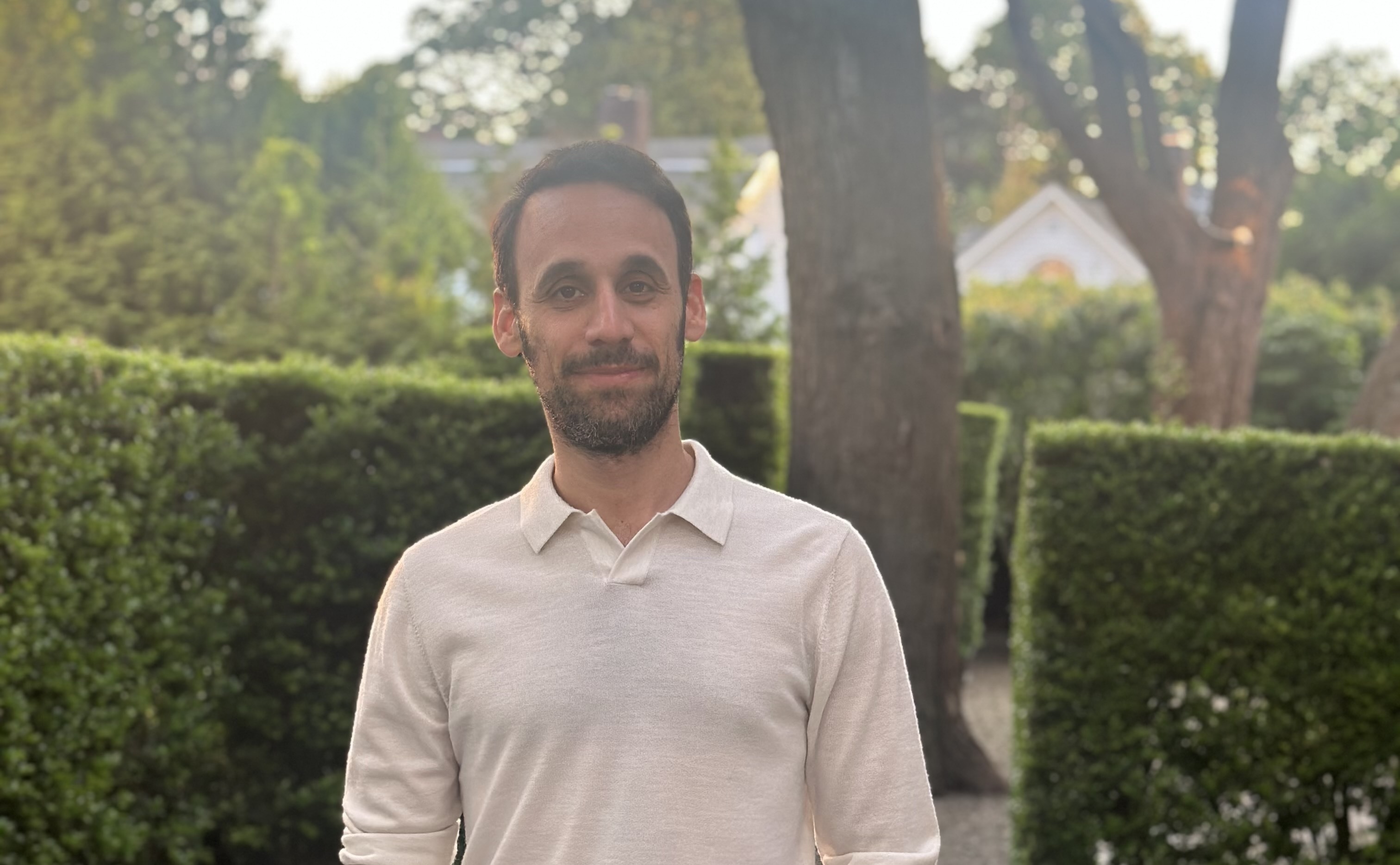
Jake Sussman, photographed for Marble's public launch. The hedges are real; so is the calm.
Founder · CEO · Marble Health

Jake
Sussman

He left a mental-health unicorn to teach fifth grade. The classroom handed him his next company.
New York Cornell '13 Ex-Headway Two-time founder

Most founders who help build a unicorn spend the next chapter raising a fund or chasing the next round. Jake Sussman went back to a fifth-grade classroom in Brooklyn, stood at the front of the room, and watched the youth mental-health system fail in slow motion. Then he built Marble Health to do something about it.

$15.5M
Series A (2025)
15K+
Sessions, year one
$20.5M
Total raised
2
Mental-health startups
The Story

A counselor, a PDF, and hundreds of kids

Start with the detail that started everything. In the charter school where Sussman taught English, there was one counselor for a building full of students. When a family came in worried about a kid's anxiety or trauma, the most that overstretched counselor could usually offer was a printout: a physical PDF of clinics, each with a waitlist measured in months.

That image - a list of doors that don't open in time - is the thing Sussman keeps returning to. "They are not clinicians. They have massive caseloads," he has said of school counselors. "The best they can do is give families physical PDFs of clinics that all have long wait lists." He doesn't say it as a criticism of counselors. He says it as a description of a system that asks them to do the impossible.

Sussman knew the adult side of this world cold. Before the classroom, he was one of four cofounders of Headway, the company that made it dramatically easier for adults to find a therapist who takes their insurance. He spent roughly five years helping scale it into a category-defining, unicorn-valued network. By most startup scorecards, that's a finish line.

He treated it as a starting question instead. Headway had cracked access for grown-ups with insurance and the wherewithal to book an appointment. Kids had neither. They have parents, schools, Medicaid, and a tangle of institutions that rarely talk to each other. The youth side of mental health wasn't a smaller version of the adult problem. It was a different problem, and nobody had built the rails for it.

So in 2023 he teamed up with fellow Headway cofounder Dan Ross and started Marble. The premise is almost stubbornly simple: meet kids where they already are five days a week. Schools. Not by selling districts another software contract, but by sitting beside the counselor and becoming the referral they can actually trust.

Here's how it runs. A school counselor flags a student. The family completes a short online assessment. Within days - not months - the child is matched to a licensed therapist and into care, much of it delivered as virtual group therapy. The counselor can see that the referral landed somewhere real. The waitlist PDF goes in the recycling.

Group therapy is the part that makes skeptics lean back. It can sound like a cost-cutting compromise, ten kids crammed into one hour. Sussman's answer is that the research disagrees. "Group care has been around for a long time. They've been studied rigorously. And they work," he says. The trick is matching. A group of seventeen-year-old girls with anxiety helps. A group of seventeen-year-old girls with anxiety who also share language, culture, and identity helps far more, because specificity is what makes a teenager feel seen rather than processed.

And then there's the math, which is where a finance background quietly pays off. Marble bills insurance, including Medicaid, instead of charging cash-strapped schools. Medicaid pays at least twenty dollars per child for a group session. Put ten kids in that hour and the session generates two hundred dollars - enough to pay the therapist a competitive rate and still leave margin to build a company. It's the rare model where doing more good and staying solvent point in the same direction.
Vitals

RoleCofounder & CEO
CompanyMarble Health
Founded2023
BasedNew York, NY
SchoolCornell '13
FieldYouth behavioral health
Co-founderDan Ross

Before Marble

HeadwayCofounder
Classroom5th-grade English
Earlier1stdibs
EarlierBloomberg
First job eraGoldman Sachs
AlsoAngel investor
We built Marble to close that gap - because kids shouldn't have to wait for help, and schools shouldn't have to go it alone.
Jake Sussman, on Marble's Series A
How It Works

From flag to therapist, in days

Marble's whole design is about shortening one line on a calendar: the wait between a kid needing help and a kid getting it.

01
Counselor refers

A trusted school counselor flags a student who needs support.

02
Family assesses

Parents complete a short online assessment to match needs.

03
Matched fast

The student is paired with a licensed therapist within days.

04
Group care

Virtual group sessions, billed to insurance and Medicaid.

$20 × 10 kids = $200 an hour.
The unlock isn't a slogan, it's arithmetic. Medicaid pays at least $20 per child per group session. Ten students in one hour pays the therapist well and still funds the business - so the schools never get a bill.
The Road Here

An unusual route to an obvious idea

2013

Graduates Cornell with a B.S. in Labor and Industrial Relations - not medicine, not computer science.

2013-2017

Works across finance and tech, with stops that include Goldman Sachs, Bloomberg, and the design marketplace 1stdibs.

2017

Cofounds Headway, helping adults find in-network therapists. One of four founders who scale it into a mental-health unicorn.

2022

Leaves Headway and becomes a fifth-grade English teacher at a Brooklyn charter school. Sees the youth gap up close.

2023

Cofounds Marble Health with Dan Ross to route teens into care through their schools.

2024

Marble launches publicly with a $5M seed round led by Khosla Ventures, with Town Hall and IA Ventures.

2025

Raises a $15.5M Series A led by Costanoa Ventures; passes 15,000 therapy sessions and sets sights on national expansion.

In His Words

The case, made plainly

On the systemThey are not clinicians. They have massive caseloads. The best they can do is give families physical PDFs of clinics that all have long wait lists.
On group careGroup care has been around for a long time. They've been studied rigorously. And they work.
On specificityA group of teens who actually share a story - language, culture, identity - heals faster than one that only shares a symptom.
On the economicsWith 10 kids in a group, we can make $200 for that hour - enough to pay the therapist well and still build the business.
The Bet

Who's betting on it, and why

The investors reading Marble's pitch had a shortcut: they'd watched these two founders do it once already. Headway gave Sussman and Ross a track record that's hard to fake - a category-defining company, built in the exact same neighborhood of healthcare, just for a different age group.

The seed round in 2024 was led by Khosla Ventures, joined by Town Hall Ventures and IA Ventures. The 2025 Series A, $15.5 million, was led by Costanoa Ventures with Town Hall and Khosla returning. Town Hall's thesis is blunt: roughly one in five young people experiences a behavioral-health disorder, and the founders had already proven they could build the plumbing for care.

The number Sussman seems proudest of isn't the round. It's the 15,000-plus sessions Marble delivered in its first year - each one a kid who didn't get handed a PDF. The Series A is fuel to take the model out of New York and into schools across the country, hiring a team and pushing the same idea at national scale.

There's a quiet through-line in all of it. A labor-relations major who learned to read incentives at Goldman, learned to build at Headway, and learned the actual problem by grading fifth-grade essays. Marble is what happens when all three educations point at the same kid in the back of the classroom.

The Cap Table

Series A leadCostanoa
Series A$15.5M
Seed leadKhosla
Also inTown Hall
Also inIA Ventures
Total raised$20.5M

By The Numbers

Group rate$20+/child
Per hour~$200
Time to careDays
Pays the billInsurance
School cost$0
Margins & Marginalia

Five things that explain him

Two for two. First he built mental-health access for adults at Headway. Now he's doing it for kids at Marble. Same problem, different generation.
The detour. Between companies he taught fifth-grade English in Brooklyn. The job hunt for his next startup was actually a teaching job.
Wrong major, right instincts. He studied Labor and Industrial Relations at Cornell. Turns out reading incentives is exactly what a Medicaid-funded model needs.
Finance roots. Goldman Sachs and Bloomberg sit on the resume - useful pedigree for a founder whose pitch hinges on per-session arithmetic.
Built with Claude. Marble's tech stack lists Anthropic's Claude among its tools, AI quietly doing logistics behind the human care.
No bill for schools. The whole model is engineered so a district never has to find budget. Insurance, not the principal, pays.
The goal is a world where timely, affordable mental health care is a default feature of every American school - where no student waits months, and no counselor faces a crisis alone.
Where Marble is headed