He studied how the visual system turns light into meaning. Now he turns brain signals into a business - reading sleep and EEG the way other people read blood.
Chief Business Officer · Beacon Biosignals · PhD, Computational Neurobiology

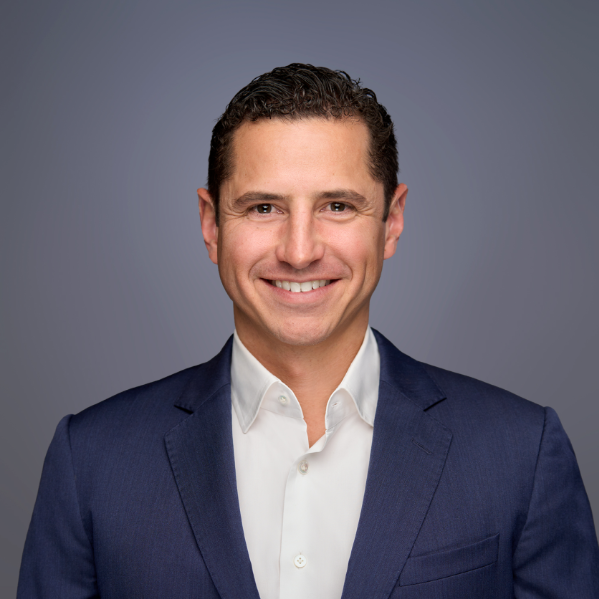
The scientist who learned to close the deal. Headshot via CES.
Most executives can read a balance sheet. Fewer can read an electroencephalogram. David Matthews does both, and that is the entire point of his job. As Chief Business Officer of Beacon Biosignals - a role he stepped into on February 1, 2024 - he sits at the seam between the science of the brain and the market for it.
Beacon is a computational neurodiagnostics company. It records the electrical chatter of the brain, much of it overnight, much of it at home, and runs it through AI to surface patterns that map onto neurological and psychiatric disease. The hardware is 510(k)-cleared. The software is the moat. Matthews' job is to turn that capability into partnerships, revenue, and reach - to make pharma companies, clinicians, and investors believe a squiggle on a graph can be a biomarker.
He brings an unusual credential to that pitch: he understands the squiggle. Before he was a consultant or a commercial chief, he was a working neuroscientist, funded by the NIH and the NSF, publishing across machine learning, bioinformatics, brain imaging, sensory processing, and health economics. When he says EEG is underexploited as a diagnostic, he is not repeating a deck. He is repeating a conviction.
In late 2025 Beacon announced an $86M Series B to accelerate exactly this work. The money is a vote on a thesis: that the brain can be measured cheaply, repeatedly, and outside a clinic - and that whoever builds the data and the algorithms to interpret it owns a new layer of medicine. Matthews helps decide where that capital points.
The straight line in Matthews' career is that there isn't one. He keeps switching rooms. Each switch added a language he could speak fluently to the next room.
He started at Princeton with a degree in molecular biology and bioengineering - the wet lab and the math, side by side. Then came a PhD in computational neurobiology, split between UC San Diego and the Salk Institute, two of the most demanding addresses in the field. The work was about how the brain processes sensory information, the kind of question that rewards patience over years rather than quarters.
Then he did the thing pure scientists rarely do: he left for Boston Consulting Group, and made Partner. There he led biopharmaceutical and medical-technology practices, advising on strategy, commercial, R&D, and digital problems. BCG's Henderson Institute backed his thinking, the same way the NIH and NSF once backed his pipetting.
From consulting he moved to operating. At BrightInsight, a regulated platform for building Software as a Medical Device, he ran growth and commercialization through four years of fast expansion. By the time Beacon came calling, he had the full stack: the science to vet the technology, the strategy to position it, and the commercial scars to sell it.
BA, Molecular Biology and Bioengineering.
PhD in Computational Neurobiology; NIH- and NSF-funded research.
Partner across biopharma and medical diagnostics.
Chief Growth / Commercial Officer through four years of growth.
Chief Business Officer, leading partnerships and commercial strategy.
Matthews' wager is that brain measurement is where blood testing was a century ago: clinically vital, technically possible, and waiting for someone to make it routine. The brain has been hard to read at scale because the tools lived in clinics and the data lived in silos. He thinks at-home sensors plus machine learning break that.
The implications run past sleep. If EEG can be turned into reliable biomarkers, drug developers can measure whether a therapy is working in the brain rather than guessing from symptoms. That is the partnership story he tells pharma - and it is why a scientist, not just a salesperson, sits in the CBO chair.
His range shows up on stage, too. At CES he joined a session on innovating for women's health and closing a $100B market gap, framing a chronically underfunded field as a commercial opportunity as much as a moral one.
Princeton bioengineer, UCSD/Salk neuroscience PhD - then a management consultant. Few people carry both a publication record and a Partner title.
Backed by the NIH and NSF as a researcher, and by BCG's Henderson Institute as a strategist. The grant committees and the consulting firm agreed on him.
His published work spans machine learning, bioinformatics, brain imaging, sensory processing, and health economics - an unusually broad footprint for one CV.