David Ebersman played bass in Feedbomb, Facebook’s in-house cover band. During the working day, he was the company’s chief financial officer. Outside it, he helped supply the low notes. For an executive joining a company identified with young engineers, the instrument was a useful introduction: here was somebody prepared to turn up, learn the arrangement and play alongside everyone else.
The musical detail invites an easy metaphor, and metaphors should be watched around finance people. Still, the bass player’s job is unusually apt. You have to hear what the others are doing. You have to keep track of the structure. An audience can enjoy an entire song without giving you much thought. Being indispensable and being the centre of attention are different ambitions.
Ebersman’s career has moved through Oppenheimer, Genentech, Facebook and the company he co-founded in 2015, Lyra Health. The titles became more senior; the work kept crossing departmental boundaries. In January 2025, he moved from Lyra’s founding CEO role to board chairman. Long before that handover, his record offered a useful puzzle: how does somebody become trusted with a business he has never worked in?
The education happened between departments
He graduated from Brown in 1991 with an A.B. in economics and international relations, then began as a research analyst at Oppenheimer. In 1994, he joined Genentech as a business development analyst. Those are sensible opening entries on a future finance executive’s résumé. What followed was less linear.
At Genentech, Ebersman moved through business development, product development and product operations before becoming CFO in March 2005. He became an executive vice president in January 2006. Each move required him to work with people whose responsibilities, vocabulary and immediate problems differed from those of the previous group.
A career can accumulate depth by staying in one discipline. His accumulated breadth inside one organisation. That distinction matters when reading the later job titles. The person appointed to oversee finance had already spent years working on the activities that finance would measure. He had seen the business from several sides before being asked to explain its results.
When Facebook announced his appointment in June 2009, Mark Zuckerberg pointed to a specific qualification: Genentech’s revenue had tripled while Ebersman was CFO. The appeal was experience with expansion, including the organisational work needed to support it. Facebook wanted someone who could help a fast-growing company keep functioning as its dimensions changed.
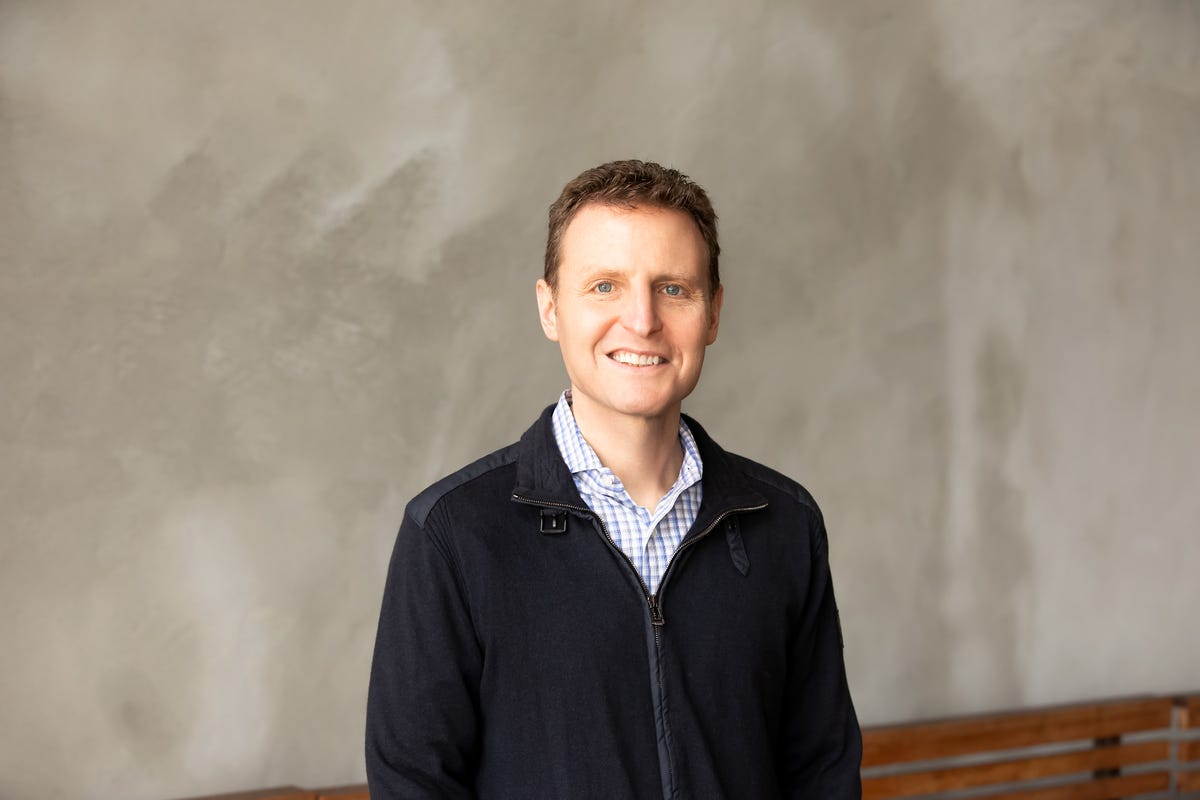
A spreadsheet joins the hackathon
Ebersman formally started at Facebook in September 2009. His announced responsibilities included finance, accounting, investor relations and real estate, as well as a seat on the executive management team. The list helps correct the image of a CFO as somebody stationed permanently beside a calculator. Buildings, people and investment decisions were part of the assignment.
In early 2010, the finance team began developing Facebook’s long-range plan with a hackathon. The familiar engineering ritual had found its way into financial planning. A budget is rarely invited to anything, so this represented a small social promotion.
The exercise began a longer process. Management contributed assumptions about users, revenue, capital spending and headcount over the following months. Susan Li, then a finance analyst, developed detailed revenue forecasts covering 2011 through 2013. The machinery of planning involved many people, even when one executive’s name appeared at the top of the organisation chart.
There is something revealing in bringing an existing company custom into another department. A new executive can arrive carrying a complete set of procedures, with the air of someone delivering replacement furniture. Here, the finance team used a ritual people already recognised. The work still needed rigour, but it could begin in a language the company spoke.
The brainstorm started the work. Months of contributions made it a plan.
The assignment could also take him outside the company altogether. In February 2011, Ebersman and Facebook’s real estate director, John Tenanes, spoke at a press conference about the move to Menlo Park. A city discussion about neighbourhood development was a different room from an investor meeting. Residents had their own questions about a growing company arriving nearby. Expansion appeared on a financial plan as spending and headcount; in a community, it had an address.
The room gets considerably louder
By May 2012, the audience had expanded. Ebersman joined Zuckerberg and Sheryl Sandberg for Facebook’s investor roadshow. At a Manhattan hotel, the three fielded questions from roughly 400 investors packed into a ballroom. A company built around everyday social interactions was now conducting a rather concentrated one with Wall Street.
The offering was priced at $38 a share. The announced sale comprised about 421 million shares, split between shares offered by Facebook and those sold by existing stockholders. Multiplying the price by the share count gives roughly $16 billion. That is the size of the offering, rather than a measure of Ebersman’s wealth or the amount the company alone received.
The scale made the transaction conspicuous. Its aftermath made it contentious. Facebook’s shares fell after the debut, and doubts about its ability to earn advertising revenue from mobile users weighed on the price. The company was going public while the way people used its product was changing.
By the second quarter of 2013, mobile accounted for 41 percent of Facebook’s advertising revenue. The business had begun demonstrating an answer to the question investors were asking. The sequence is more instructive than a simple story of triumph: expectations moved, operating results followed, and confidence had to be earned again.
Looking back in 2022, Ebersman described an IPO as a financing event whose timing deserves care. His account stressed the instability of investor sentiment when a business is in transition. The experience gave him an unusually concrete reason to distinguish running a company from managing the market’s changing opinion of it.
Leaving with somebody ready to take over
Facebook announced his departure in April 2014. David Wehner would succeed him as CFO on June 1; Ebersman would remain through September to transfer responsibilities. Zuckerberg’s farewell singled out efficient operations, long-term investment and the team Ebersman had built, including his successor.
That last detail is easy to lose among the financial figures. An executive’s departure tests whether an organisation can carry on without the person who helped assemble it. Having a successor already inside the business gives the handover a practical starting point. It also makes team-building visible in a way that a flattering job title cannot.
Later that year, Brown listed Ebersman as an entrepreneur in residence. The graduate who had spent years explaining established businesses was returning to campus while considering what to build. The direction of travel had changed again, without requiring him to discard his earlier experience.
At Brown in 2019, he credited his undergraduate years with “the idea that learning was interesting for the sake of learning.” It is an unusually uncommercial sentence from someone associated with a closely watched stock offering. Curiosity, in that formulation, has value before it produces anything suitable for a pitch deck.
A founder still has to make the calls
Ebersman co-founded Lyra Health with Dena Bravata in 2015. Starting a company put him in a different relationship with uncertainty. At Facebook, he had joined an existing organisation. At Lyra, the organisation itself had to be made: people recruited, customers persuaded, investors selected, a business model worked out.
His later account of fundraising was candid about needing help. He wanted investors who would improve his thinking and contribute to building the business. Experience had given him a network, but it had also given him reasons to recognise the limits of his own knowledge. Being able to hire or consult expertise is useful only if you can admit where you need it.
Some of the relationships reached much further back than a financing round. Greylock’s David Sze had known Ebersman since summer camp. The connection is a pleasingly unglamorous footnote to a Silicon Valley career. Long before anyone could discuss executive performance, the two had already met as children.
“The past decade at Lyra has been the highlight of my career.”
David Ebersman · December 2024
The founder’s work also required the ordinary labour that polished company histories tend to abbreviate. Ebersman recalled the early team making calls individually to persuade people to work with the business. Connections could open a conversation. Somebody still had to conduct it. A company begins to look inevitable only after enough such conversations have worked.
Another way to stay in the room
On January 13, 2025, Jennifer Schulz succeeded Ebersman as Lyra’s CEO. He became chairman. The announced remit kept him involved with customers and company culture, and as a strategic sounding board for Schulz. It was a change in responsibility within a company he had spent a decade building.
The move belongs in the same story as his earlier transitions, though each had its own circumstances. Analyst, operating executive, CFO, founder and chairman are different jobs. Doing one well does not eliminate the need to understand the next. Ebersman’s career is interesting because the changes are visible, rather than smoothed into a single predetermined ascent.
And there remains the bass guitar. It would be foolish to claim that playing in a cover band explains an executive career. It does offer a more human picture of the work than the offering price alone: a finance chief sharing an arrangement with colleagues, listening for his entrance, contributing something everyone can hear even when they are watching somebody else.
Keep listening
Conversations, career records and places to follow Ebersman.
Watch the conversationSouth Park Commons · 2022 ↗His reflections on company-building, fundraising and the IPO. Back at BrownLearning across different careers ↗The 2019 campus conversation. From the company archiveFacebook’s 2009 CFO appointment ↗ The handoverLyra’s leadership announcement ↗